- TypologyResidential complex
- Statusshematic design
- LocationZagreb, Croatia
- ClientViking d.o.o.
- Size90,000 m²
- Year2024 -
- ScopeArchitecture, Lead Design, Project Management Support
Concept
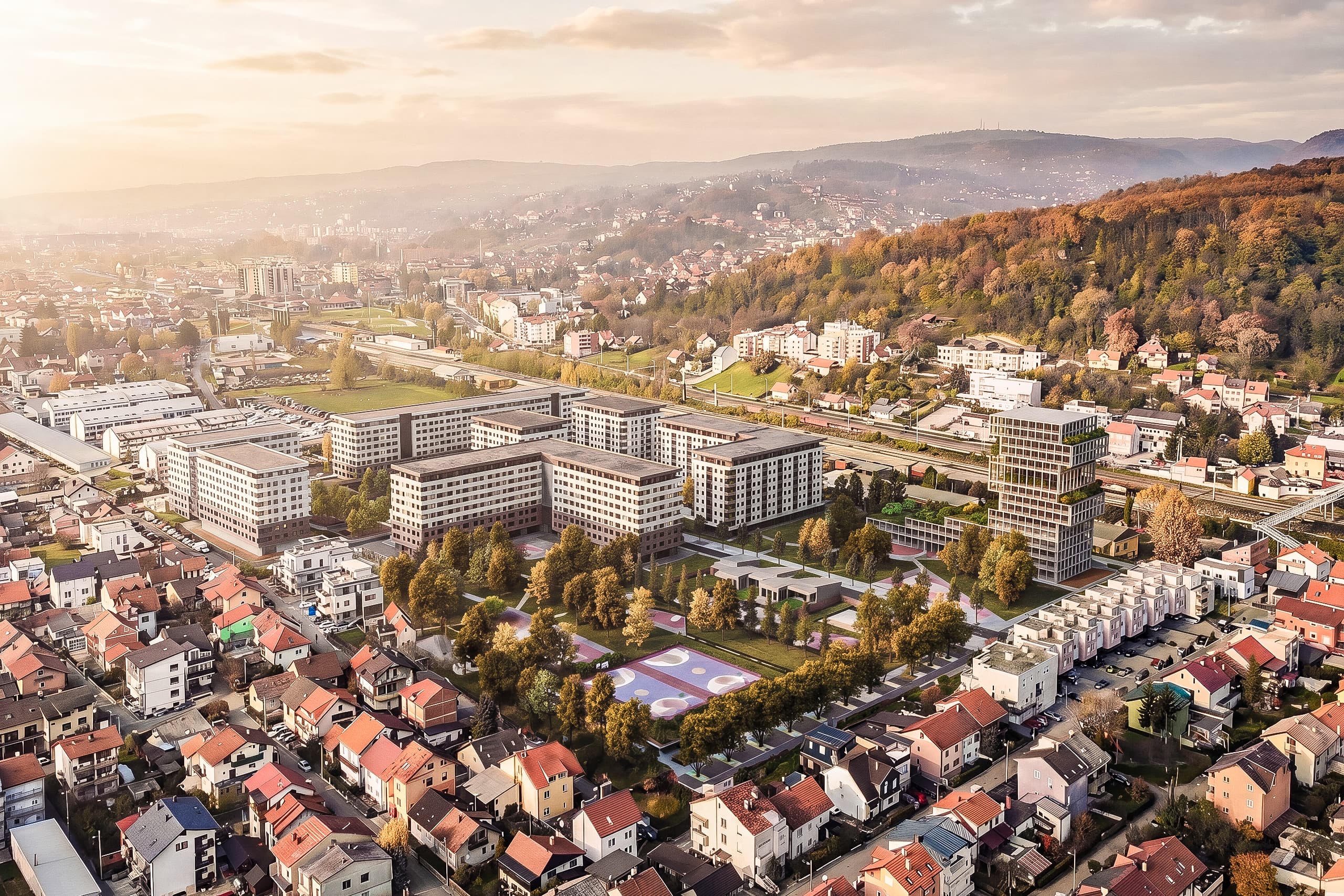
The project is based on the idea of forming a coherent residential ensemble that balances building density with the quality of open space. The volumes are organized within a clearly defined matrix, enabling the creation of semi-private inner courtyards and active ground-floor public spaces.
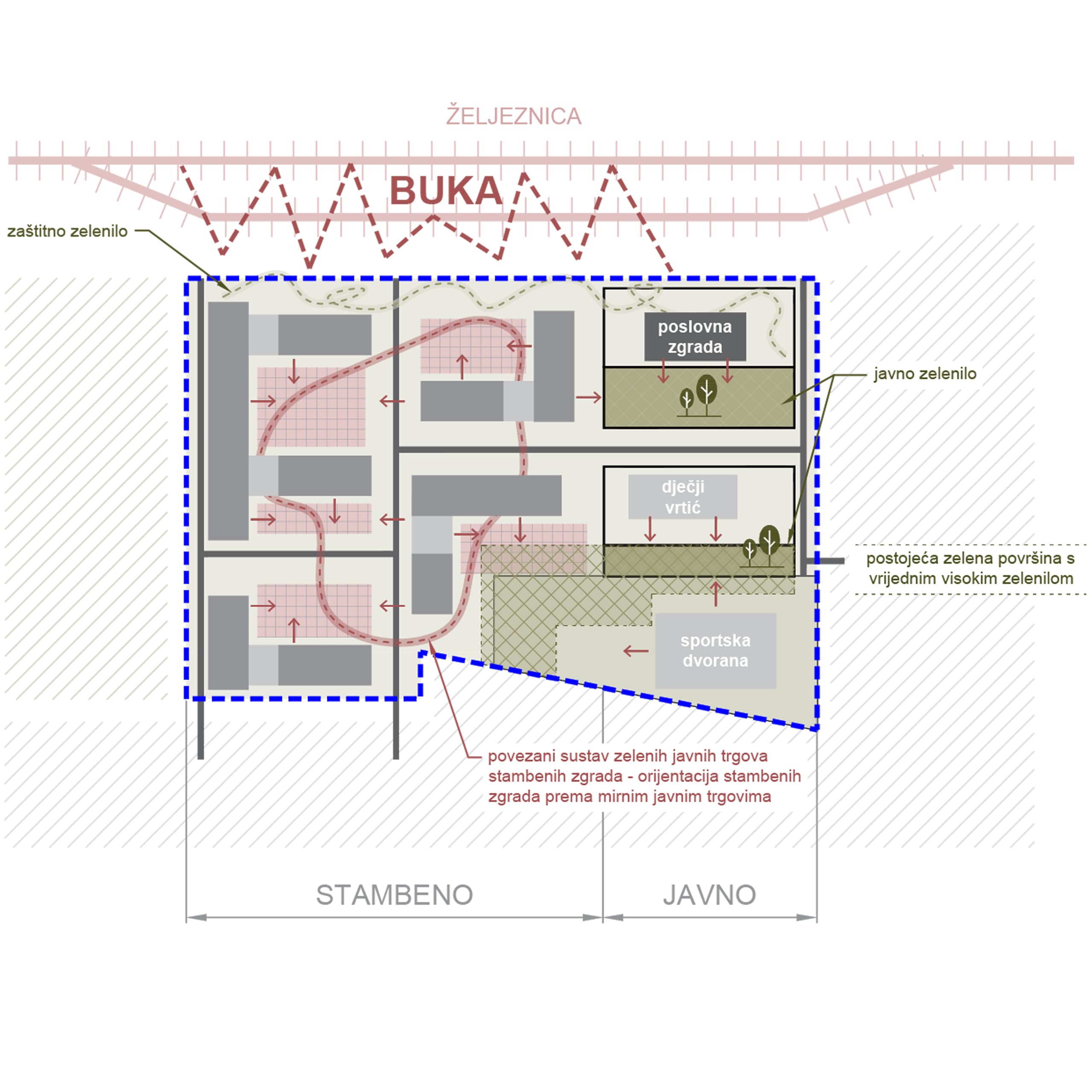
The core concept emerges from the need to mitigate negative environmental impacts—primarily noise from the adjacent railway—while maintaining visual openness and spatial continuity toward the surrounding city and landscape. The buildings act as a protective perimeter, while the interior of the block develops as a calm, green residential environment.
Particular emphasis is placed on the transformation of the site itself, which was previously occupied by an industrial complex. Through a process of urban regeneration, the area is redefined as a contemporary residential zone, introducing new programs and public amenities that support a high quality of everyday living. This shift not only reactivates an underused urban fragment but also establishes a new identity rooted in livability, accessibility, and integration with the wider city fabric.
Purpose
The project aims to establish a contemporary residential environment that integrates housing, public amenities, and landscaped open spaces into a unified system.
Ground floors accommodate programmatic elements that activate the urban edge—commercial spaces, a kindergarten, and sports facilities—ensuring daily use and encouraging social interaction. The development responds to the demand for high-quality urban living that is not isolated, but embedded within the local community and infrastructure.
A key objective of the project is to provide affordable living solutions, achieving maximum spatial and architectural quality within a constrained budget. Through careful design strategies, rational planning, and efficient use of resources, the project demonstrates how cost-effectiveness can coexist with generous living standards and a strong sense of place.
Spatial Strategy
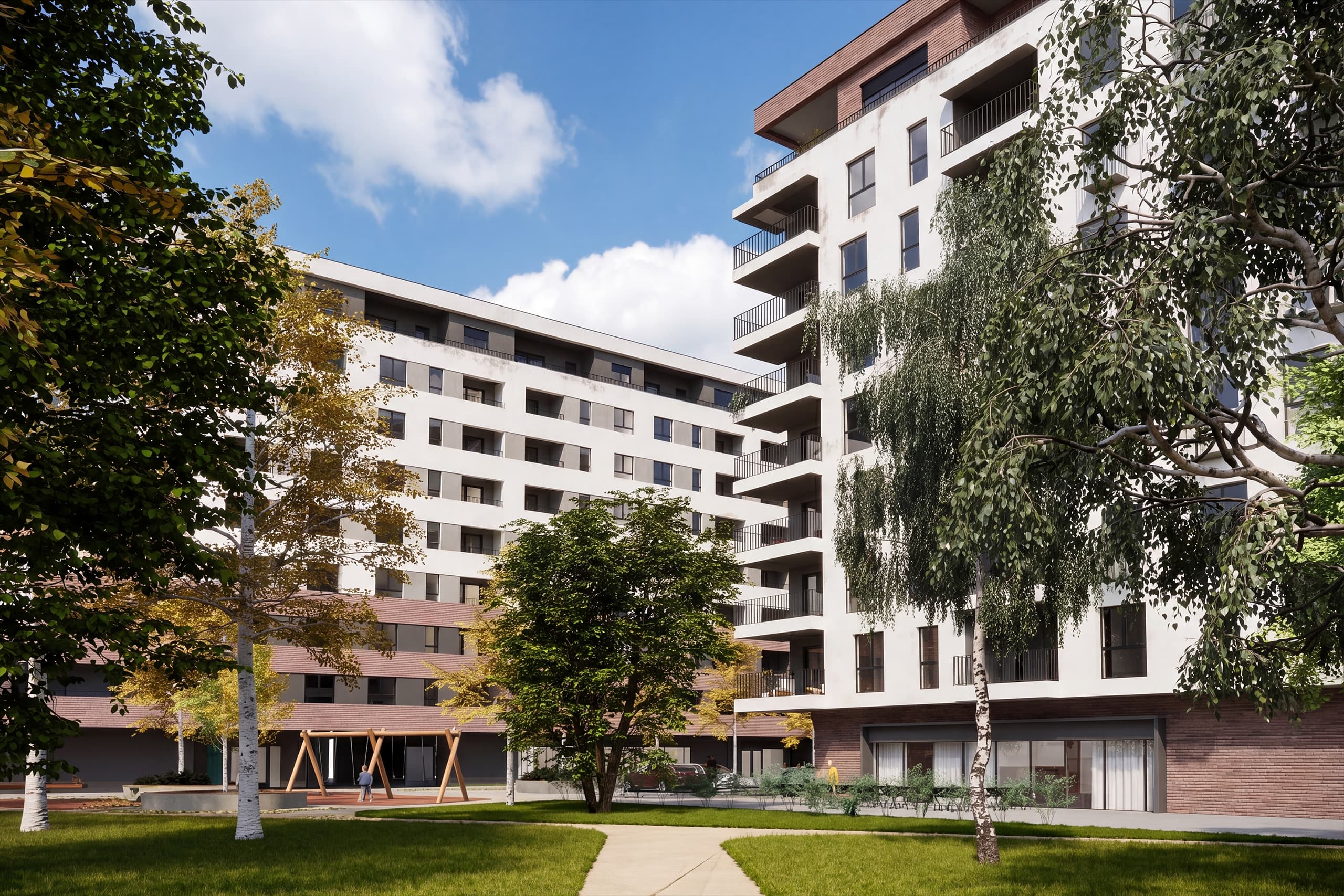
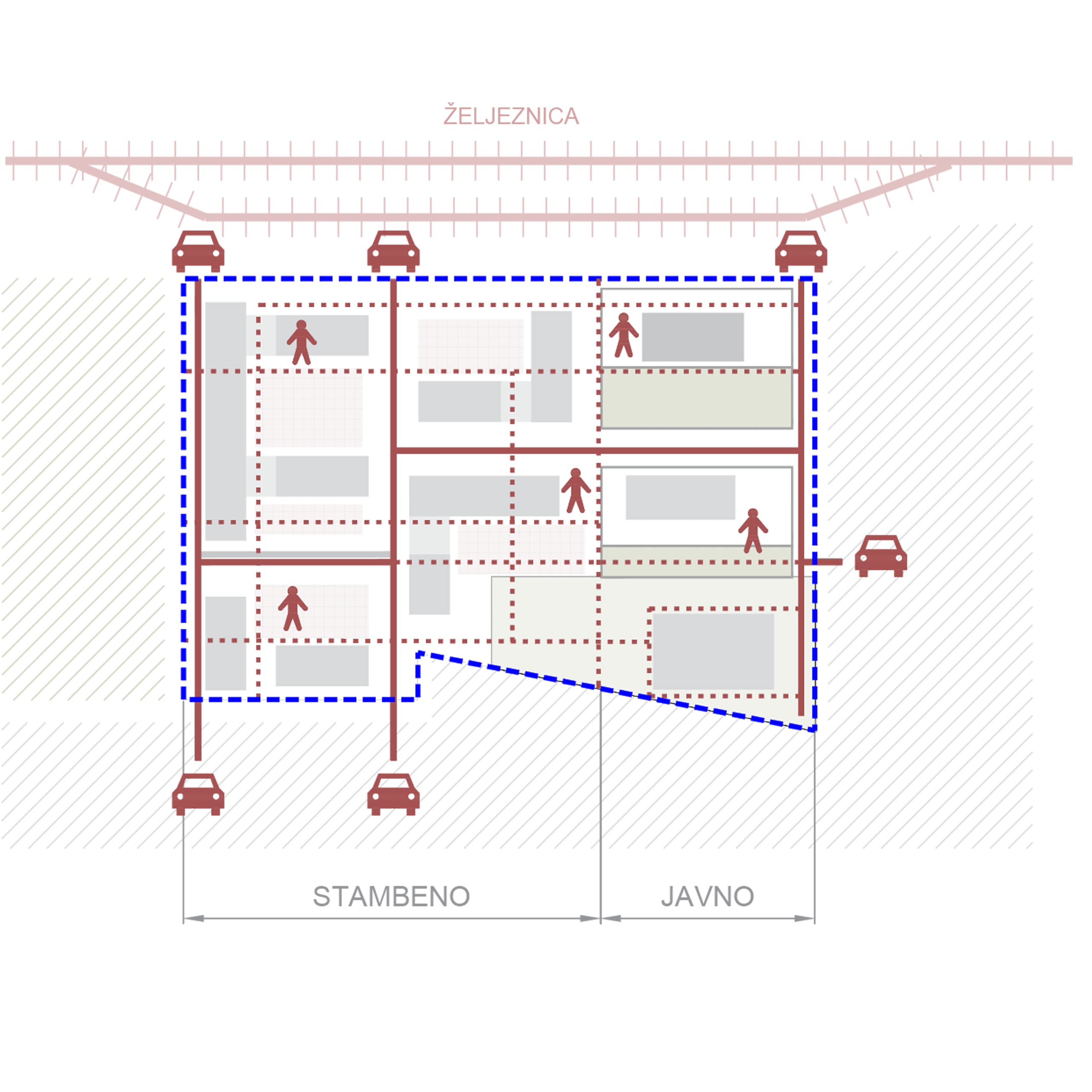
The spatial organization is based on a clear hierarchy of public, semi-public, and private spaces. The perimeter volumes define the urban structure and protect the interior, while a sequence of green courtyards and pedestrian paths is formed within the block.
Circulation is carefully structured to separate vehicular and pedestrian movement. Vehicular access is limited to the perimeter, while the interior is dedicated exclusively to pedestrians and communal use, ensuring both safety and spatial quality.
Residential units are oriented toward the inner green areas, reducing exposure to noise and enhancing the overall living conditions.
The masterplan extends beyond residential development, incorporating a diverse program that includes a business building, a kindergarten, and a series of recreational zones. This mix of uses supports the creation of a self-sufficient and vibrant neighborhood, where living, working, and leisure are seamlessly integrated within a coherent spatial framework.
Architecture and Materials
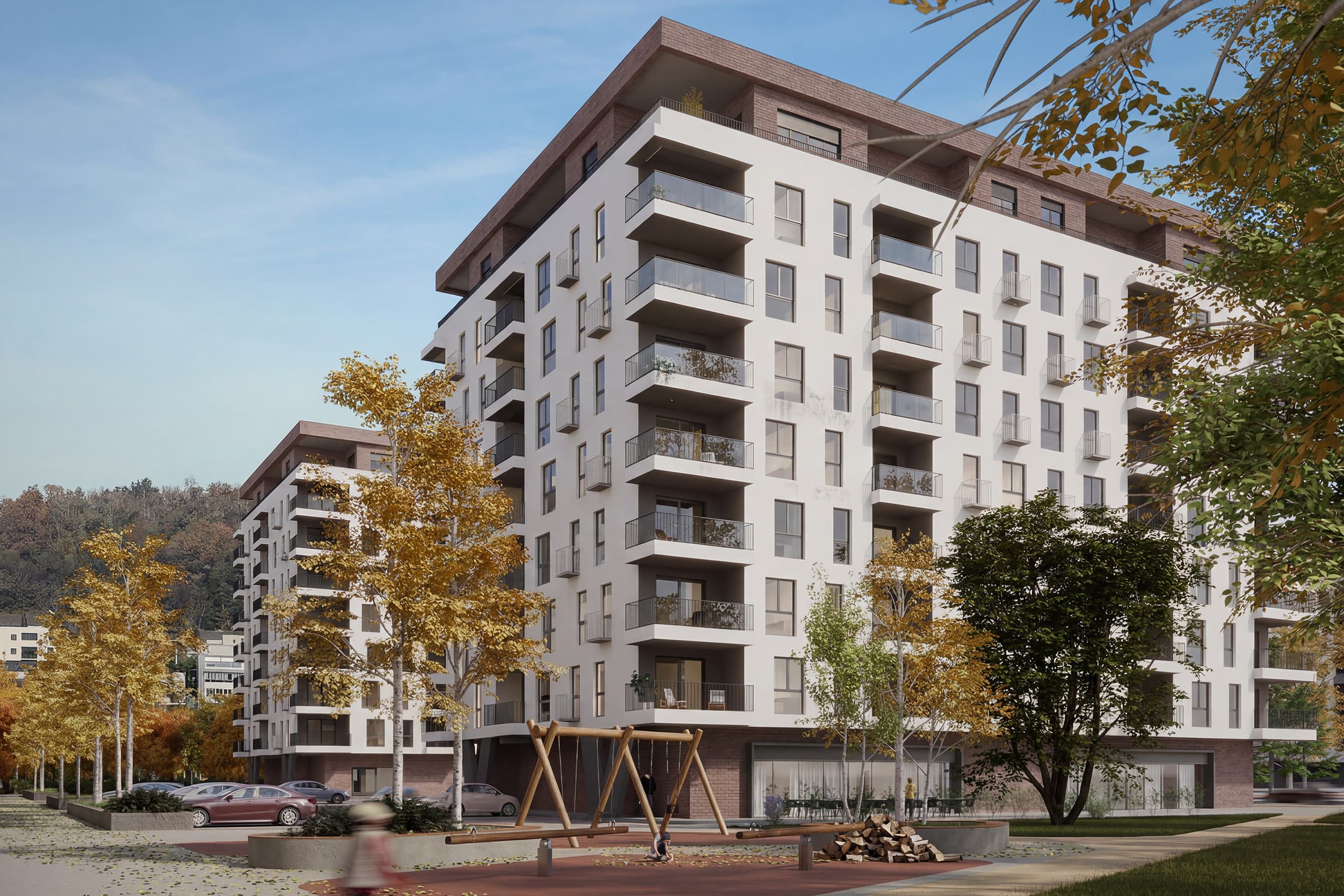
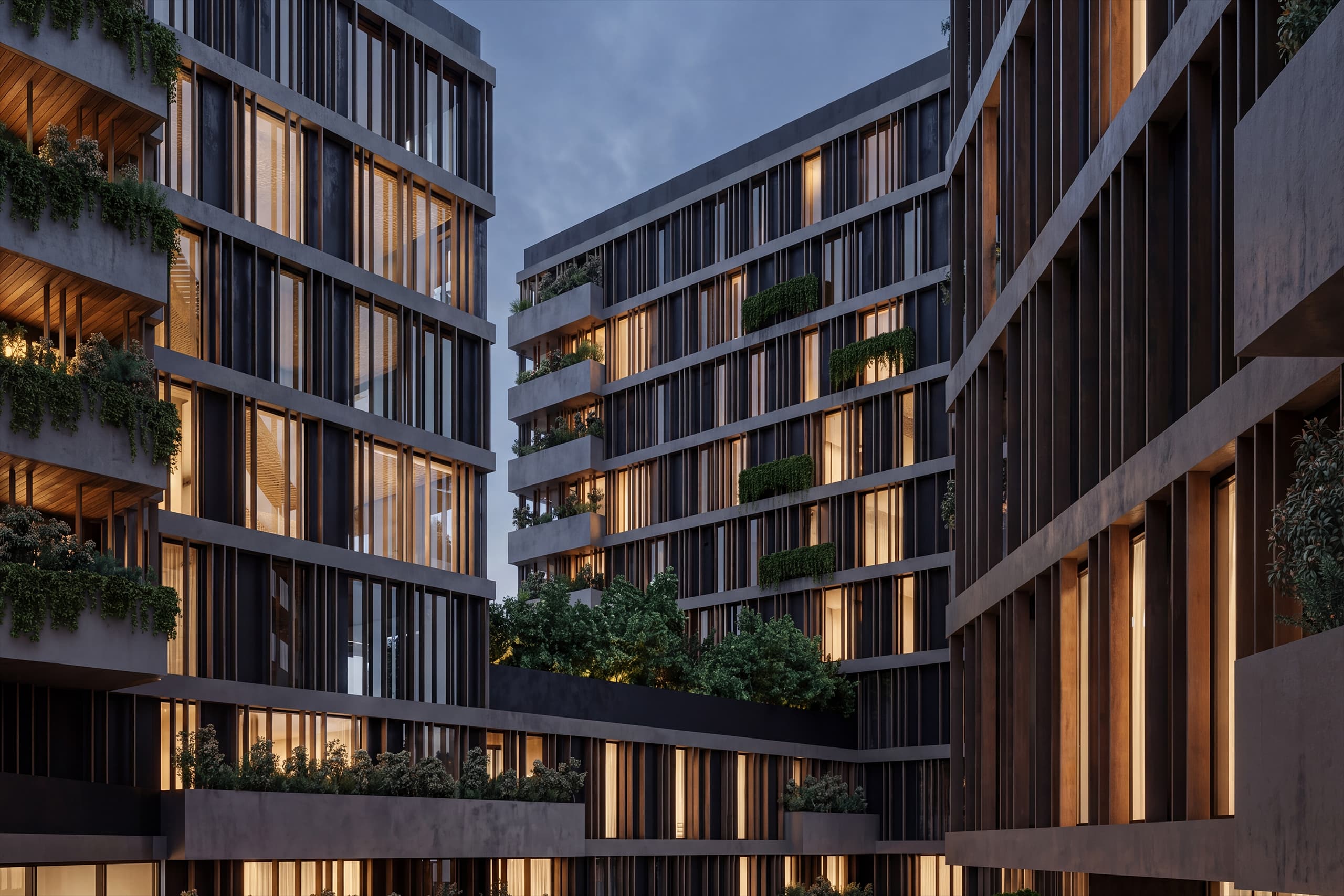
The architectural expression is defined by a clear and rational volumetric composition, articulated through horizontal lines and a rhythmic arrangement of balconies. The fragmented volumes allow for optimal daylight access and visual connections to the surroundings.
Materiality is based on a combination of light, neutral façade surfaces and warmer tones at the base and upper levels. This approach enhances the readability of the volumes while introducing a sense of tactility and human scale.
Balconies and loggias are integral elements of the living concept, providing outdoor space and an additional layer of privacy, while transparent railings contribute to the visual lightness of the façades.
Urban Context
The project is situated within a heterogeneous urban context that combines low-density residential areas with major infrastructural corridors. The new development acts as a mediator between different scales—from individual housing to larger urban blocks.
The site itself represents a former industrial zone undergoing a process of transformation into a new residential neighborhood. This shift in land use plays a key role in redefining the character of the area, moving from production-oriented functions toward a more livable, community-focused urban environment.
Special attention is given to the relationship with the railway, treated both as a source of noise and as a significant infrastructural element. Green buffer zones and strategic building placement mitigate its negative impact.
The project establishes a new network of public and green spaces that extend the existing urban fabric, contributing to the long-term transformation of the area into a high-quality and sustainable urban environment.