- TypologyResidential, Commercial
- Statusshematic design
- LocationZagreb, Croatia
- ClientPHI
- Size50,000 m²
- Year2023 -
- ScopeArchitecture, Lead Design, Project Management Support
Concept
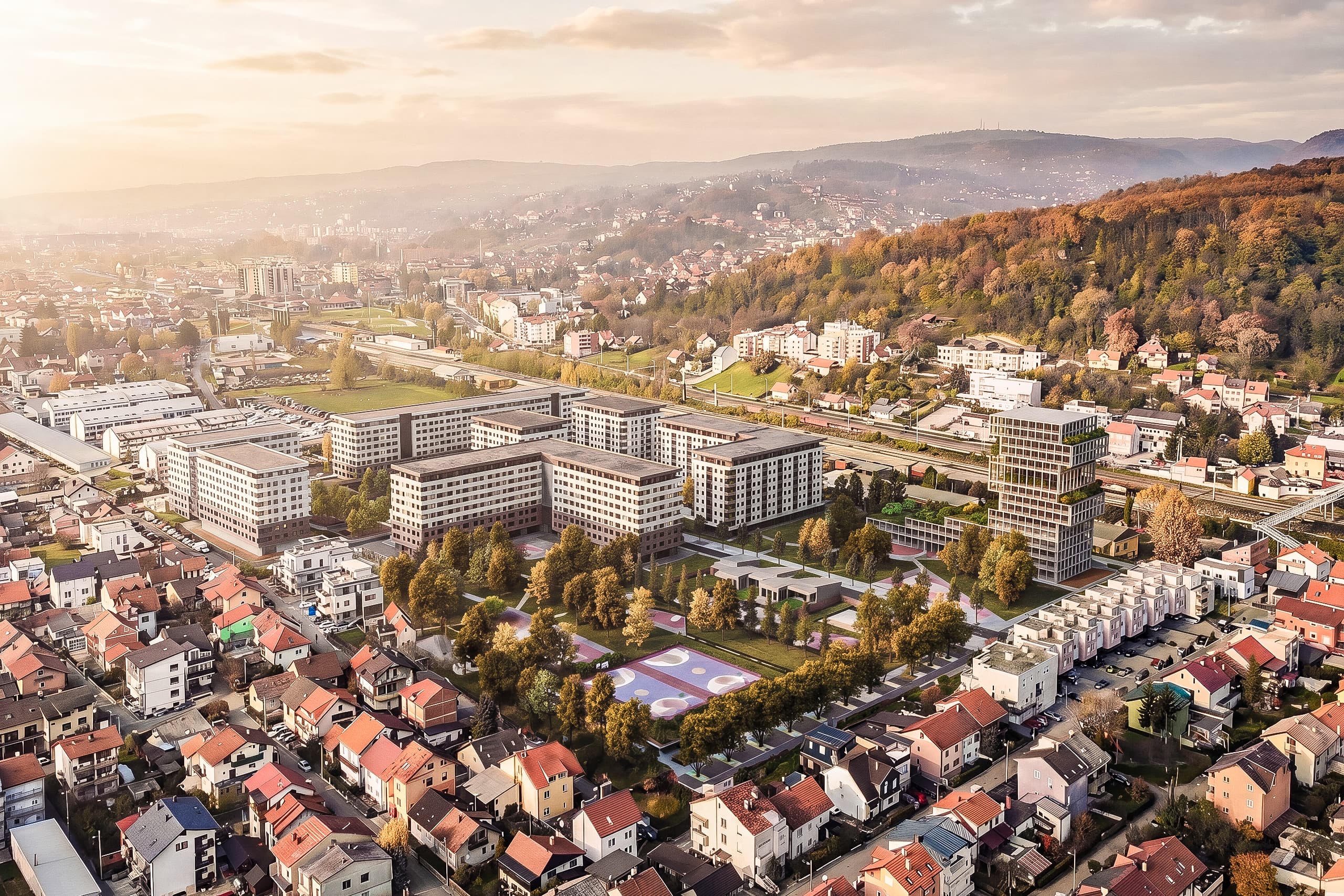
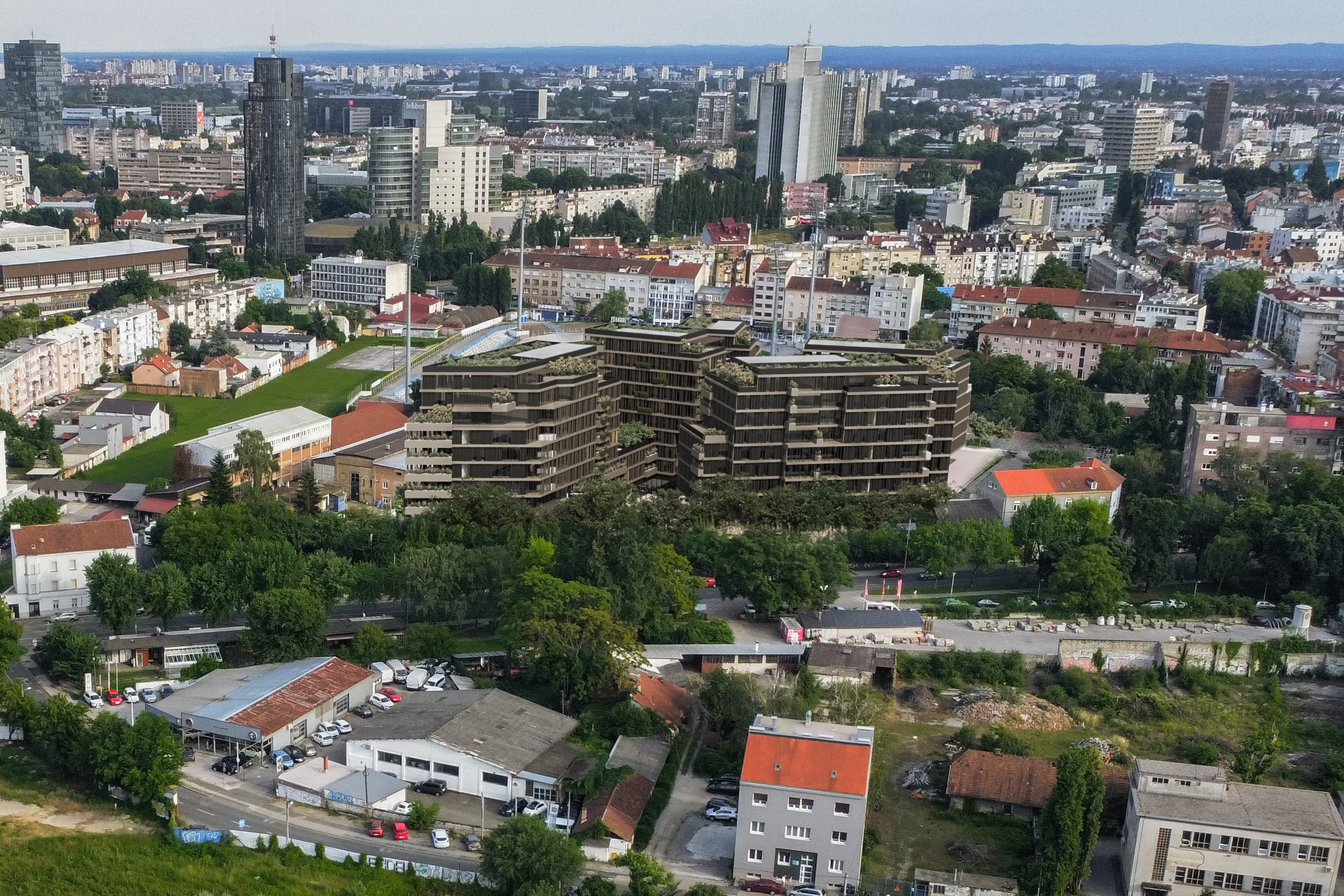
The residential-commercial complex in Zagreb, located on the site of a former silk factory behind Kranjčevićeva Stadium, redefines the urban block through a contemporary approach to mixed-use development and open space. Drawing from the industrial heritage of the site, the concept reinterprets the idea of production and structure through a rhythmic façade and a layered composition of volumes.
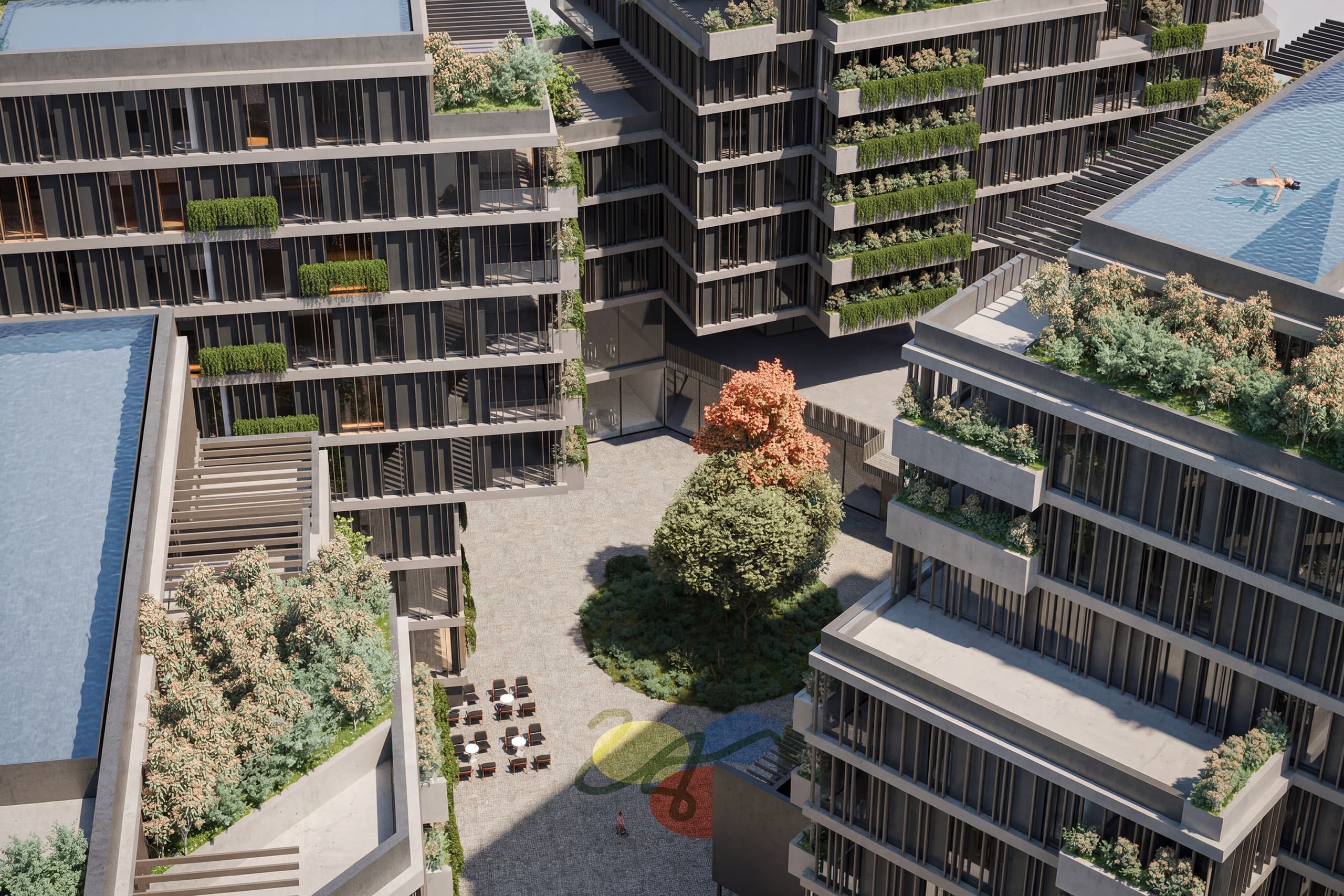
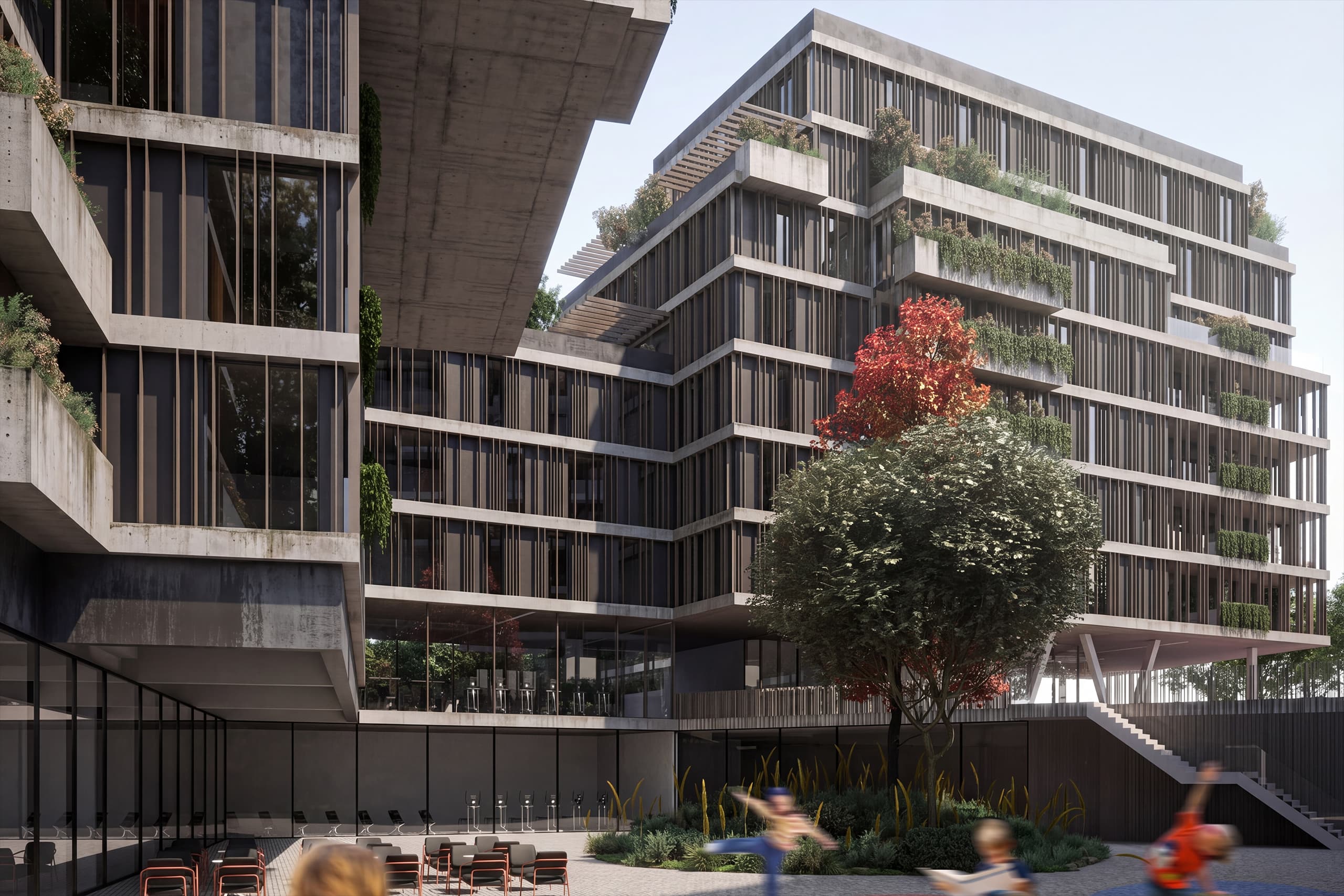
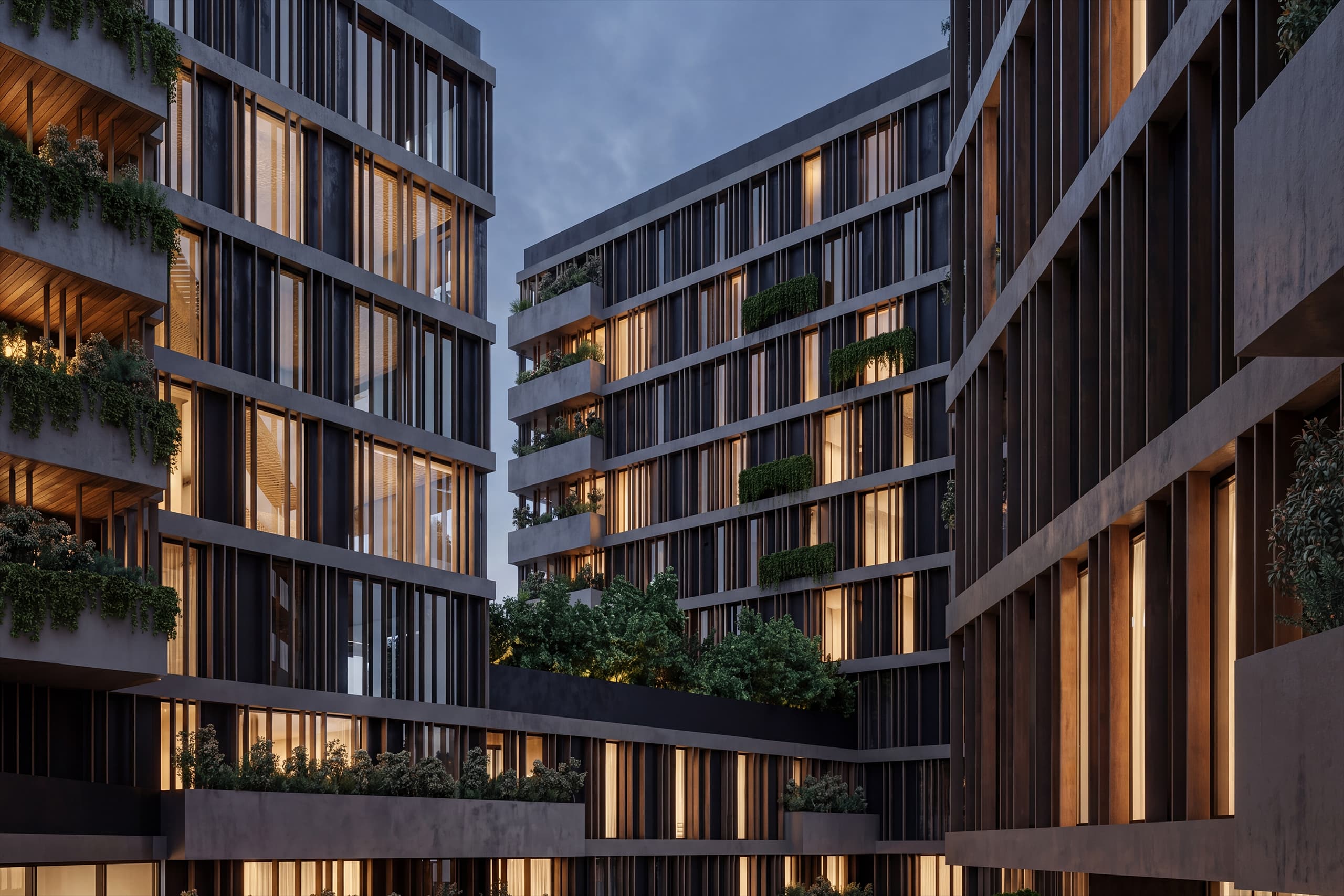
The buildings are organized as a system of interconnected lamellae, forming a sequence of semi-public and public spaces at ground level. The articulated massing allows for the interplay of light, views, and greenery, while vertical façade elements emphasize rhythm and create a dynamic play of light and shadow. Setback floors and planted terraces soften the overall volume and establish a dialogue between architecture and nature.
The project transforms a former industrial zone into a contemporary urban environment, with a focus on spatial permeability, quality of living, and the integration of green spaces.
Purpose
The complex is conceived as a mixed-use development that integrates residential living, workspaces, and everyday urban amenities. Residential units are distributed across multiple volumes of varying heights, creating spatial diversity and responding sensitively to the surrounding urban context.
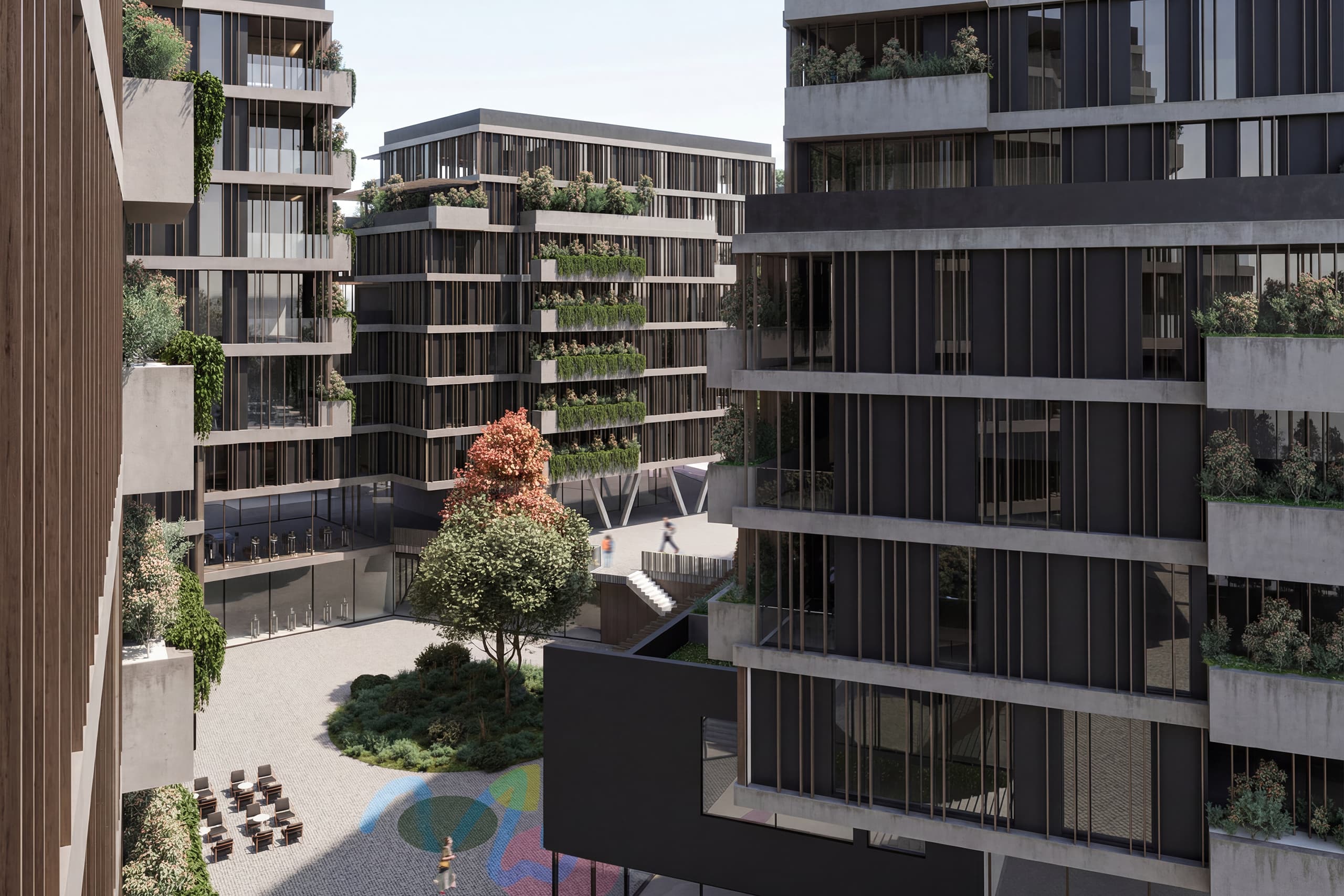
The ground floor accommodates commercial and business functions, activating the street level and contributing to a vibrant public realm. The inner courtyard is designed as a shared green space for residents, featuring landscape elements and areas for social interaction.
The project emphasizes a balance between private and public space, creating a contemporary urban block that responds to the needs of modern city living.
Spatial Strategy
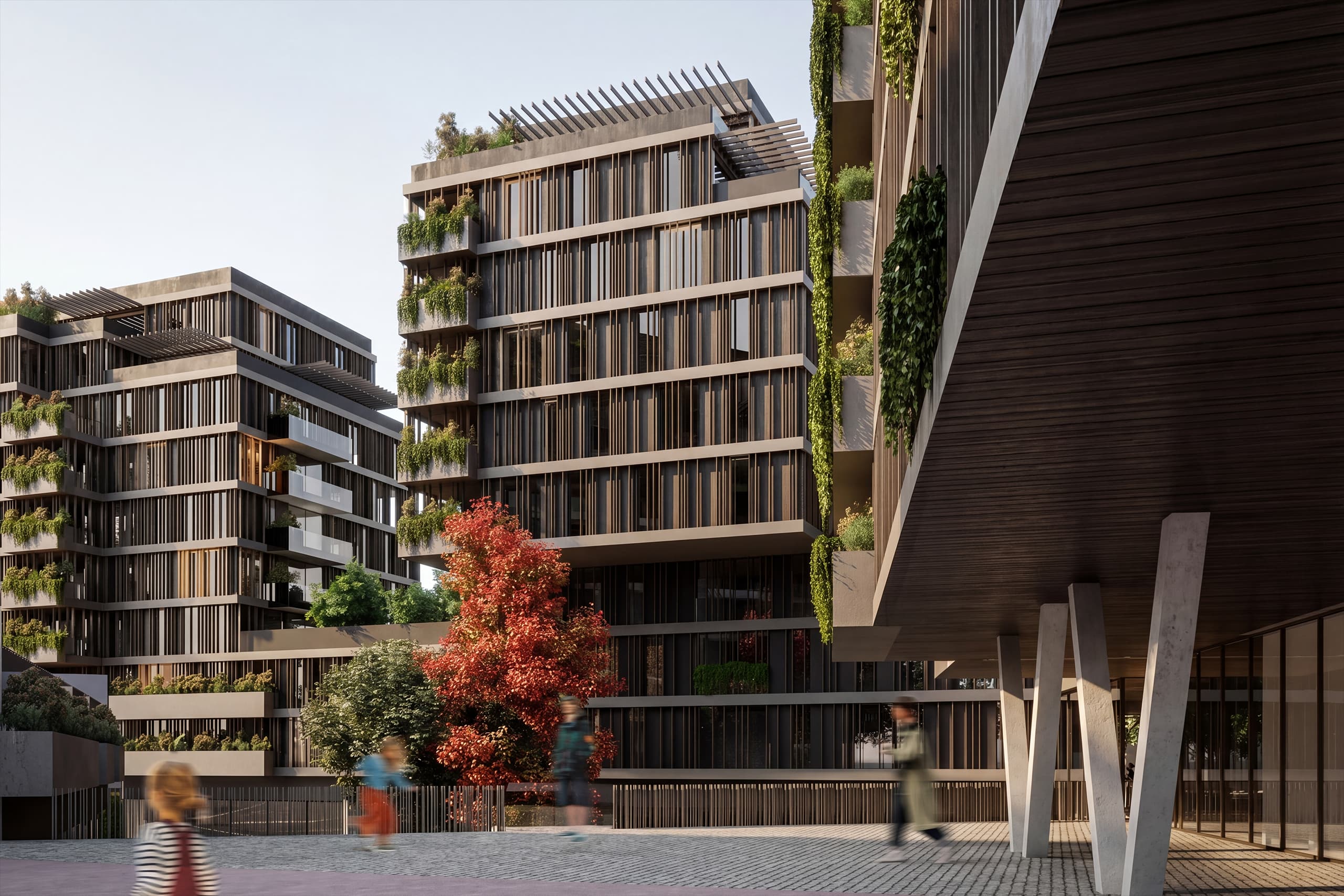
The spatial strategy articulates the block as a permeable system of volumes, dissolving its boundaries through a sequence of layered spaces. Circulation, views, and landscape are interwoven, with a central courtyard acting as the spatial anchor that organizes movement, light, and social interaction.
Architecture and Materials
The architecture emerges from a system of layered volumes and a disciplined façade rhythm, where repetition and variation define the visual identity. Materiality is expressed through a palette of robust, neutral surfaces that subtly reference the site's industrial heritage, while green elements and recessed terraces introduce softness and human scale.
Urban Context
The project is situated within a transitional urban area characterized by a mix of residential fabric, sports facilities, and former industrial sites. Positioned behind Kranjčevićeva Stadium, the development responds to its context by introducing a contemporary urban block that mediates between different scales and typologies. The design enhances connectivity, activates the ground level, and contributes to the gradual transformation of the area into a vibrant and cohesive urban environment.