- TypologyUrban Planning
- StatusArchitecture Competition
- LocationPodgorica, Crna Gora
- ClientMinistarstvo prostornog planiranja, urbanizma i državne imovine Crne Gore
- Year2023
- Size50,686 m²
- ScopeExterior design, Urban Planning, Interior Design
Concept and explanation of the solution
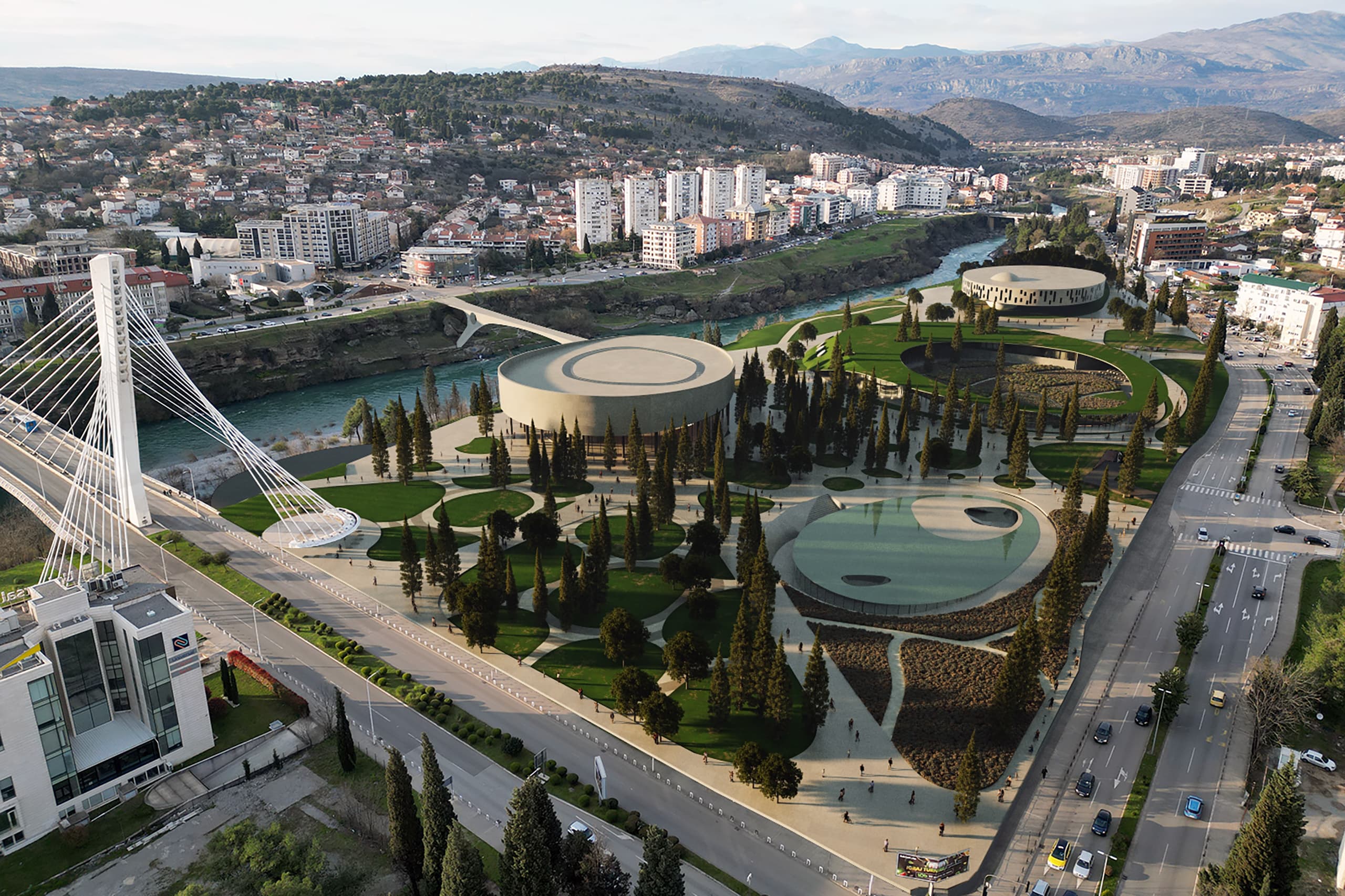
The location of the architectural design competition for the Museum of Contemporary Art, the Natural History Museum, and the Park of Culture and Art with accompanying cultural facilities is situated in the area of the former Morača barracks, occupying a central position in the capital city. It borders the Morača River on the west, Vaka Đurovića Street on the east, and Ivan Crnojević Boulevard towards the Millennium Bridge on the south.
The site consists of a competition area and a contact zone, with a total surface of approximately 81,500 m². The concept is established considering the exceptional significance of this location as a crucial developmental project aimed at enhancing the cultural development of both the city and the country. The goal is to create a representative zone that will become the cultural centre of the city and the bearer of a new visual identity of the wider urban core.
The solution encompasses a complete urban planning proposal with conceptual architectural designs for the Museum of Contemporary Art, the Natural History Museum with Botanical Garden, the House of Architecture, and the Park of Culture and Art, together with the basic volumetric concept of additional cultural facilities within the contact zone.
Urban context and strategy
Podgorica can be defined as a point of intersection of Mediterranean, Eastern Orthodox, and Ottoman cultural influences, with a strong urban potential shaped by its natural environment and existing cultural base.
The urban structure is defined by the contrast between Nova Varoš and Stara Varoš, the presence of green areas, and the Morača River, which flows through the city centre but remains insufficiently integrated into the urban fabric. The subject area, located on the eastern bank of the Morača River, is currently undeveloped and covered with remains of former military barracks, while the Millennium Bridge represents a dominant visual element.
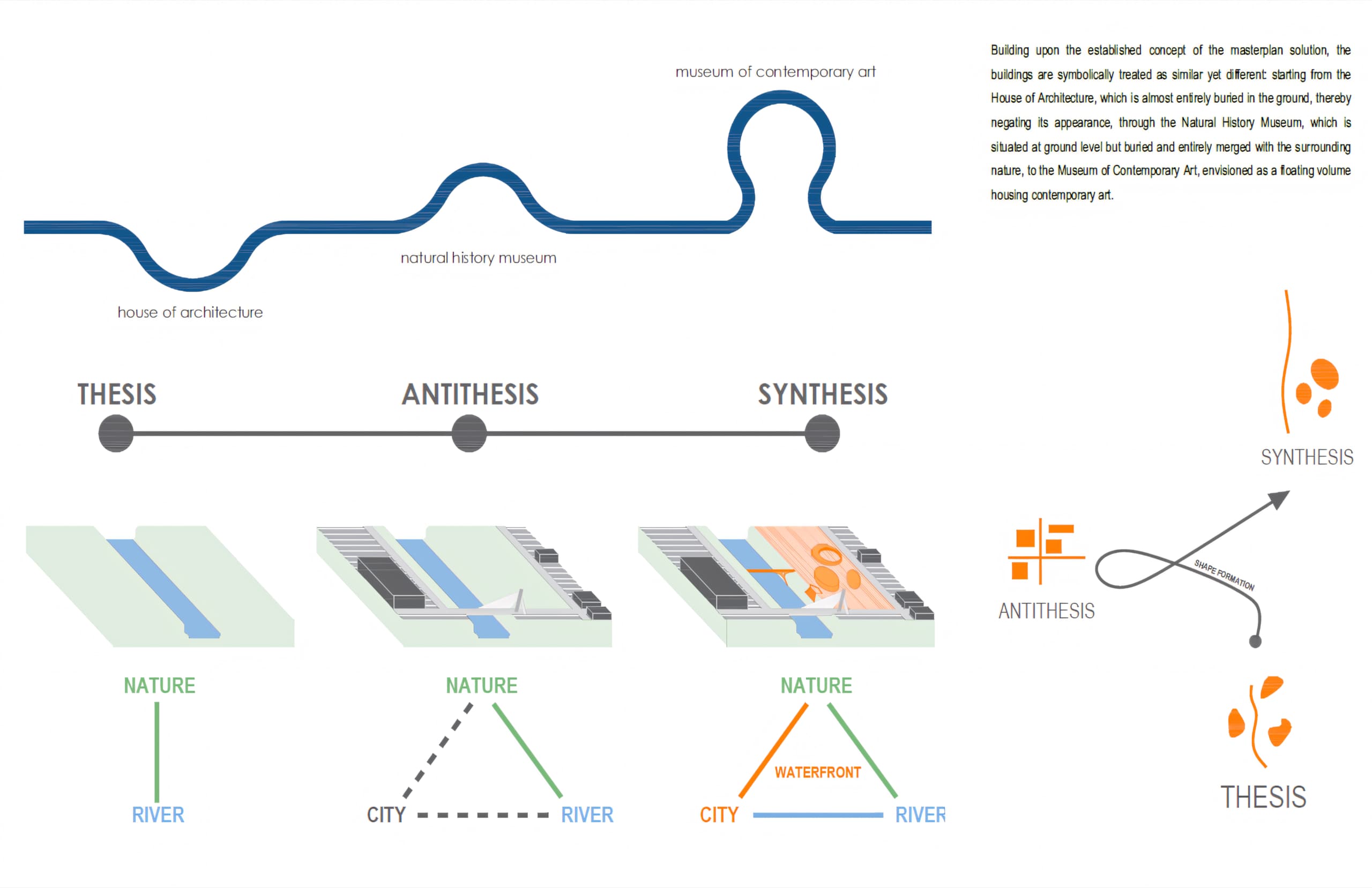
The future of the site is not defined as a simple extension of the urban network, but as a compositional point of connection between the city and the river. The proposal establishes a synthesis between the existing urban layers, forming a contemporary focal point in terms of content, volume, and atmosphere.
Masterplan concept
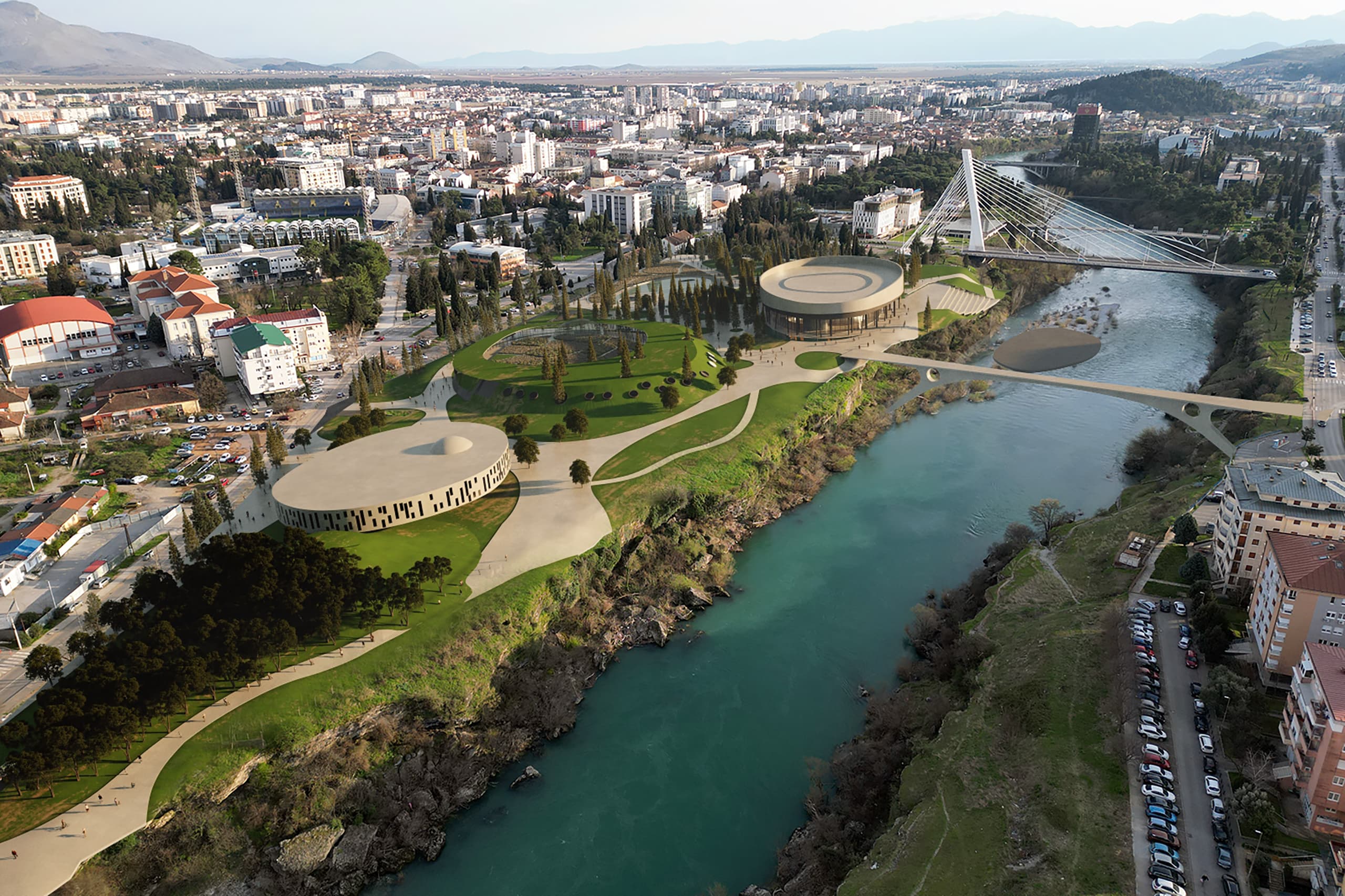
The concept is based on the positioning of three main cultural buildings — the Museum of Contemporary Art, the Natural History Museum, and the House of Architecture — forming a network of clearly defined zones within a continuous public space.
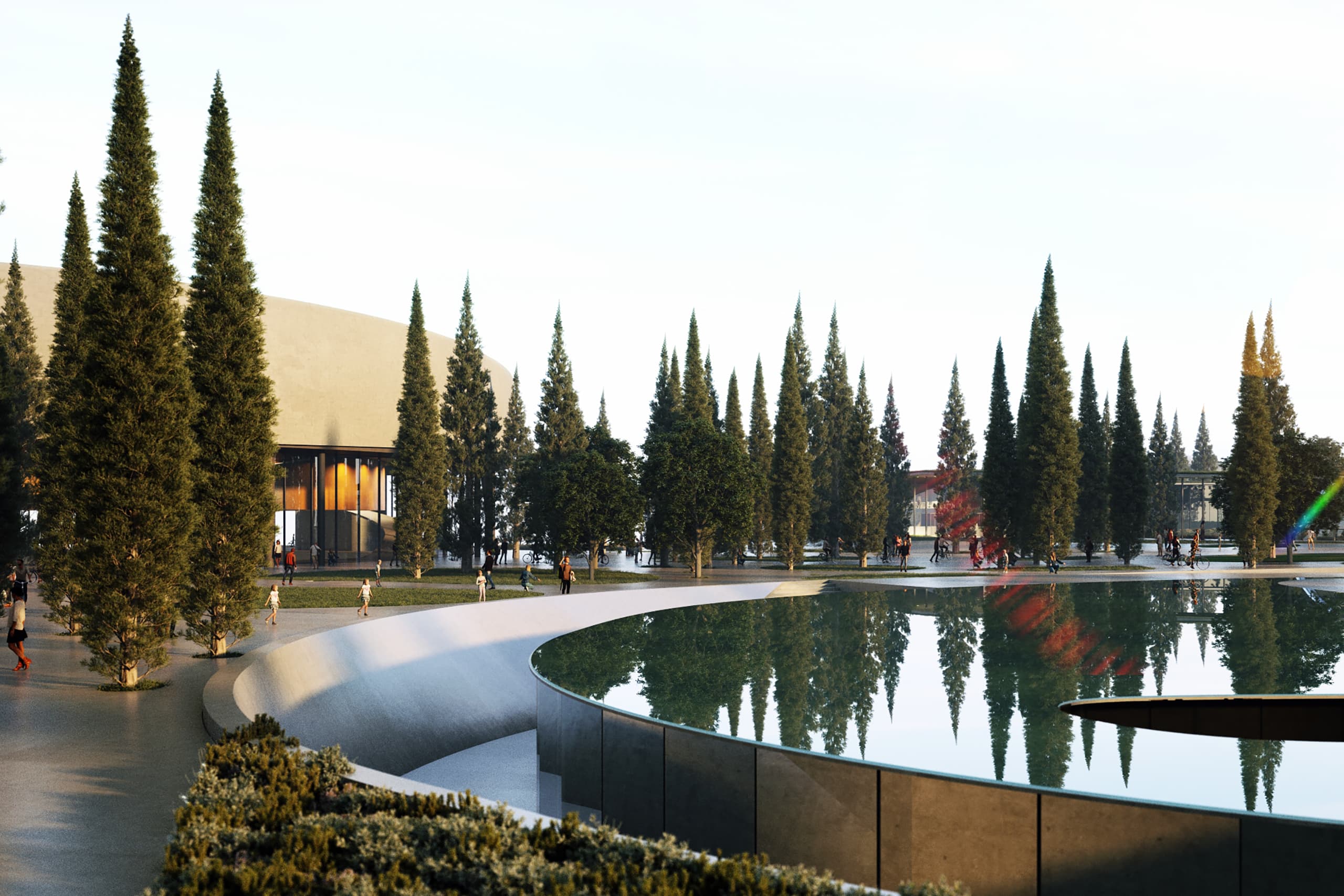
Their organic oval shapes, combined with greenery and reflective water surfaces, initiate a compositional encounter between the city and the river. The ensemble is conceived as a symbolic “nest”, representing a space that preserves and nurtures cultural and scientific content, while establishing continuous spatial and visual connections between its elements.
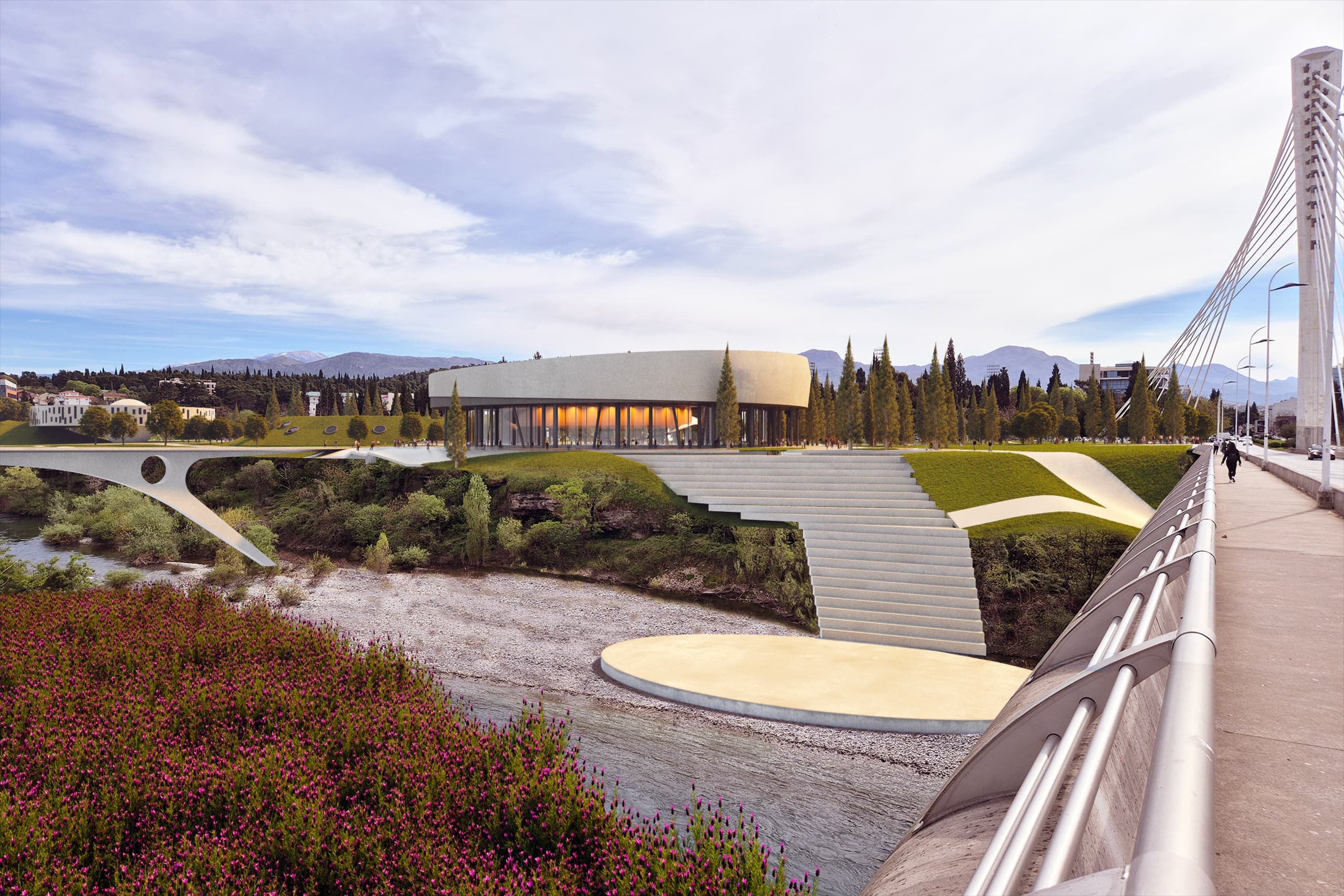
The entire area is designed as a freely accessible pedestrian zone, conceived as a place of encounter and urban passage. A new pedestrian bridge, together with river-oriented tribunes and a stage, contributes to bringing the city closer to the Morača River and activating its riverbanks.
Architectural concept
The architectural concept is based on the idea of similar yet different volumes, defined through their relationship to the terrain.
The House of Architecture is almost entirely embedded in the ground, minimizing its presence. The Natural History Museum is positioned at ground level and merged with the surrounding landscape. The Museum of Contemporary Art is conceived as a floating volume, defining the visual identity of the complex.
Museum of contemporary art
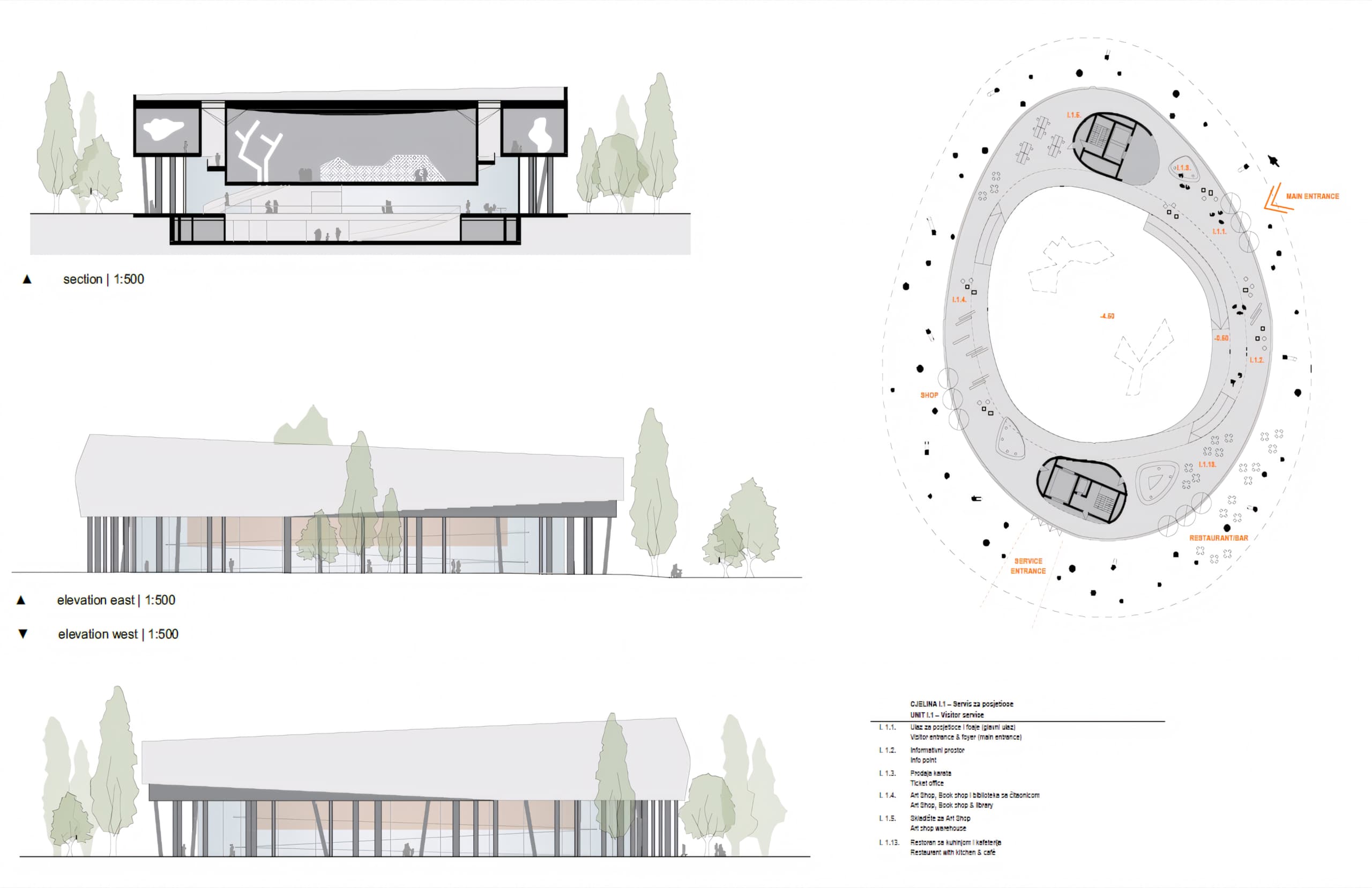
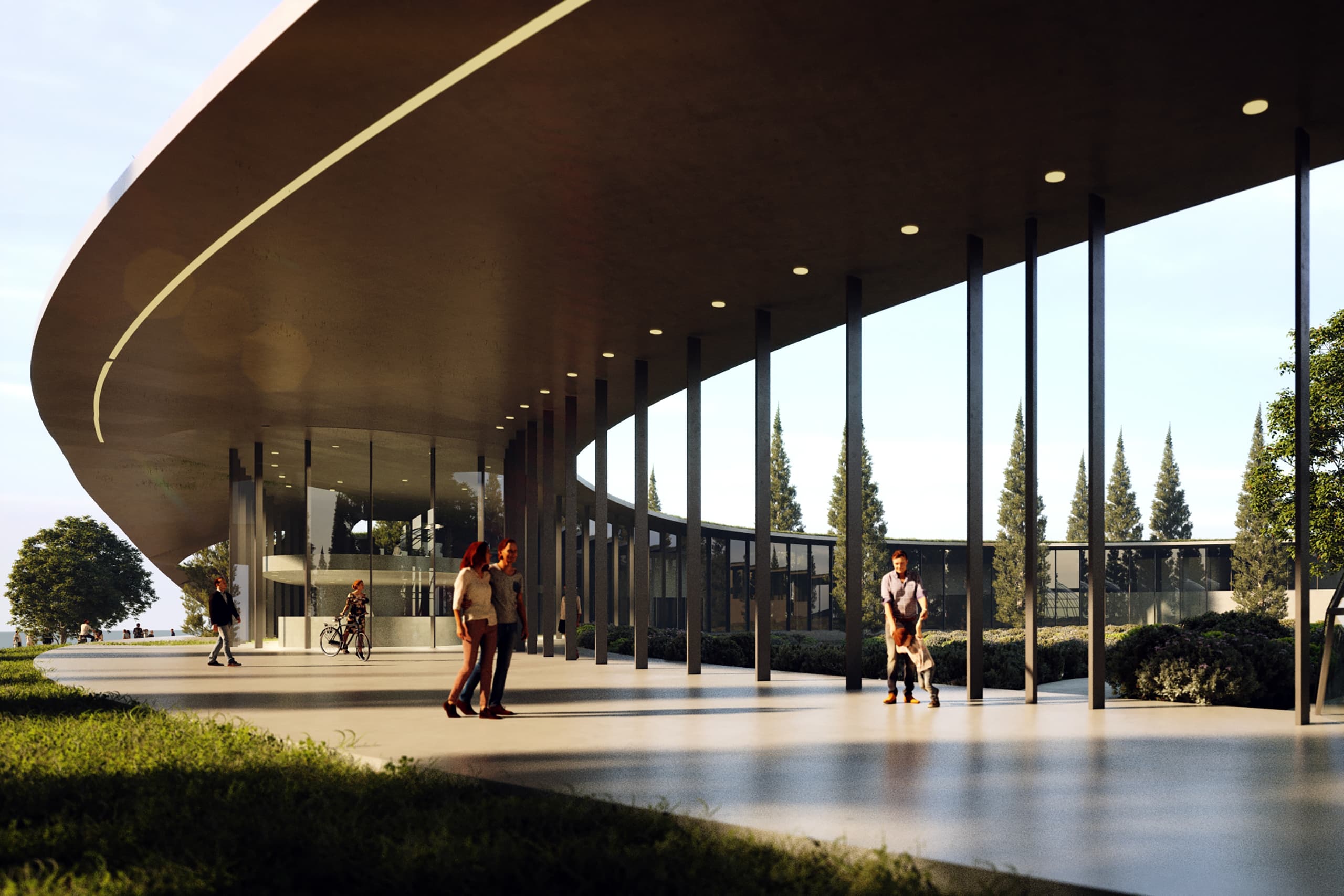
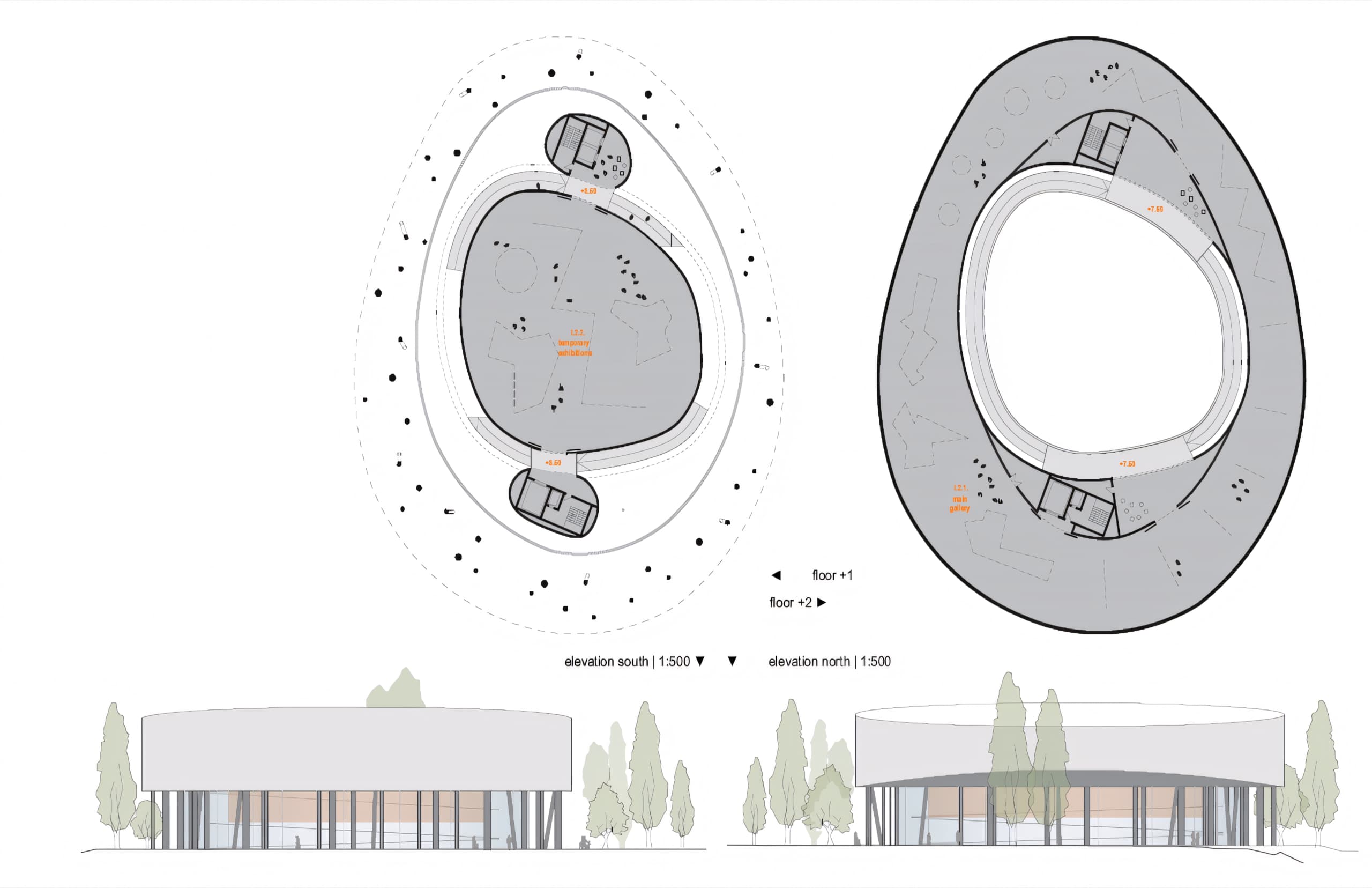
The Museum of Contemporary Art is positioned near the Millennium Bridge to achieve visual prominence and accessibility, while preserving the surrounding greenery. The building is conceived as a floating volume above a transparent ground level.
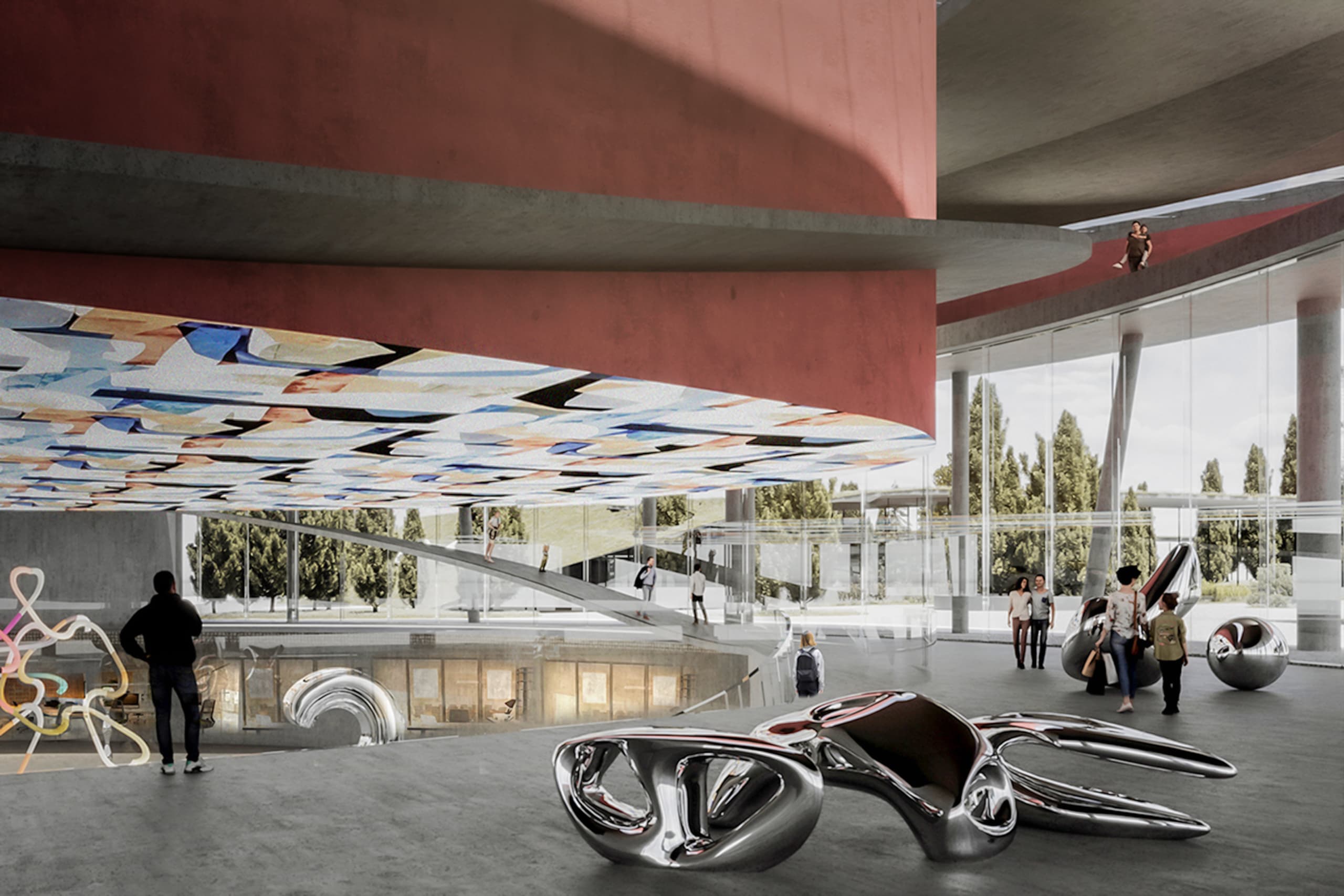
The functional organization includes exhibition spaces, educational and administrative areas, arranged through a sequence of spatial experiences connected by ramps and vertical circulation. The distinction between permanent and temporary exhibition spaces is achieved through different spatial heights and levels.
The central gallery volume is designed as an active projection surface, contributing to the visual identity of the building, especially in night conditions, emphasizing its floating character and openness towards the river.
Natural history museum and botanical garden
The Natural History Museum is conceived as a volume integrated into the terrain, resembling a landscape form, while the Botanical Garden is incorporated into its interior and exterior spaces.
The entrance space flows into the garden through transparent surfaces, forming a continuous spatial entity. Existing trees are preserved and integrated into the building, creating atrium spaces and strengthening the connection between architecture and nature.
The Botanical Garden is organized into different thematic zones, including educational and ecological areas, aimed at promoting awareness of nature and its preservation.
House of arhitecture
The House of Architecture is designed as an intimate underground space for exhibitions, workshops, and educational activities. Its reflective roof surface and minimal above-ground presence contribute to its integration into the environment.
The building functions as a space for gathering, research, and the development of architectural culture, with access provided through a pedestrian ramp and connections to the central public space.
Art and culture park
The entire area is designed as a multifunctional park with green areas, pedestrian paths, and spaces for outdoor cultural events. A central square connects all facilities and acts as the main gathering space.
The park is conceived as an open-air gallery, accommodating sculptures, installations, and artistic interventions, with particular emphasis on lighting and spatial experience in both day and night conditions.
Materialization and landscape
The structural system is based on reinforced concrete, with steel elements used for larger spans. The architectural expression is defined through the use of concrete, glass, green roofs, and reflective surfaces.
The House of Architecture is dematerialized through reflective materials, the Natural History Museum is fully integrated into a green roof landscape, and the Museum of Contemporary Art is defined by a transparent base and a dominant upper volume.
The landscape design preserves existing vegetation and introduces diverse plant species, forming layered green zones and improving ecological and spatial quality.
Ecological concept
The project is based on principles of sustainable and energy-efficient design. Renewable energy systems are introduced, including solar panels and a water-to-water heat pump using the Morača River.
Buildings are designed with compact volumes, high thermal capacity, efficient insulation, and the possibility of natural ventilation. Energy-efficient lighting and intelligent control systems are implemented.
Rainwater is collected and reused for irrigation, while sanitary systems are designed to reduce water consumption.