Technical Details
- TypologyCommercial, Mixed-Use, Public Space
- StatusCompleted
- LocationACI marinas, Croatian Coast
- Year2014
- Size-
- ScopeArchitecture, Interior Design, Exterior Design, Urban Planning
Introduction
As part of the unification and modernization of the ACI marina network, PULSAR Arhitektura d.o.o. from Zagreb played a key role in implementing a new visual identity across selected marina locations along the Adriatic coast. Through the development of architectural concepts, interior design, signage systems, urban furniture and landscape strategies, PULSAR transformed the marinas into a recognizable and coherent spatial system.
The aim of the project was to create a contemporary marina environment that combines functionality, Mediterranean atmosphere and nautical heritage into a unified spatial experience. Rather than relying on complete reconstruction, the concept introduced a flexible system of interventions that could be implemented gradually and adapted to different locations with rational investments and simple maintenance.
Special emphasis was placed on creating a recognizable “ACI feeling” through the use of materials, graphics, architectural elements and integrated public spaces. Nautical references, Mediterranean textures and contemporary spatial solutions were combined into a cohesive architectural language connecting interiors, exteriors, landscape and signage.
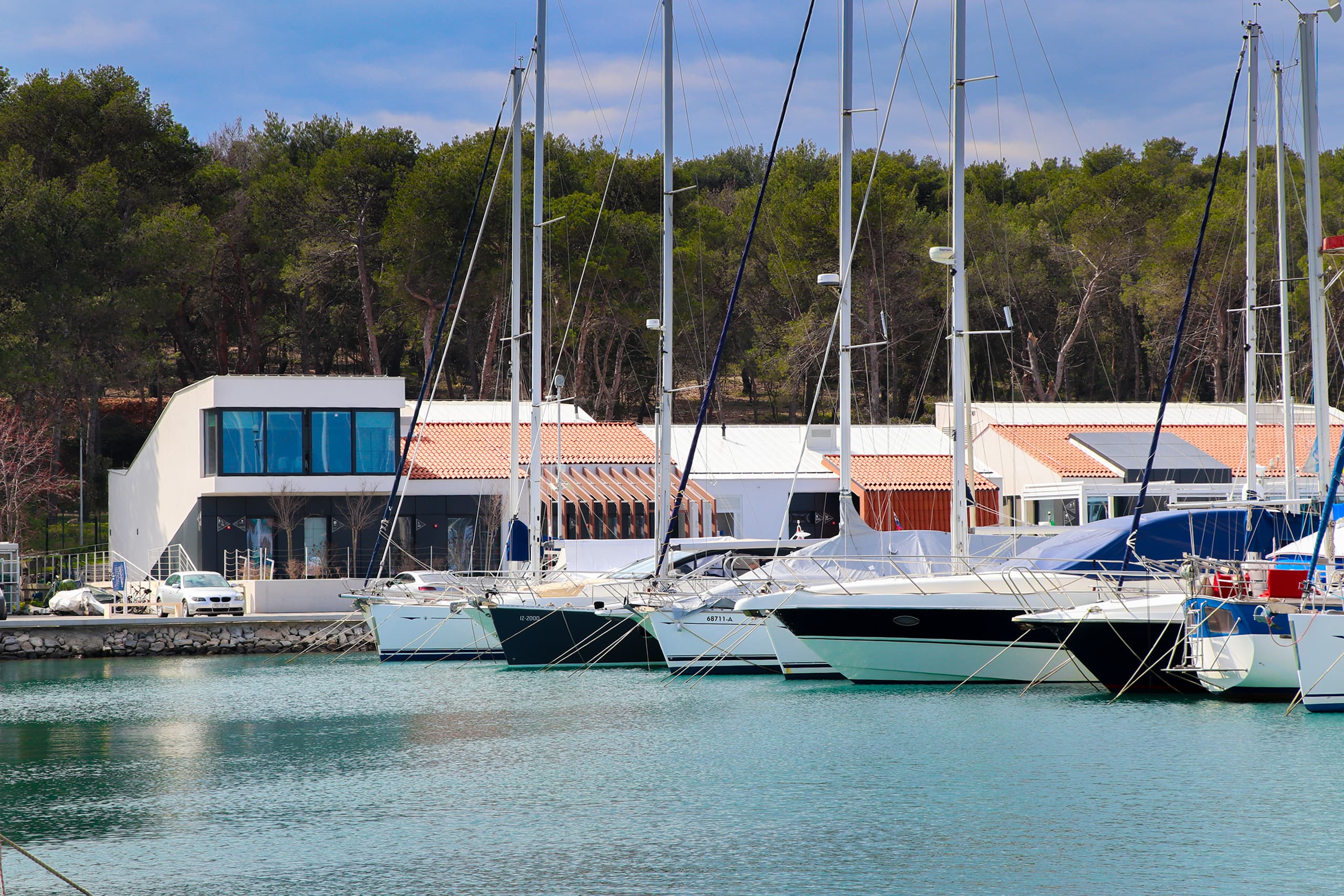
The first marina realized according to the new concept was ACI Marina Pomer, which became the benchmark project for the future development of the ACI marina system.
Existing conditions
The analysis of existing marina conditions revealed an incoherent architectural language, inconsistent use of materials and colors, fragmented interior design, and poorly organized functional zones. Many locations lacked additional amenities and spatial quality despite their attractive waterfront positions.
Due to the high costs of complete reconstruction, the project focused on creating a system of adaptable interventions capable of transforming existing spaces while maximizing the use of current infrastructure.
Basic design principles
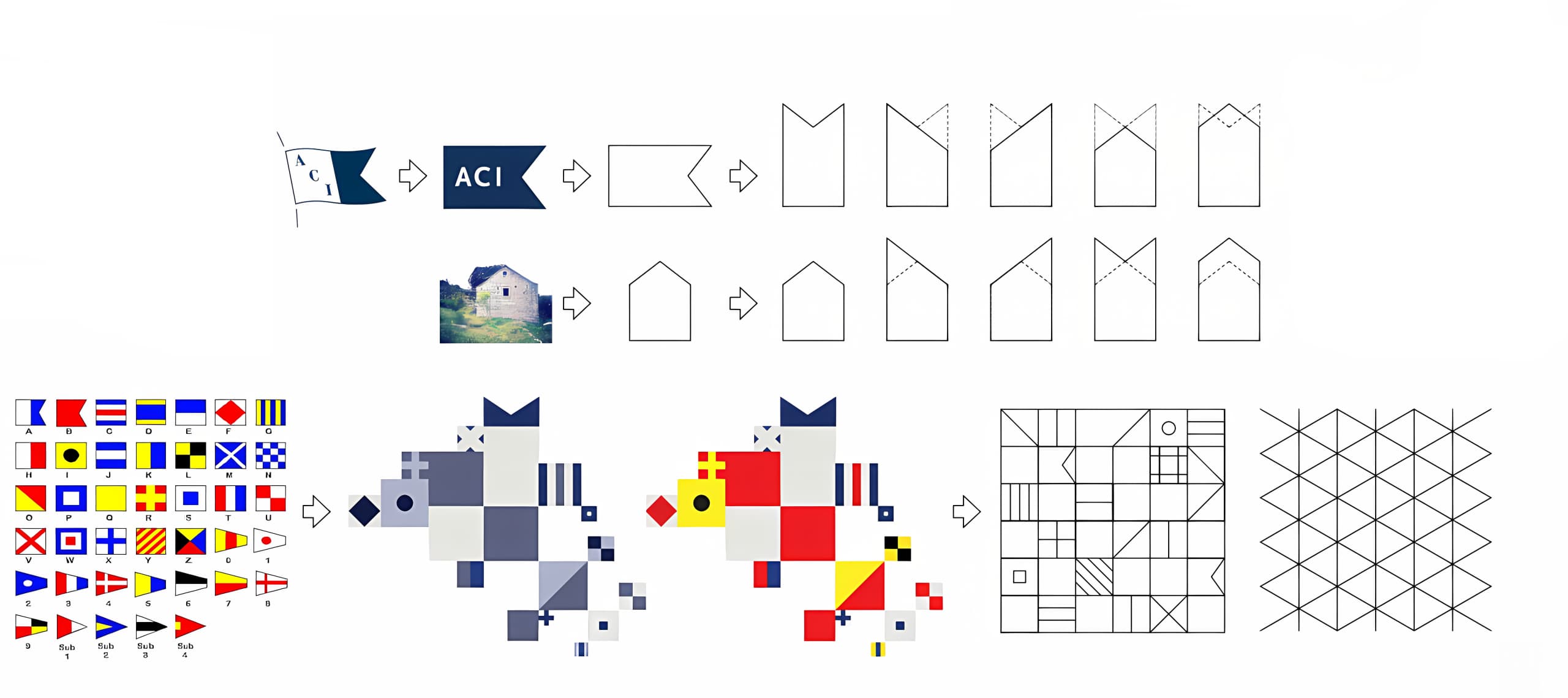
The project strategy was based on creating a recognizable visual identity through the implementation of an additional architectural “curing layer” applied over the existing marina structures.
Modular and adaptable design elements were developed to ensure flexibility, cost efficiency, durability and ease of maintenance. Particular emphasis was placed on multifunctionality, combining several functions within single architectural elements in order to reduce costs and strengthen visual clarity from both land and sea perspectives.
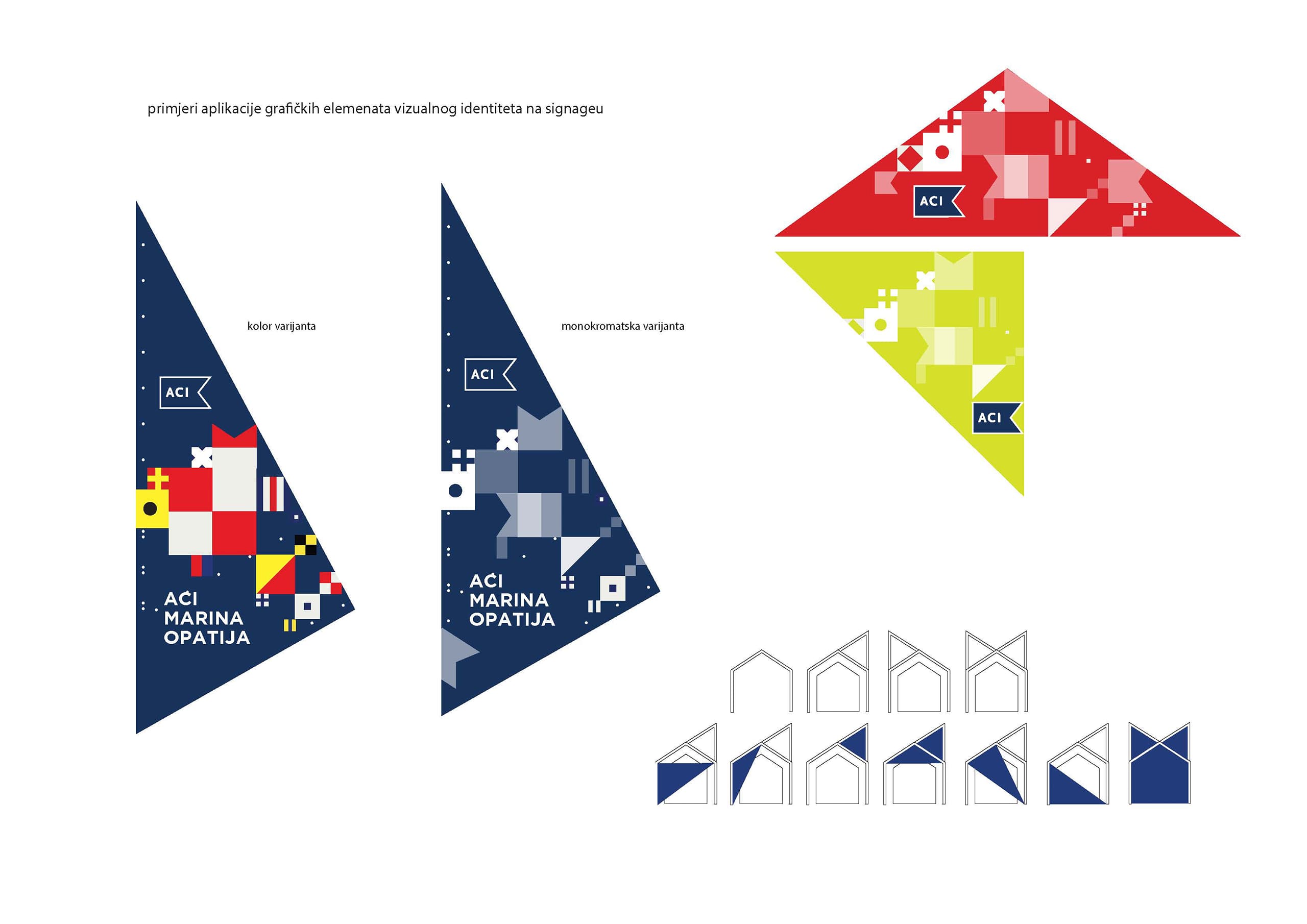
The visual language was derived from the ACI logo, Mediterranean identity and universal nautical motifs.
Interior design guidelines
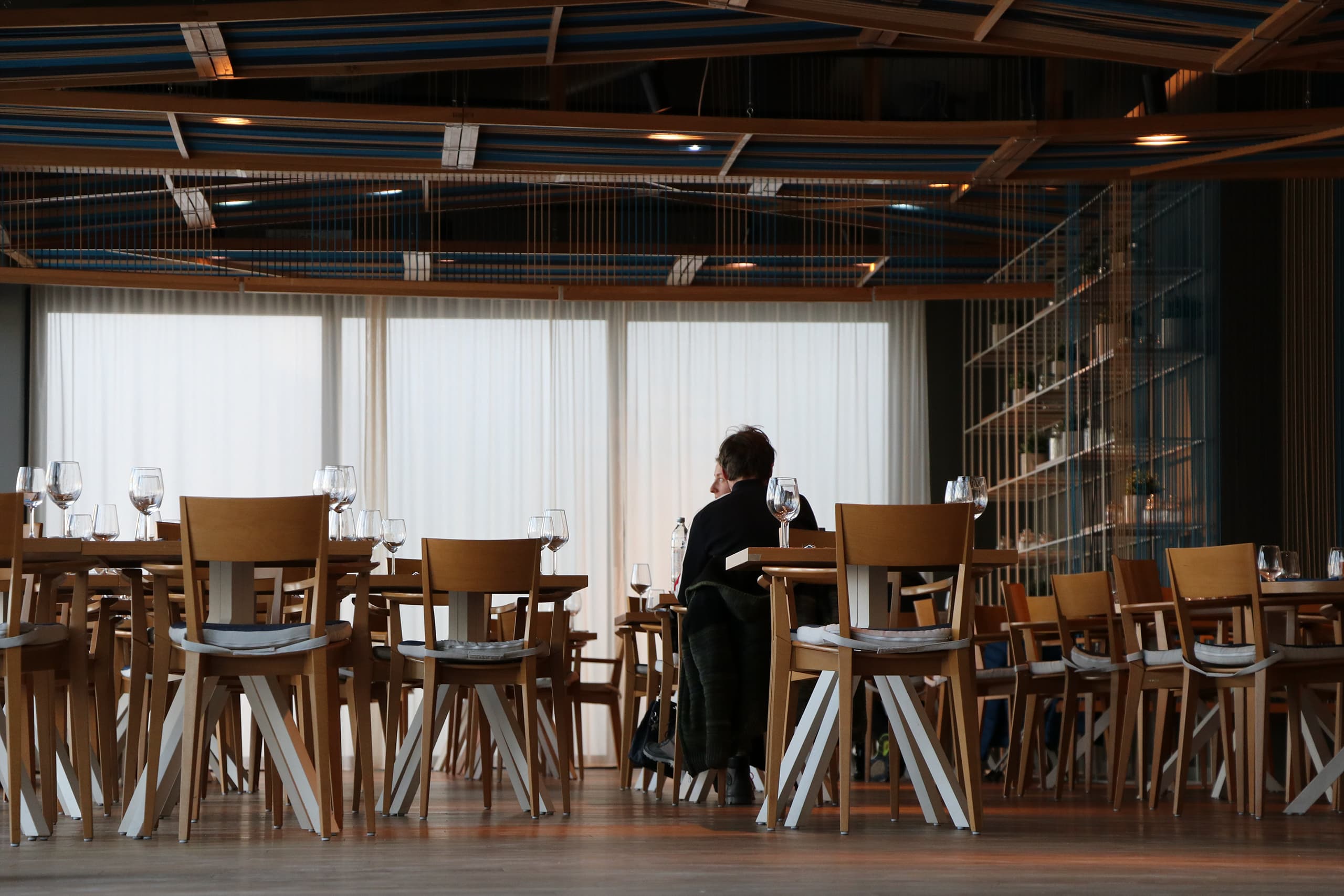
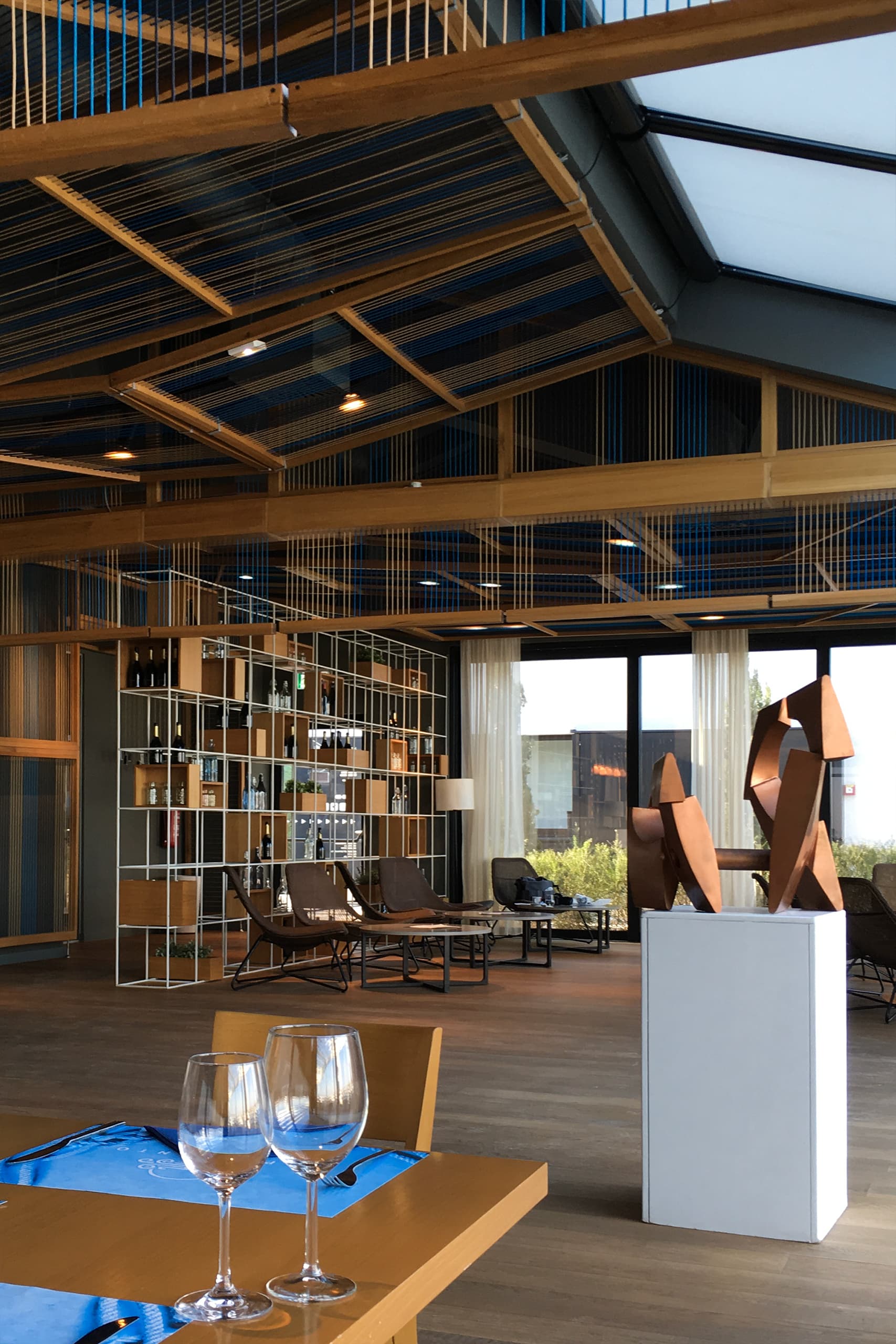
The interior design concept is based on the reinterpretation of characteristic nautical elements through a contemporary architectural language. Wooden decking textures, white surfaces, ropes, sail references and nautical details were integrated into the new visual identity, creating an atmosphere of elegance, relaxation and understated luxury.
The graphic identity draws inspiration from the ACI logo, nautical signal flags and Mediterranean visual culture. Warm and neutral materials, natural textures and carefully positioned accent elements define the interiors, while Croatian product design was incorporated through selected furniture pieces and custom-made elements.
Sanitary areas were designed using white ceramic tiles arranged in distinctive graphic compositions, combined with durable stainless steel sanitary equipment to ensure longevity and easy maintenance.
The exterior areas were conceived as a direct extension of the interiors, creating a unified waterfront identity throughout the marina.
Concept as the primary system of intervention
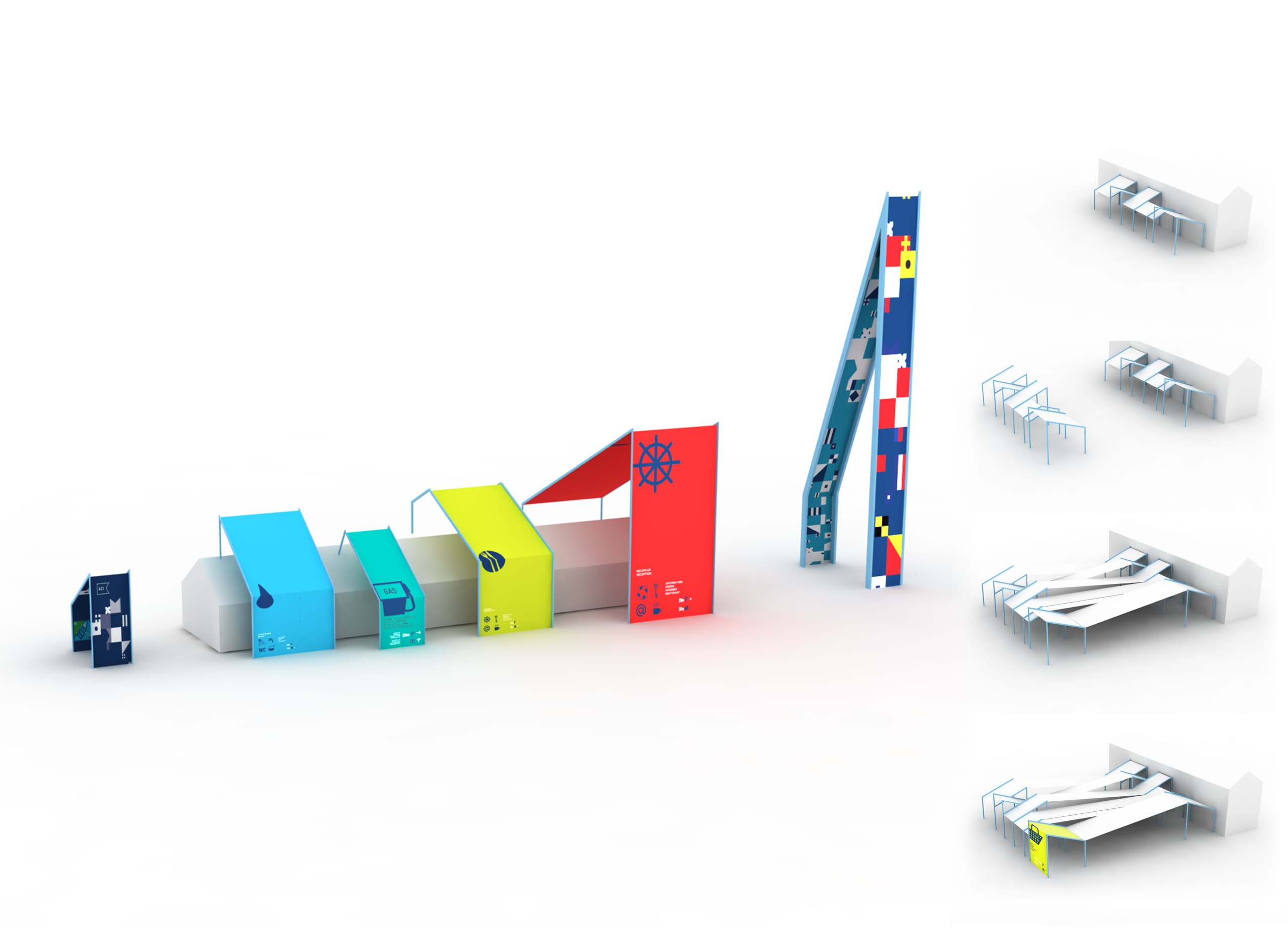
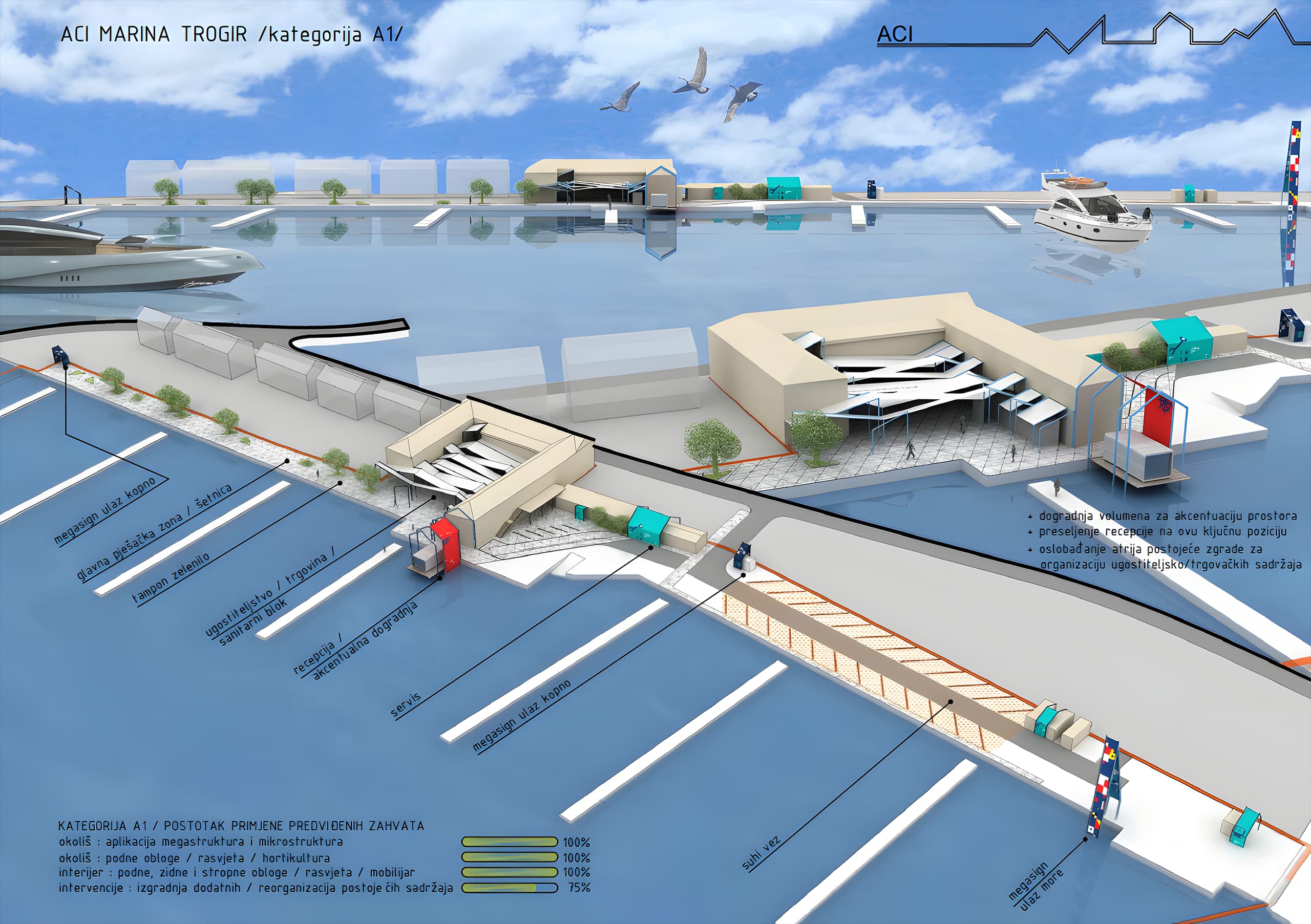
The concept is based on a hierarchy of interventions including megastructures, microstructures, landscape design and targeted architectural replacements.
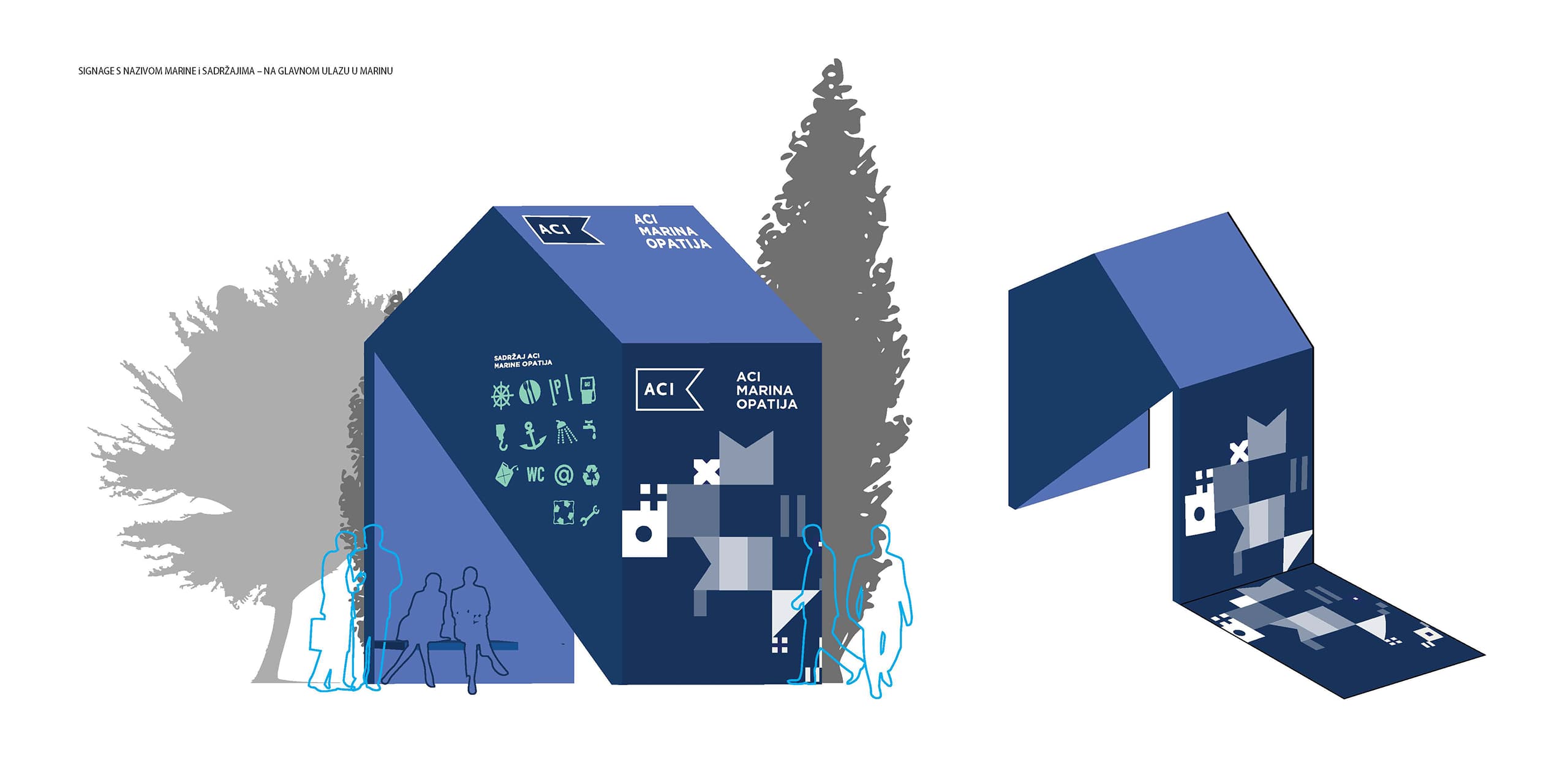
Megastructures serve as dominant spatial elements defining the new skyline and visual identity of the marinas, while also functioning as carriers of primary signage and orientation systems.
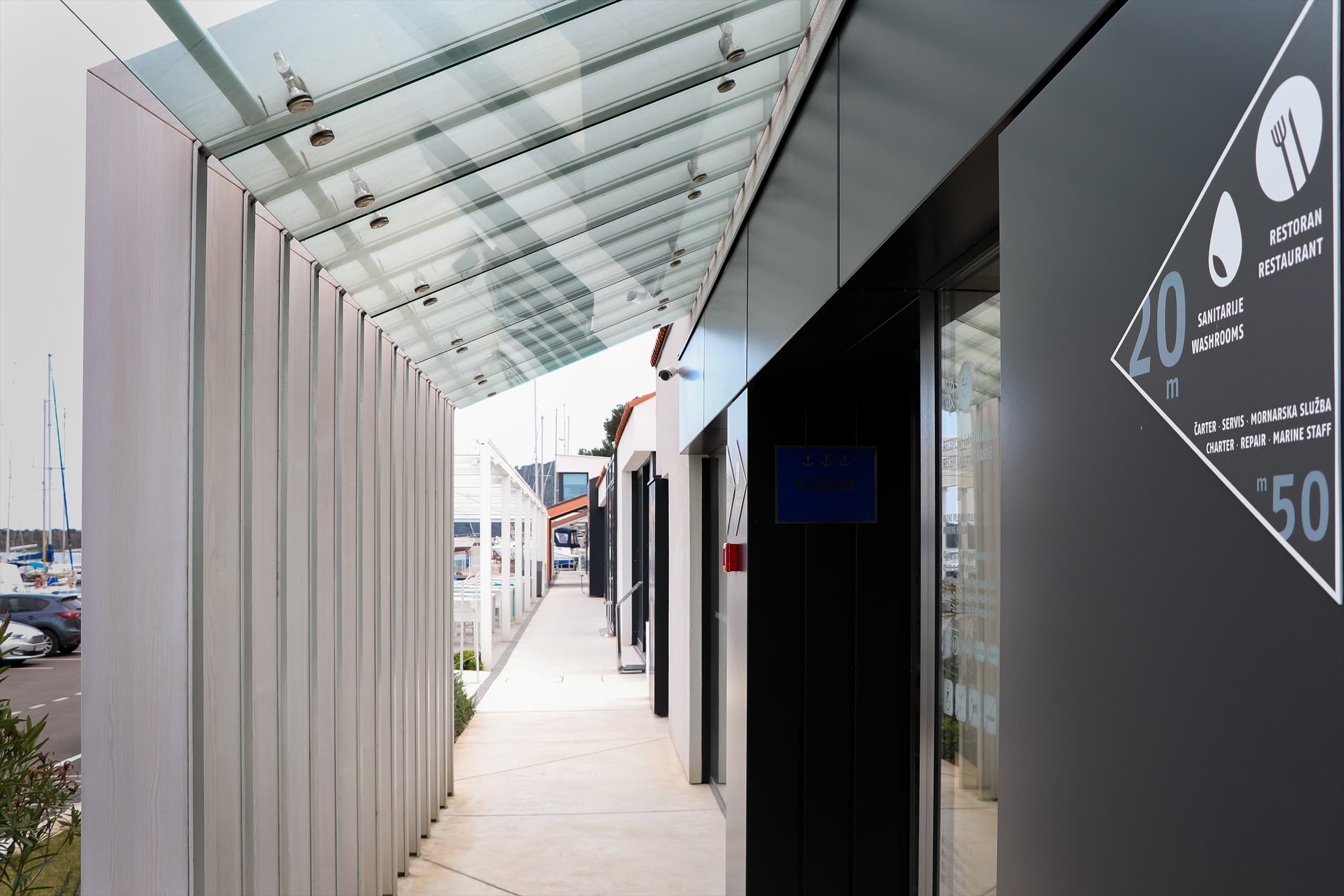
Microstructures replace existing uncoordinated canopies, pergolas and awnings, creating a new spatial layer in combination with Mediterranean vegetation. Ground surfaces were designed using custom-made paving systems that also function as wayfinding elements and integrate urban furniture into a cohesive spatial language.
In selected locations, new buildings and additional facilities were introduced in order to improve functionality and elevate the overall service level of the marinas.
Reception interior as the representative space od the marina
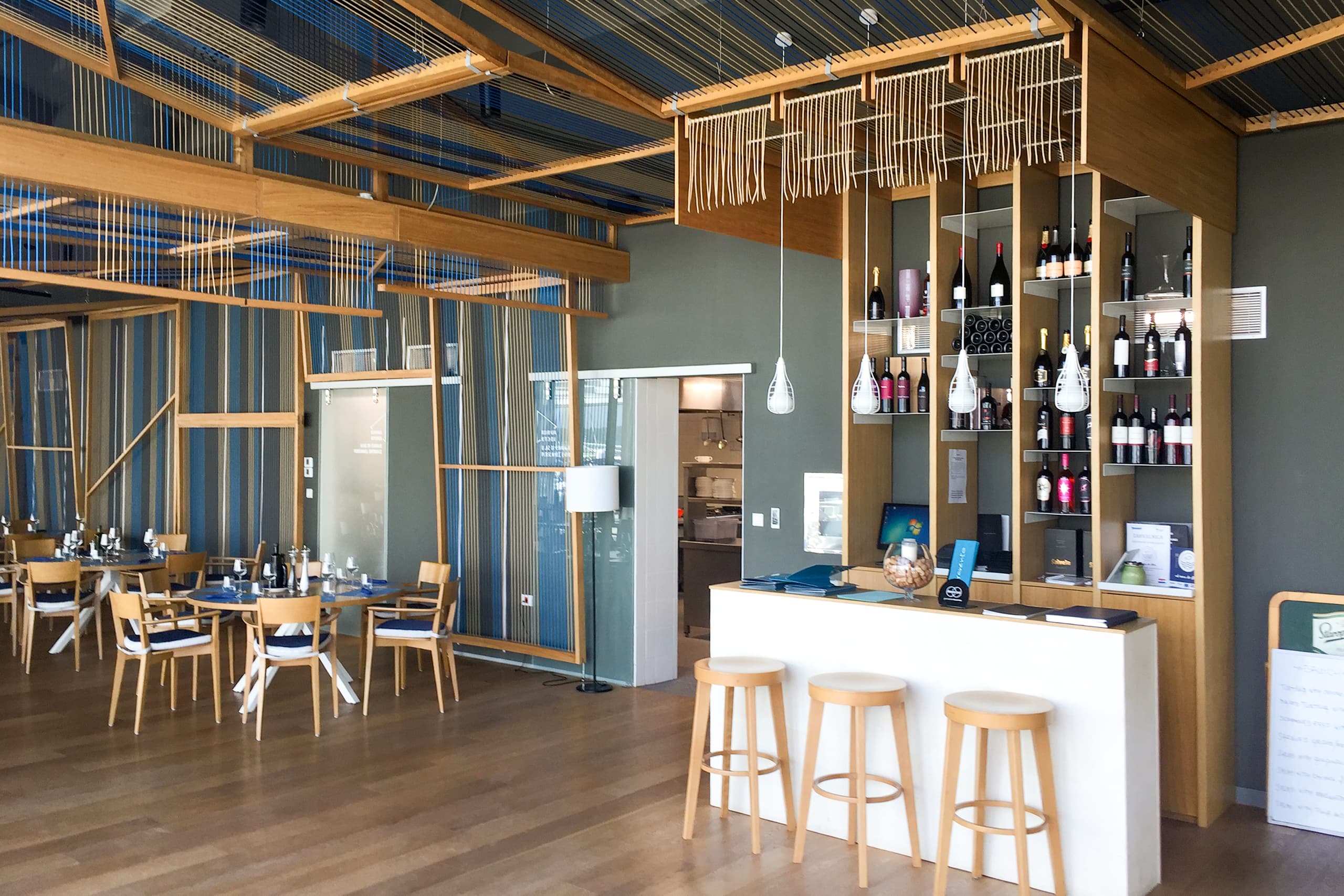
The marina reception was conceived as the central representative space embodying the ACI identity. Through custom-designed shelving systems, display elements, wall graphics and integrated furniture, the reception interiors reinterpret nautical themes in a contemporary way.
Graphics inspired by nautical flags and the recognizable ACI color palette were consistently applied across different marina locations, ensuring a unified visual identity throughout the system. Reception desks were designed as abstracted boat forms, further reinforcing the connection to maritime culture.
Natural materials, wood textures and neutral tones create a warm and welcoming atmosphere, while selected accent colors define specific spatial zones.
Signage of piers, pontons and baths
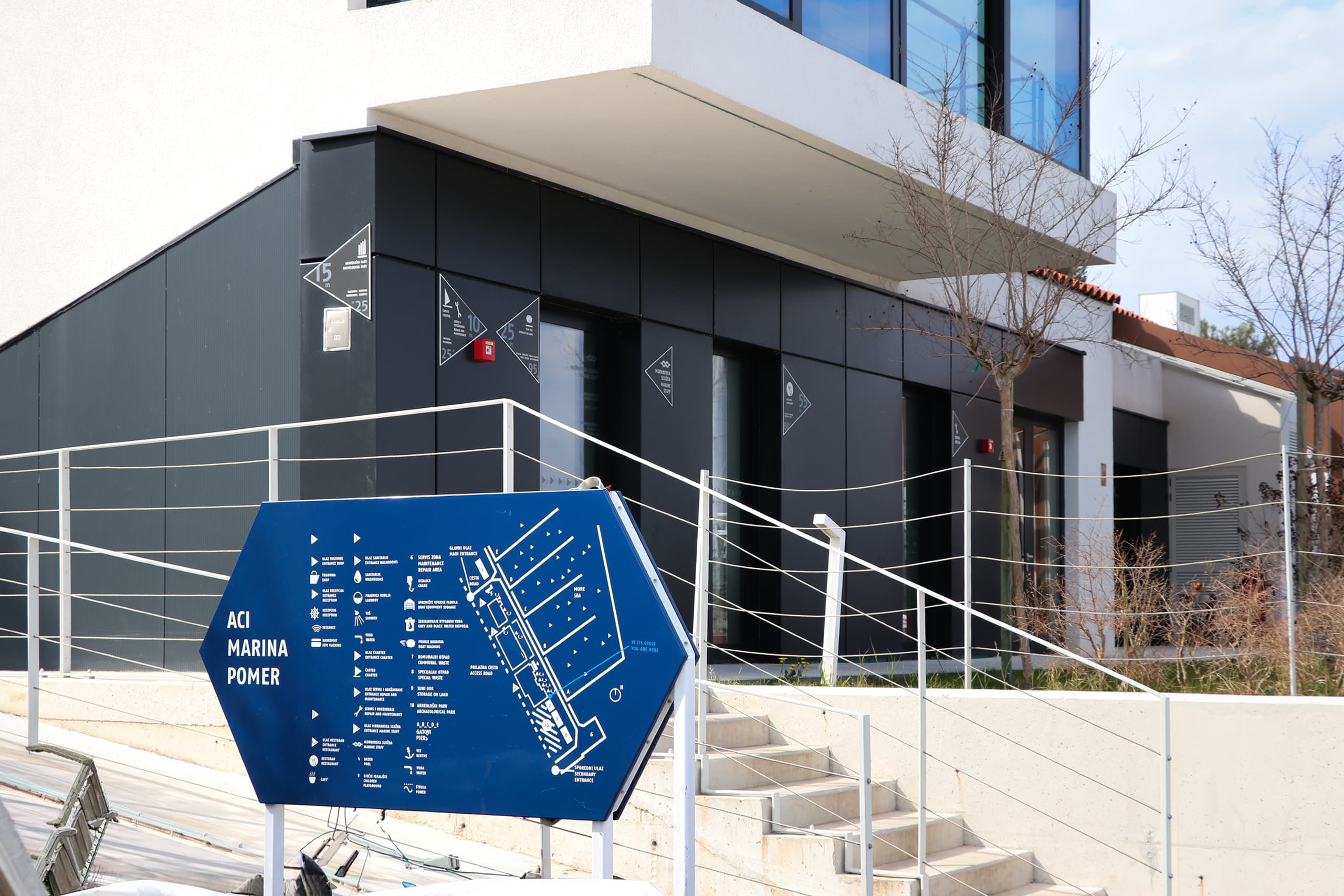
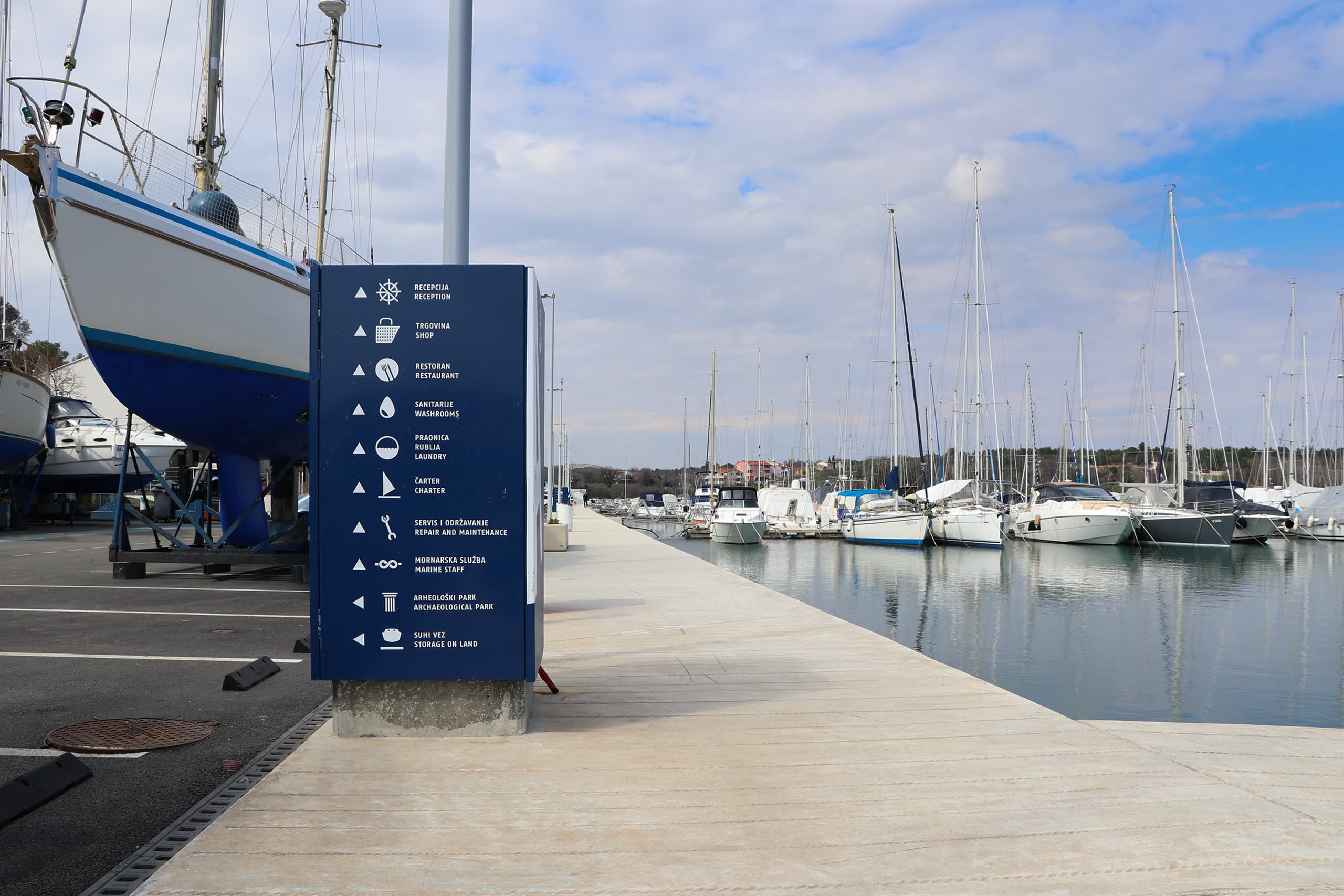
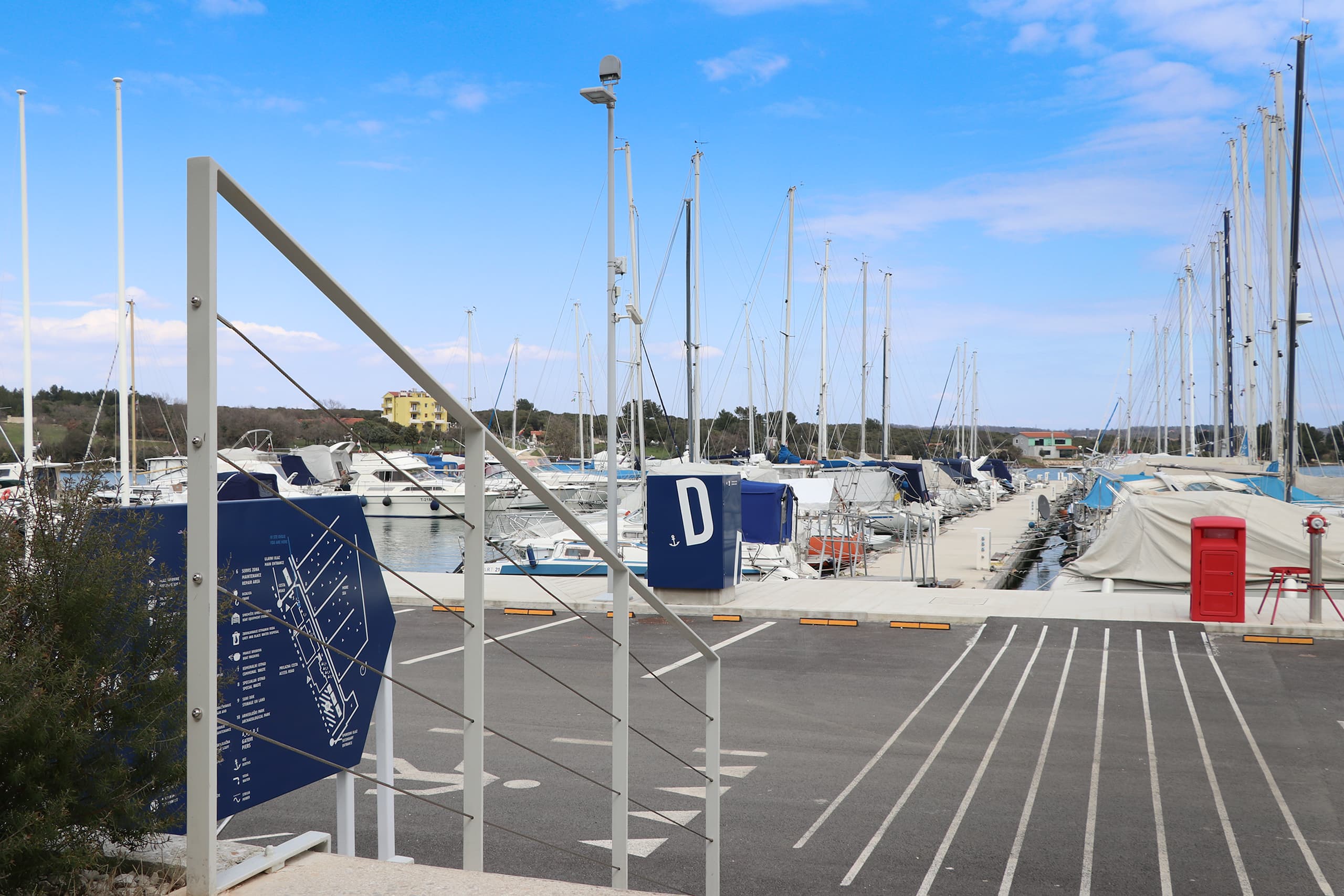
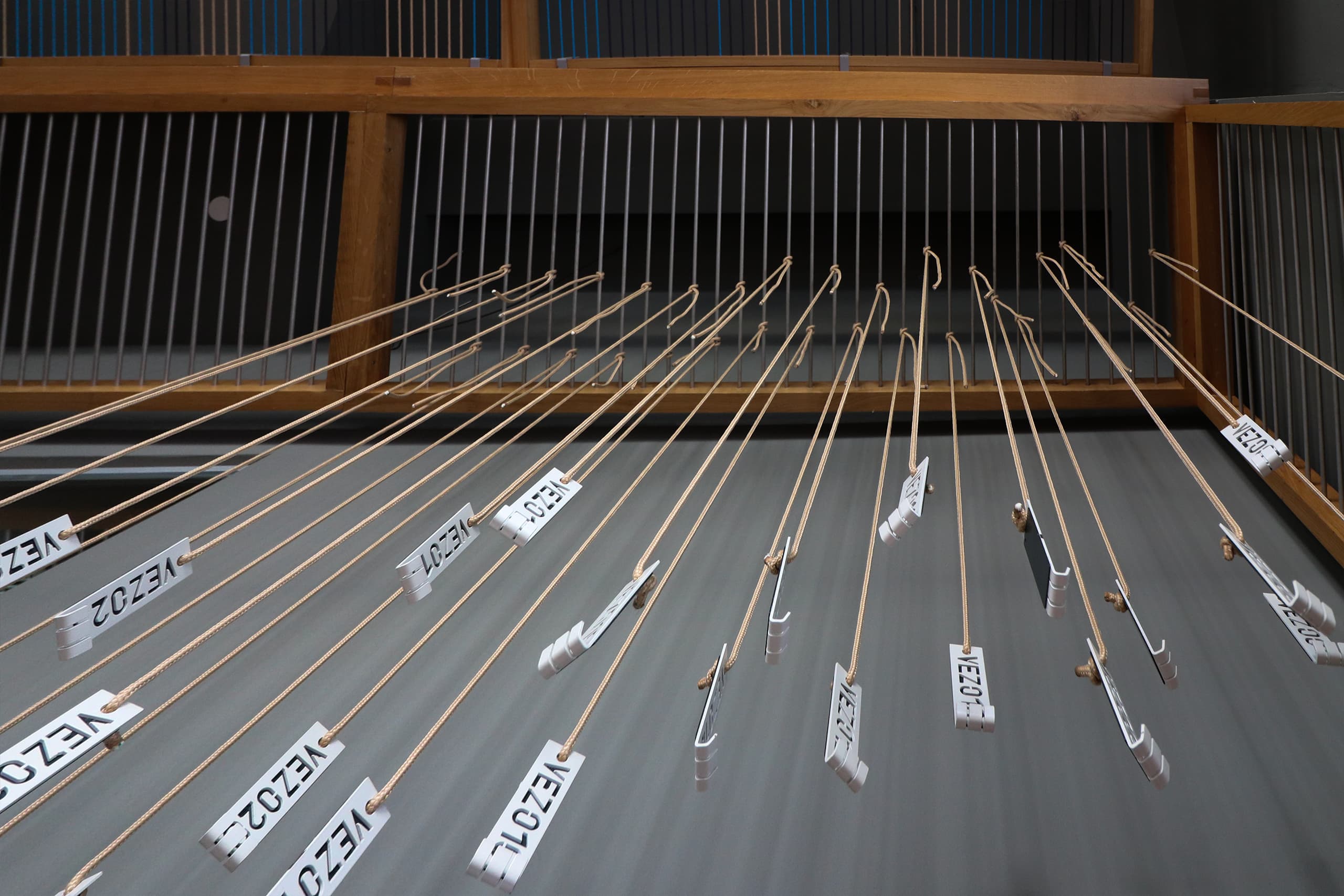
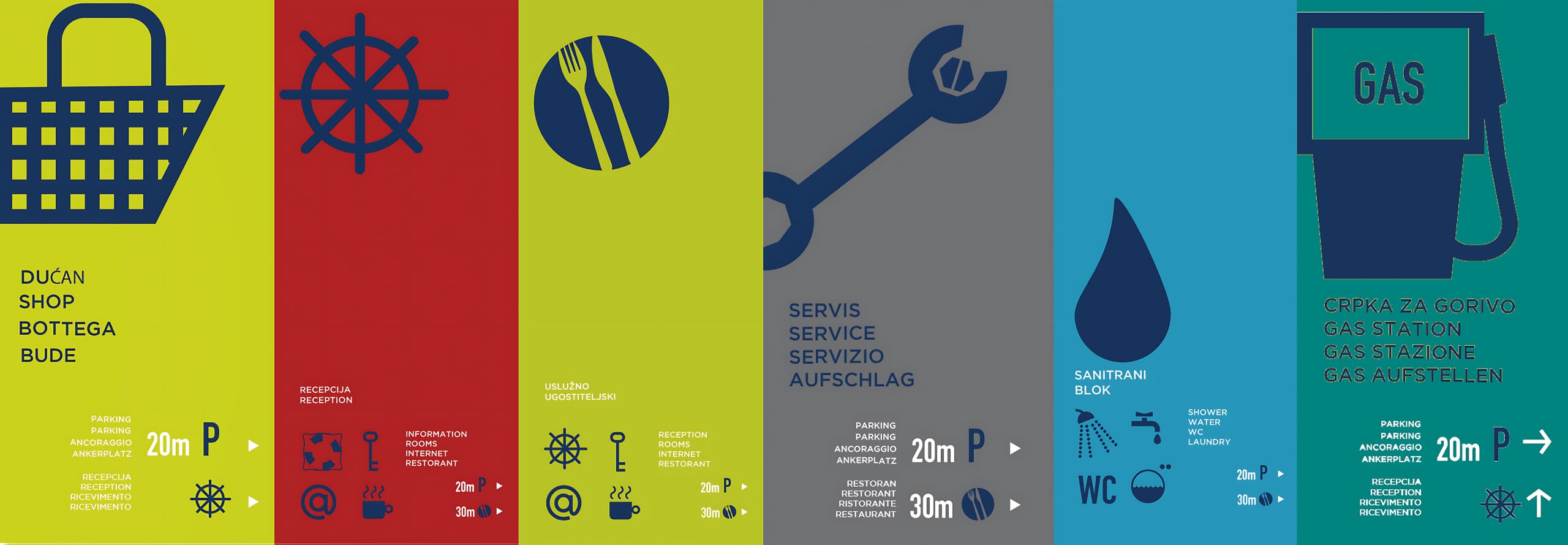
The signage system was designed as an integral part of the new visual identity. Signage elements for piers, pontoons and berths are clearly visible from both land and sea, visually connected to the ACI logo and newly designed marina structures.
Berths are marked through simple blue and white graphic fields that ensure easy orientation and strong visual clarity, while signage elements are fully integrated into the architectural and urban design system.
Landscape, lighting, urban furniture
Landscape design and urban furniture form an integral part of the new marina identity. Pedestrian zones were designed using strong graphic paving patterns composed of custom-made triangular concrete elements, pigmented asphalt and wooden decking in key gathering areas.
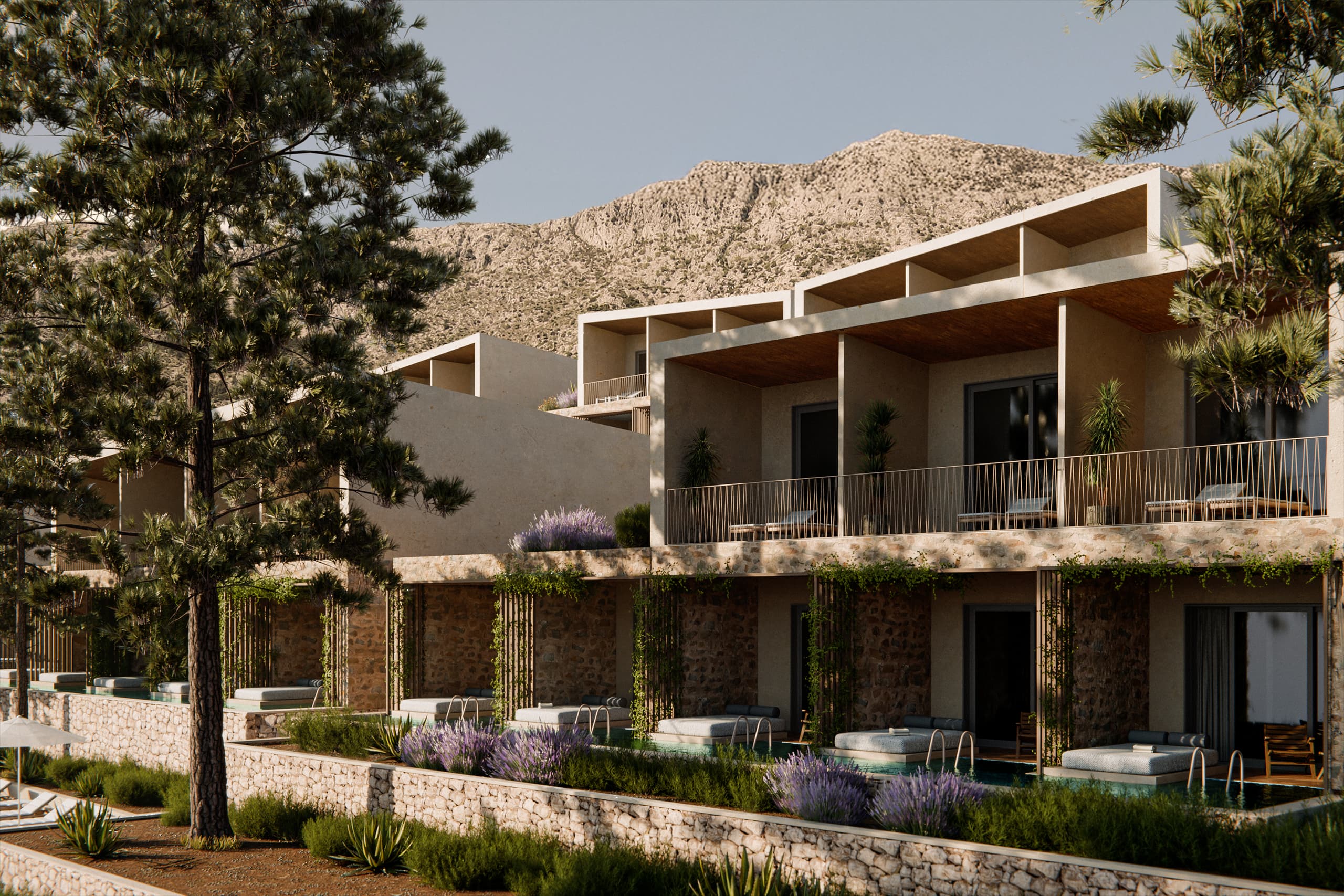
Urban furniture was developed as a continuation of the paving system, creating a cohesive and recognizable spatial language. Mediterranean plant species with low maintenance requirements — including succulents, citrus trees, lavender, oleander, pine trees and holm oaks — were used throughout the landscape design.
Lighting was conceived as indirect ambient illumination, where light sources remain hidden and illumination is reflected through surfaces, vegetation and water, creating a subtle nighttime atmosphere that emphasizes the architectural identity of the marinas.
Conclusion
The modernization and unification project of the ACI marina network established a contemporary spatial model that connects architecture, interior design, landscape, urban furniture and signage into a coherent and recognizable system.
Through a carefully developed strategy of modular and adaptable interventions, the project transformed existing marina spaces into contemporary environments tailored to the needs of modern users and the tourism industry. Rather than relying on complete reconstruction, the concept introduced a new spatial layer that reinterprets the Mediterranean atmosphere and nautical heritage through contemporary architectural language.
By combining architecture, materials, graphics, landscape and lighting into a unified identity, the project created a flexible and long-term framework for the future development of ACI marinas across the Adriatic coast.