- TypologyHospitality, Tourism, Commercial
- StatusDesign development stage
- LocationSplit, Croatia
- ClientPrivate client
- Size8000 m²
- Year2024-
- ScopeArchitecture, Lead Design, Project Management Support
Introduction
Located along Vukovarska Street in Split, the project occupies a prominent position within one of the city’s key urban corridors, connecting residential areas with the broader coastal landscape. The intervention is conceived as a careful urban interpolation within the existing fabric, acknowledging the inherited structure while redefining its architectural presence. Positioned within a city strongly shaped by its relationship to the sea, the project emphasizes orientation, views, and climate responsiveness, contributing to Split’s ongoing transformation as a contemporary Mediterranean destination.
Concept
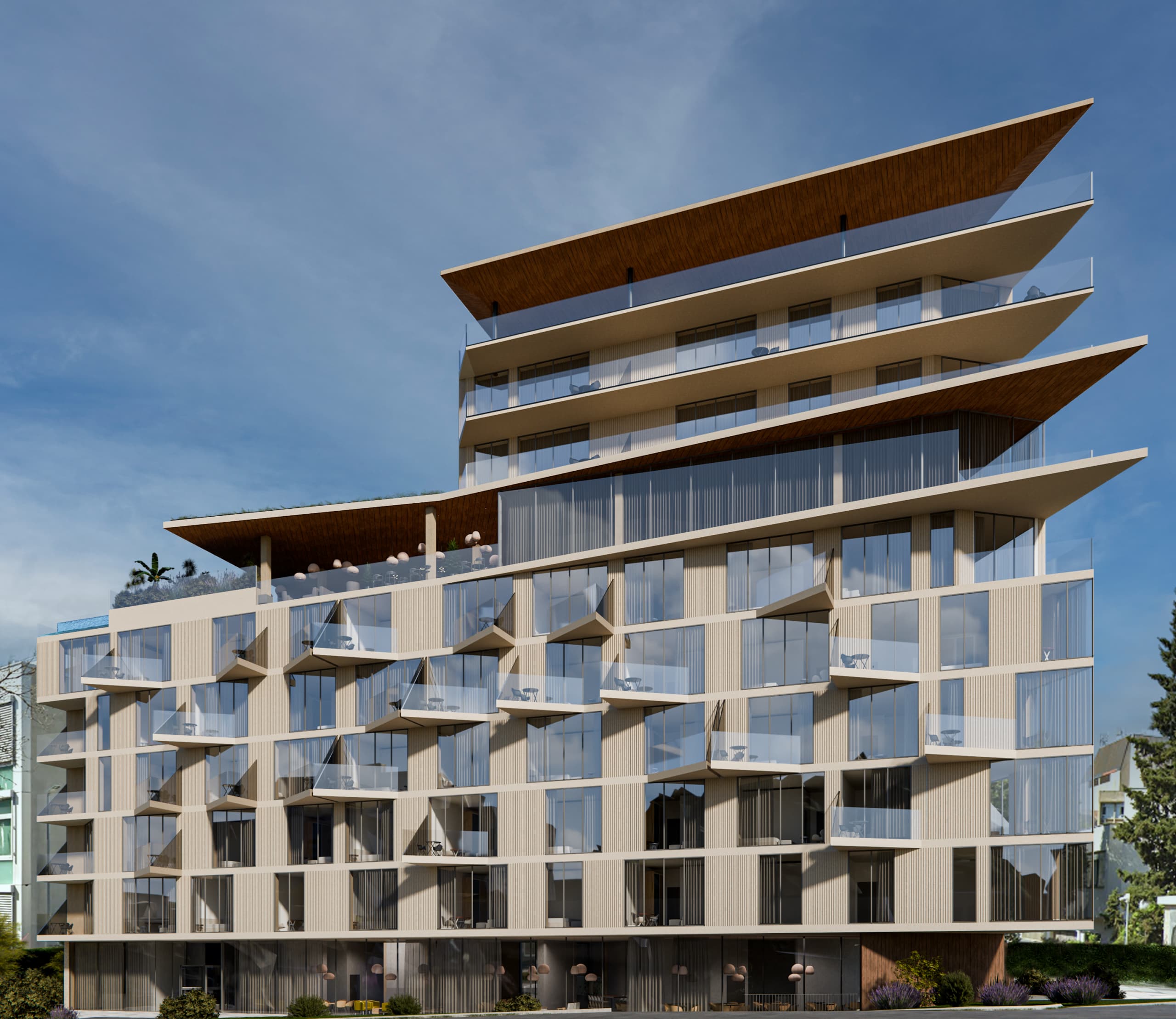
The project is based on the reconstruction and reinterpretation of an existing hotel, transforming it into a contemporary architectural landmark. Entrusted by the investor with a high level of design freedom, the proposal aims to create a modern hotel that expresses a distinct Dalmatian identity through materiality and form. The concept combines precision and expressiveness—where a sharp, angular building geometry becomes the defining architectural gesture, while the use of white stone with subtle fluting (kanelure) grounds the building in its regional context. The result is a hotel that is both contemporary and deeply connected to the architectural language of the Mediterranean.
Purpose
The primary goal of the project is to elevate the existing structure into a high-quality hospitality destination with over 120 rooms, designed to meet contemporary standards of comfort and spatial organization. The hotel is envisioned as a destination for both leisure and business users, offering a complete hospitality experience enriched by its location, views, and amenities. By reconstructing rather than replacing the building, the project promotes sustainability while maximizing the value of the inherited structure.
Spatial Strategy
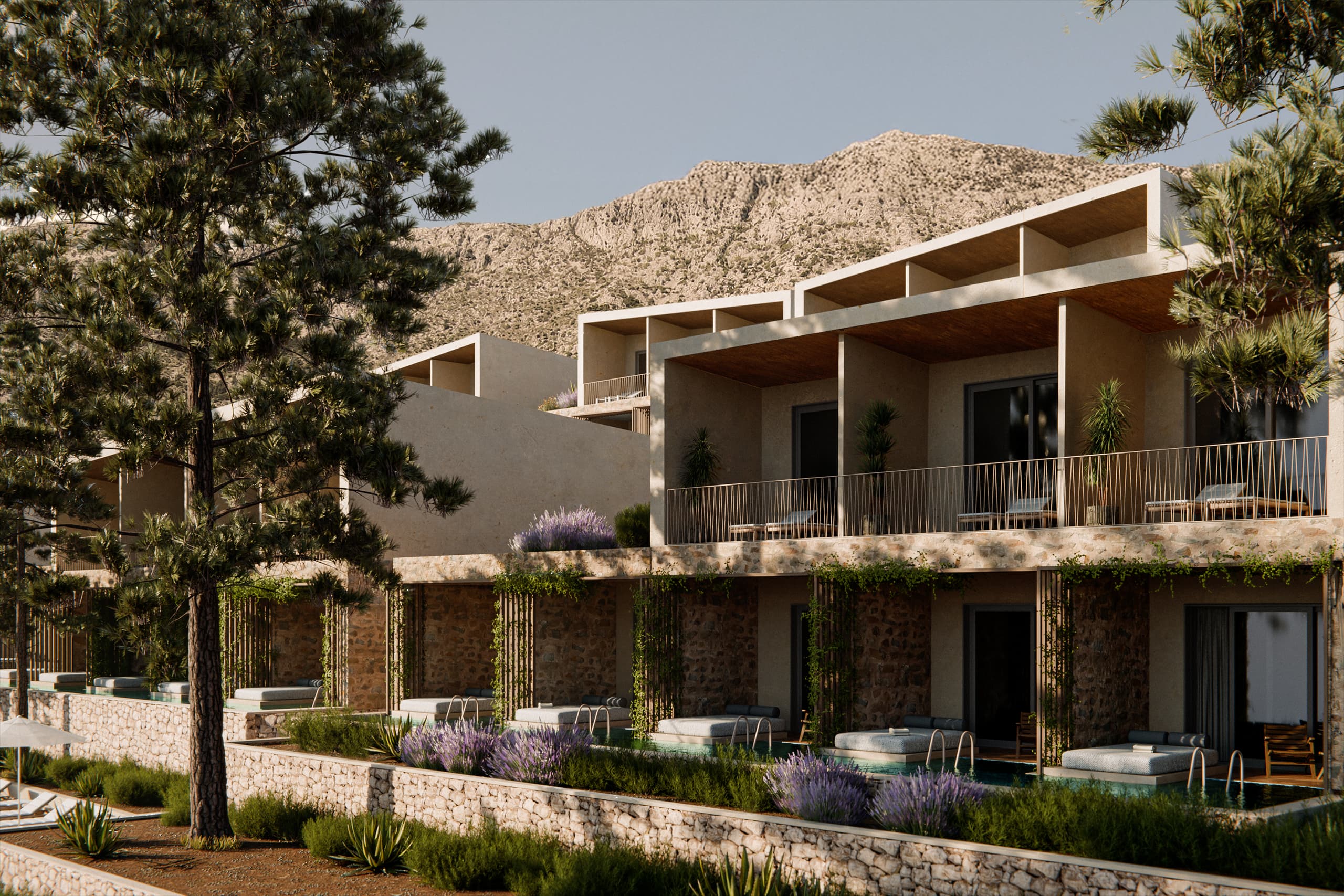
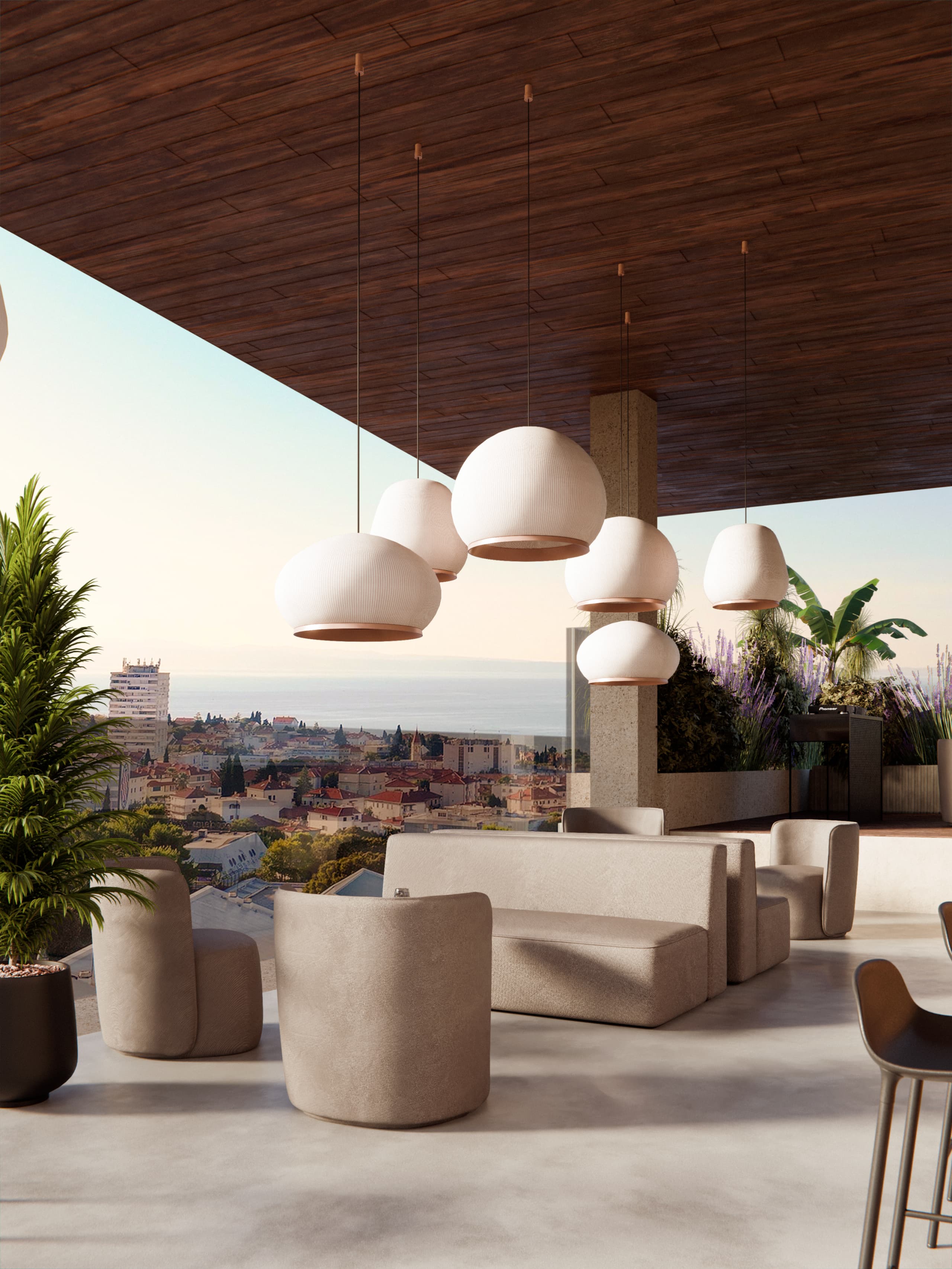
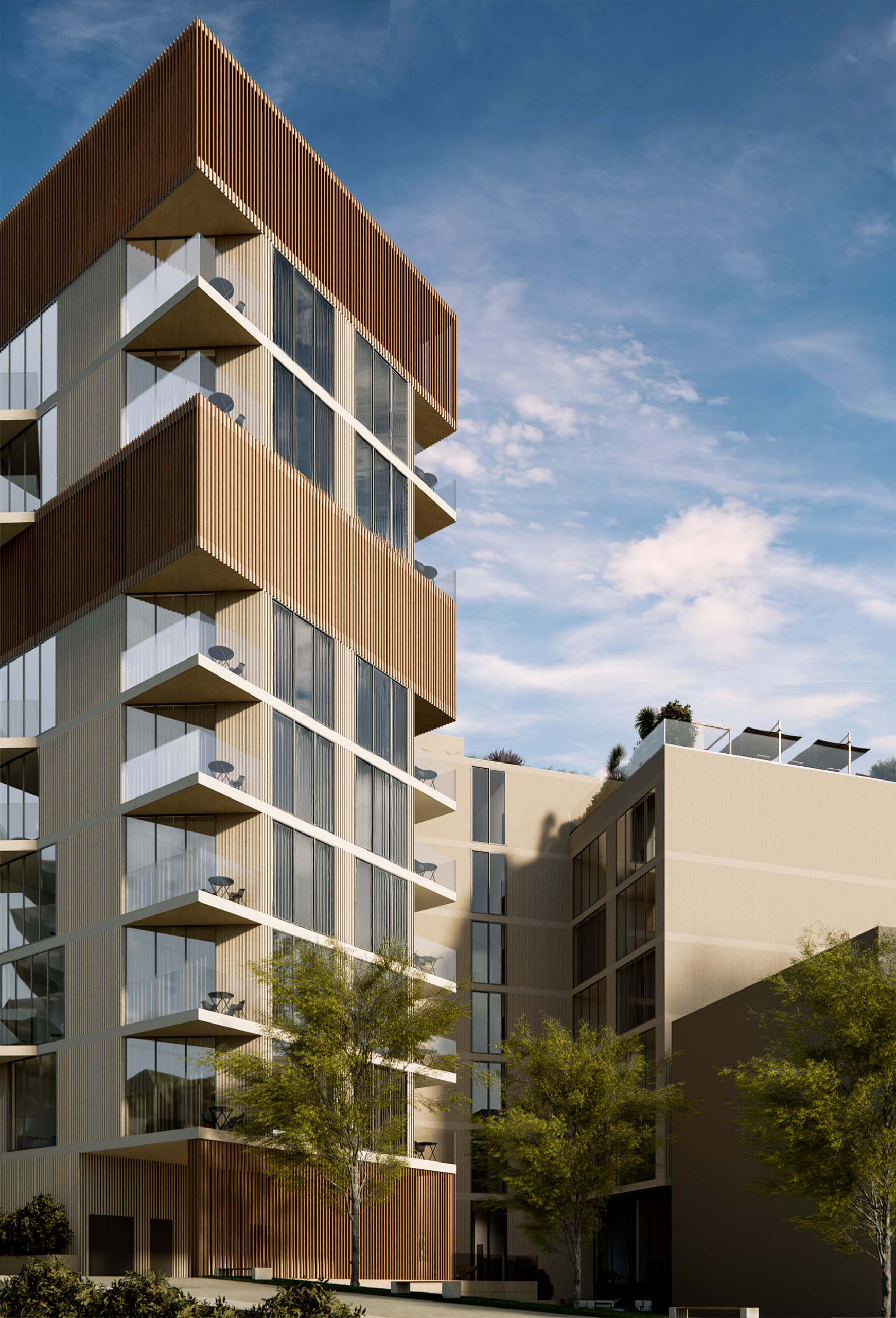
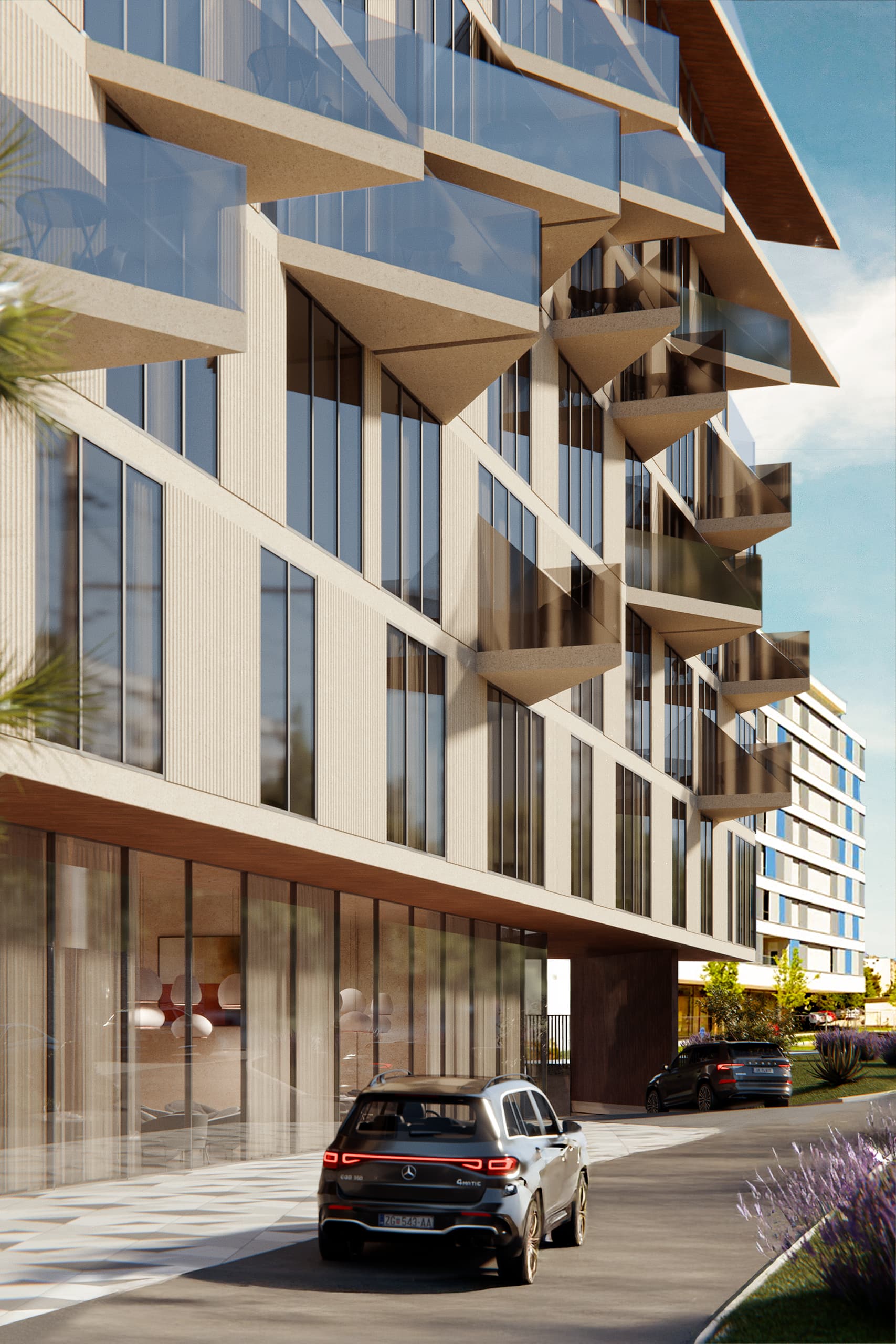
The spatial organization is shaped by the building’s distinctive angular form, which presents both a design challenge and an opportunity. This geometry is carefully utilized to orient all accommodation units toward the sea, ensuring that every room benefits from open views of the Adriatic. A key architectural element is the system of precisely positioned triangular balconies. These elements serve a dual function: they enhance the dynamic expression of the façade while acting as passive shading devices, protecting the rooms below from strong southern sun exposure. Public functions are concentrated in the lower levels, establishing a clear and welcoming interface with the street, while upper levels are reserved for accommodation. The rooftop is activated as a key social and experiential zone, extending the program vertically.
Architecture and Materials
The architectural language is defined by a synthesis of contemporary form and regional material identity. The building envelope is articulated through clean, angular lines, emphasizing its sharp geometry and giving it a recognizable silhouette within the urban context. Materially, the project draws strongly from Dalmatian tradition, using white stone as the primary façade material. The introduction of subtle vertical fluting adds depth, texture, and a refined play of light and shadow. The palette of materials and colors is carefully selected to align with the coastal environment, ensuring durability while maintaining a sense of elegance and authenticity.
Landscape
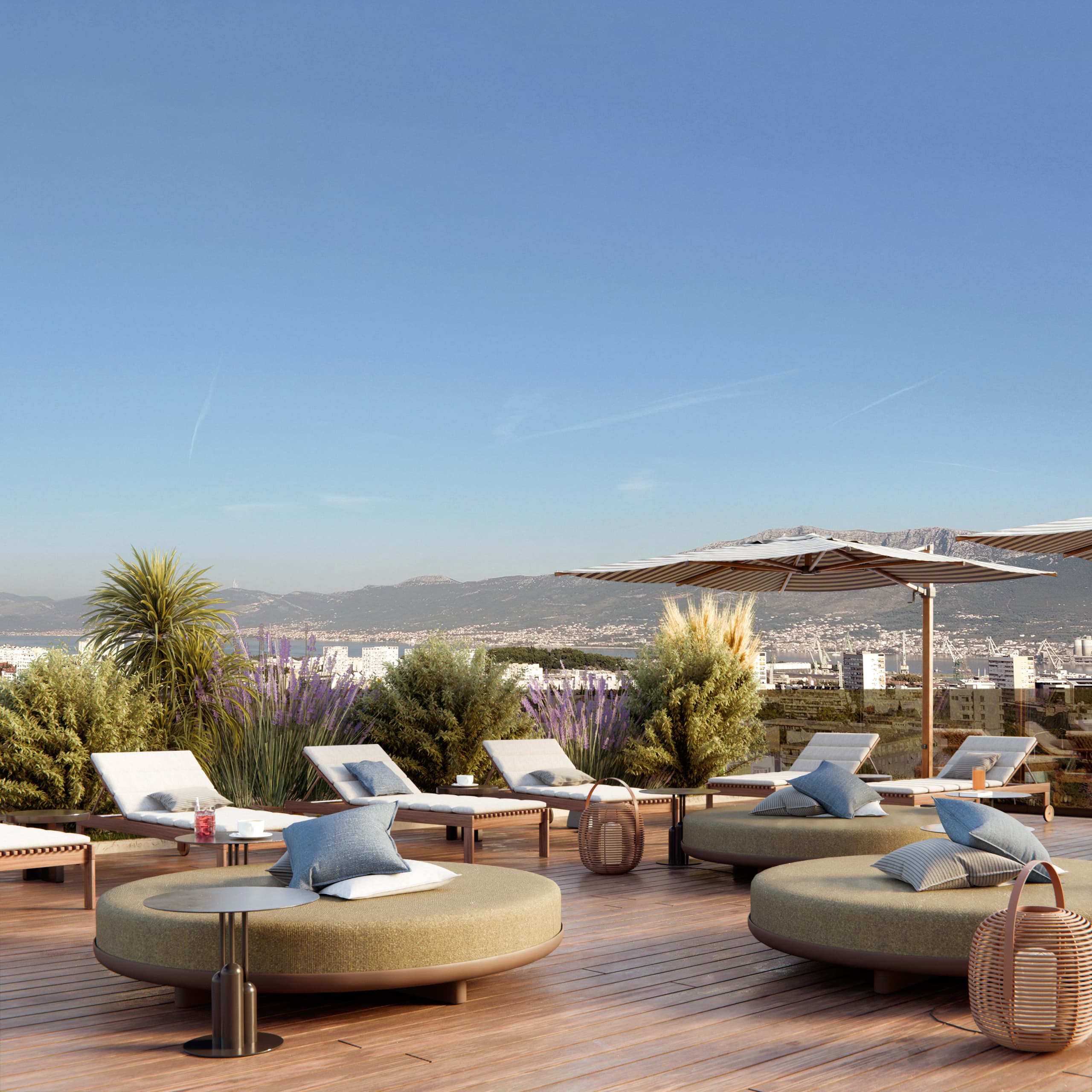
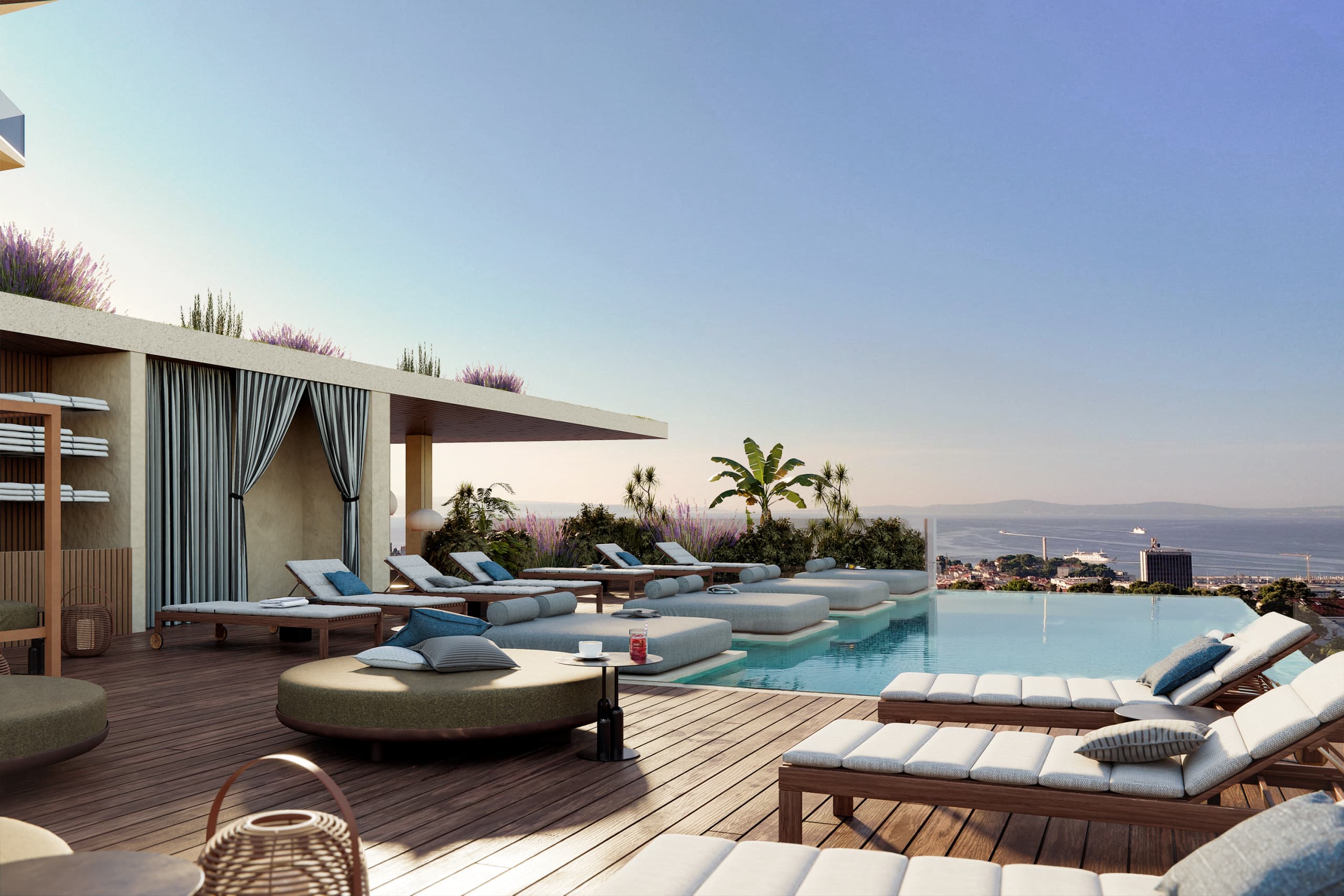
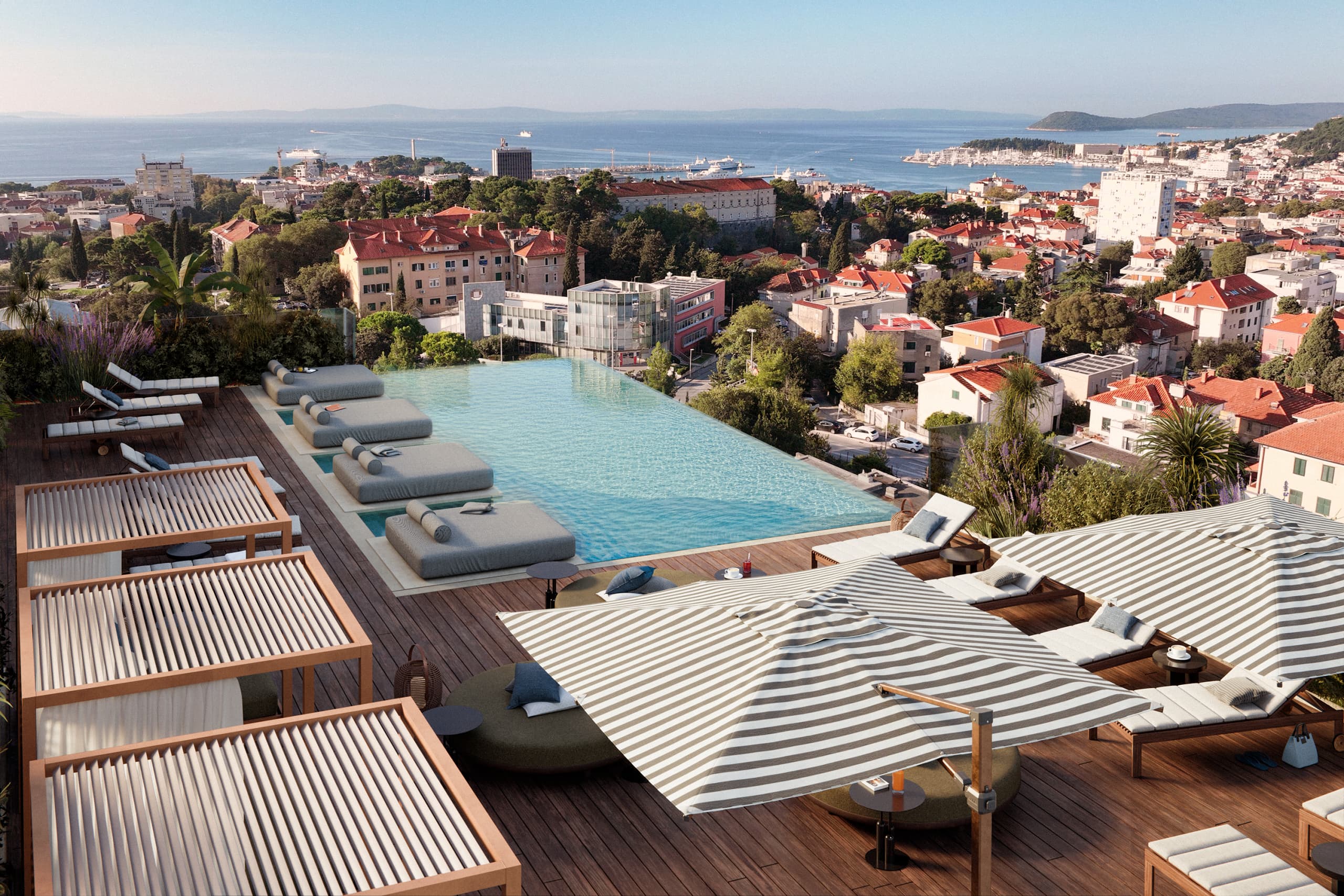
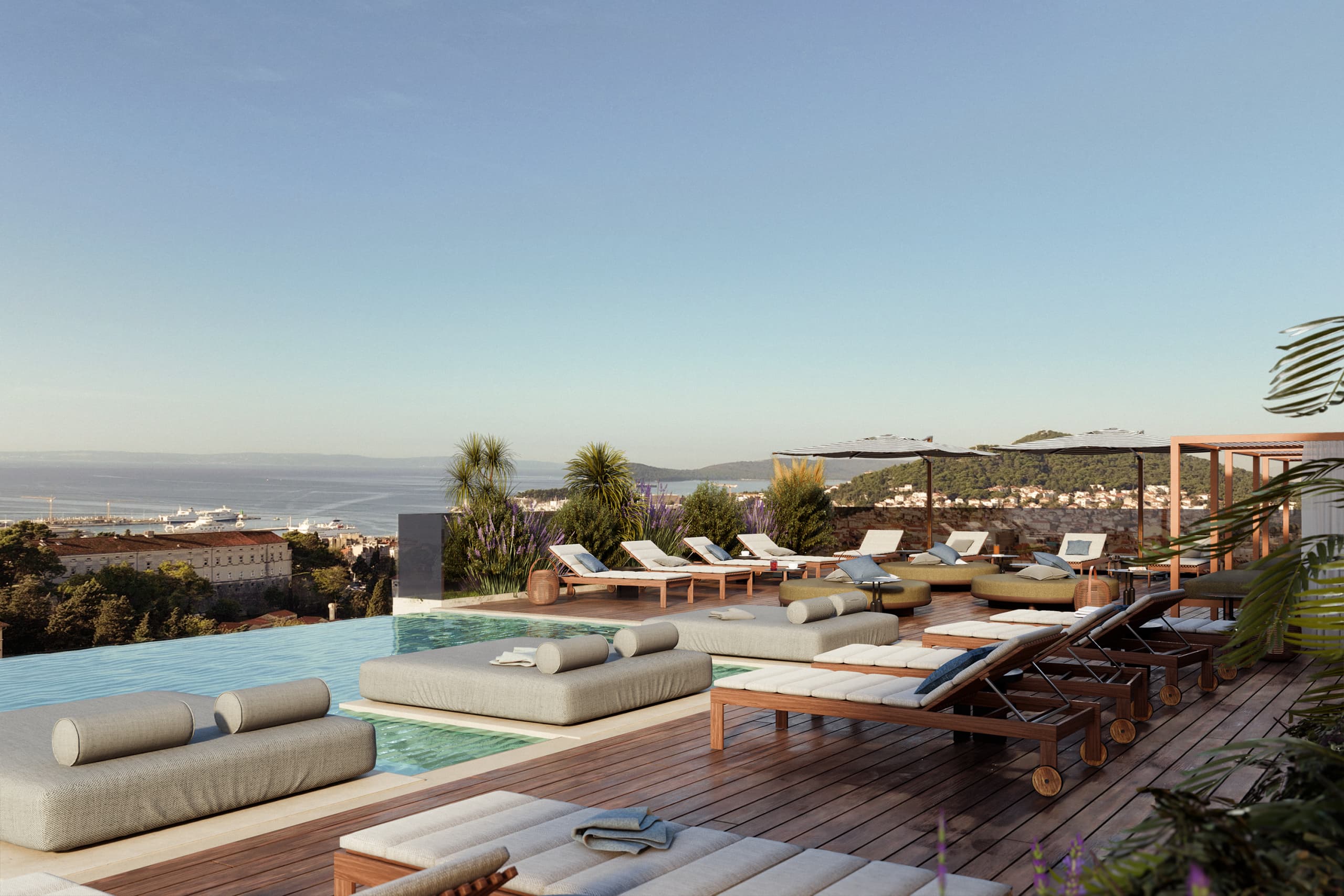
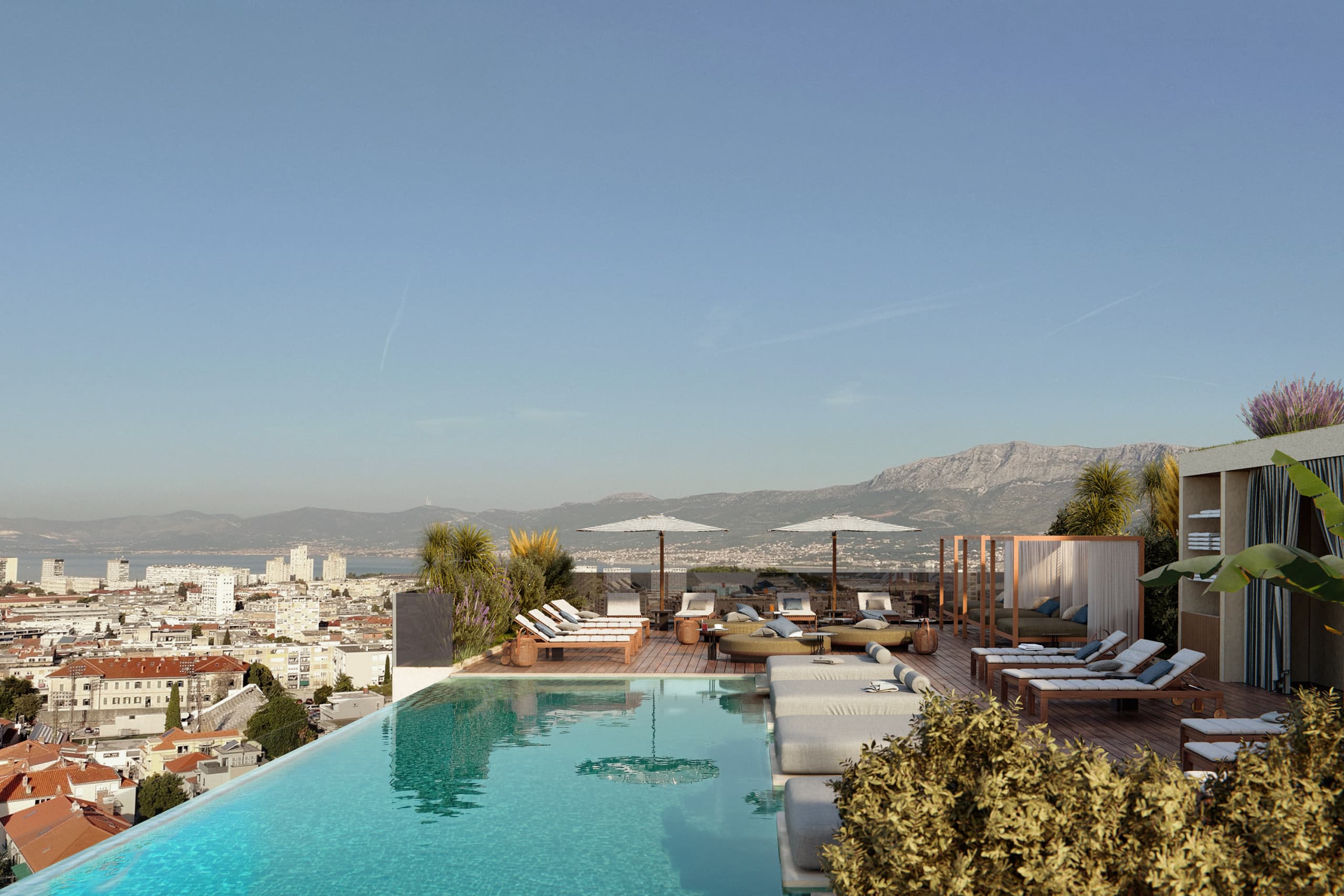
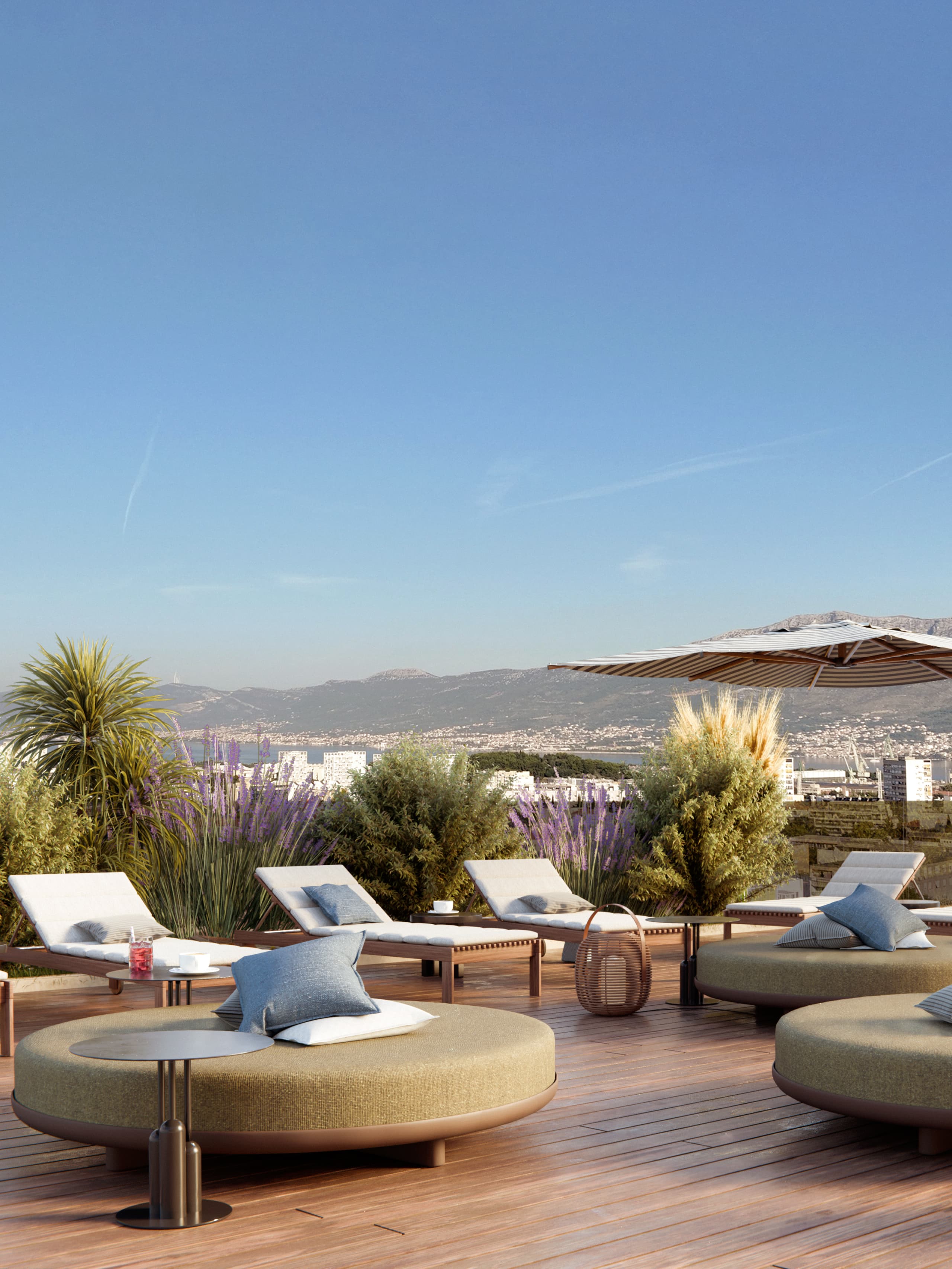
The landscape approach focuses on enhancing the microclimate and extending the architectural experience into exterior spaces. While the urban setting limits large green surfaces, carefully designed terraces and outdoor zones provide moments of relaxation and visual openness. Special emphasis is placed on the rooftop level, where landscape elements, water features, and shaded lounge areas create a distinctive elevated environment that connects directly with the surrounding seascape.
Experience
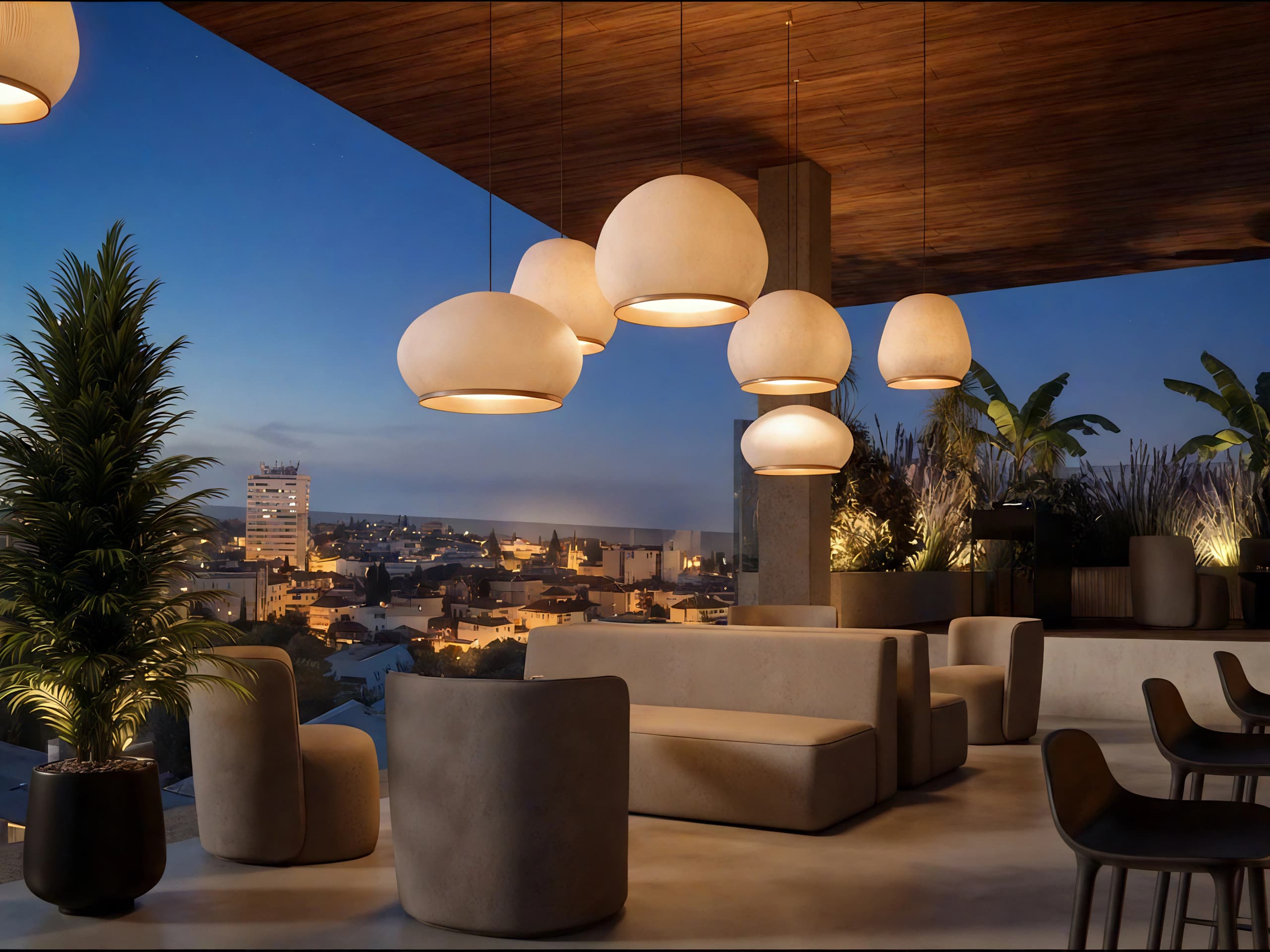
The guest experience is defined by a strong connection to the sea, light, and atmosphere of Split. From arrival to accommodation, the spatial sequence is intuitive and fluid, offering both social and private zones. All rooms are designed to maximize views, creating a continuous visual relationship with the Adriatic. The interplay of light, shadow, and materiality enhances the sense of comfort and identity throughout the building. The rooftop level represents the highlight of the experience—a vibrant social destination featuring a lounge area, bar, swimming pool, and sun deck. From this elevated position, guests are offered panoramic views of the Brač Channel, creating a memorable and iconic spatial moment.
Vision
The project envisions the hotel as a contemporary landmark that redefines its inherited structure through design, materiality, and experience. It demonstrates how reconstruction can become an opportunity for architectural innovation, transforming constraints into defining qualities. By combining a strong geometric identity, regional material expression, and a carefully curated hospitality program, the hotel establishes itself as a distinctive destination within Split—one that captures the essence of the Mediterranean while projecting a confident and modern architectural vision.