- LocationBrač, Bol, Croatia
- StatusPermit Issue
- ClientBluesun
- TypologyHospitality, Tourism, Commerical
- Size43,190 m²
- ScopeExterior design, Interior Design, Architecture, Urban Planing
Overview
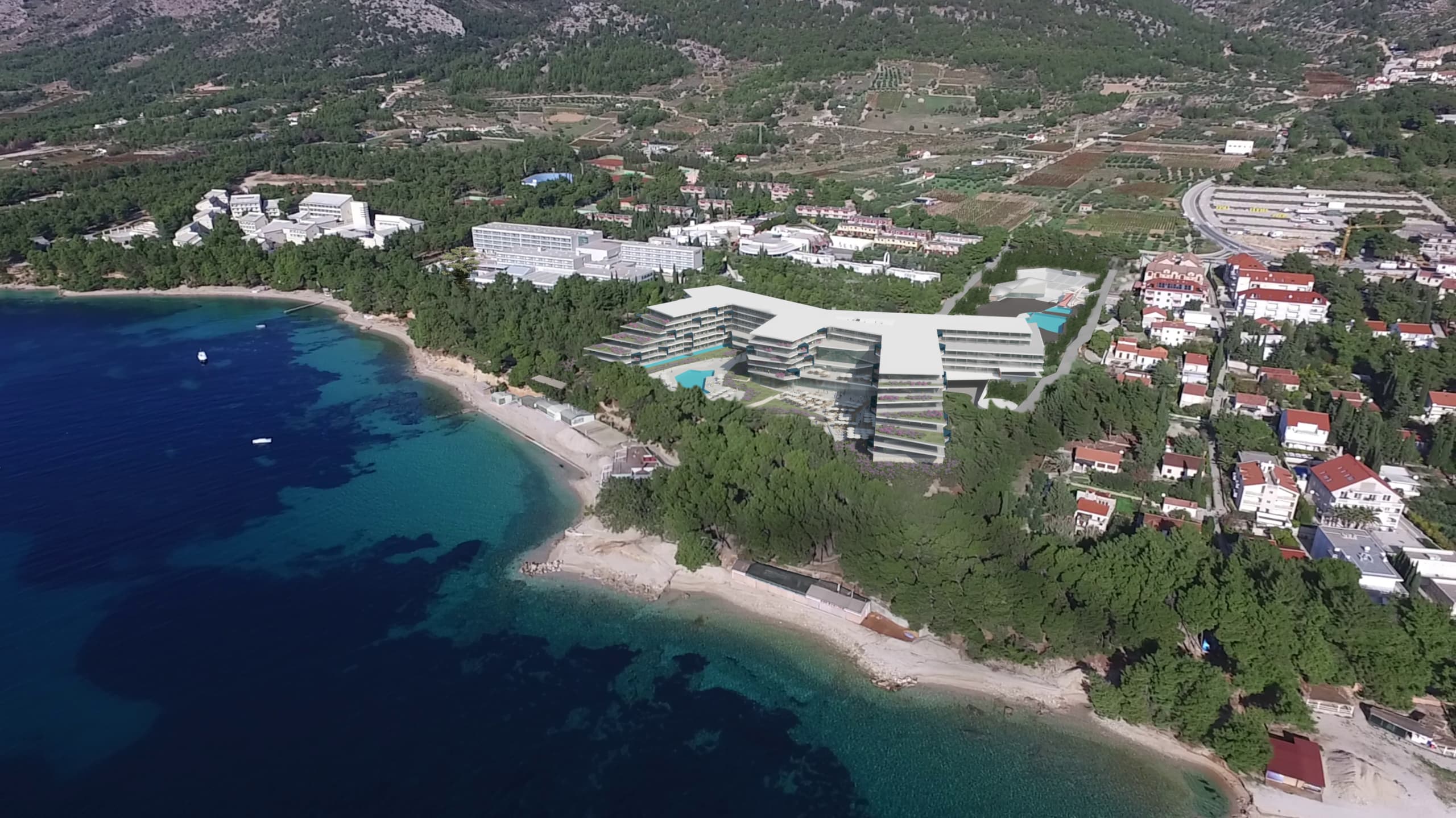
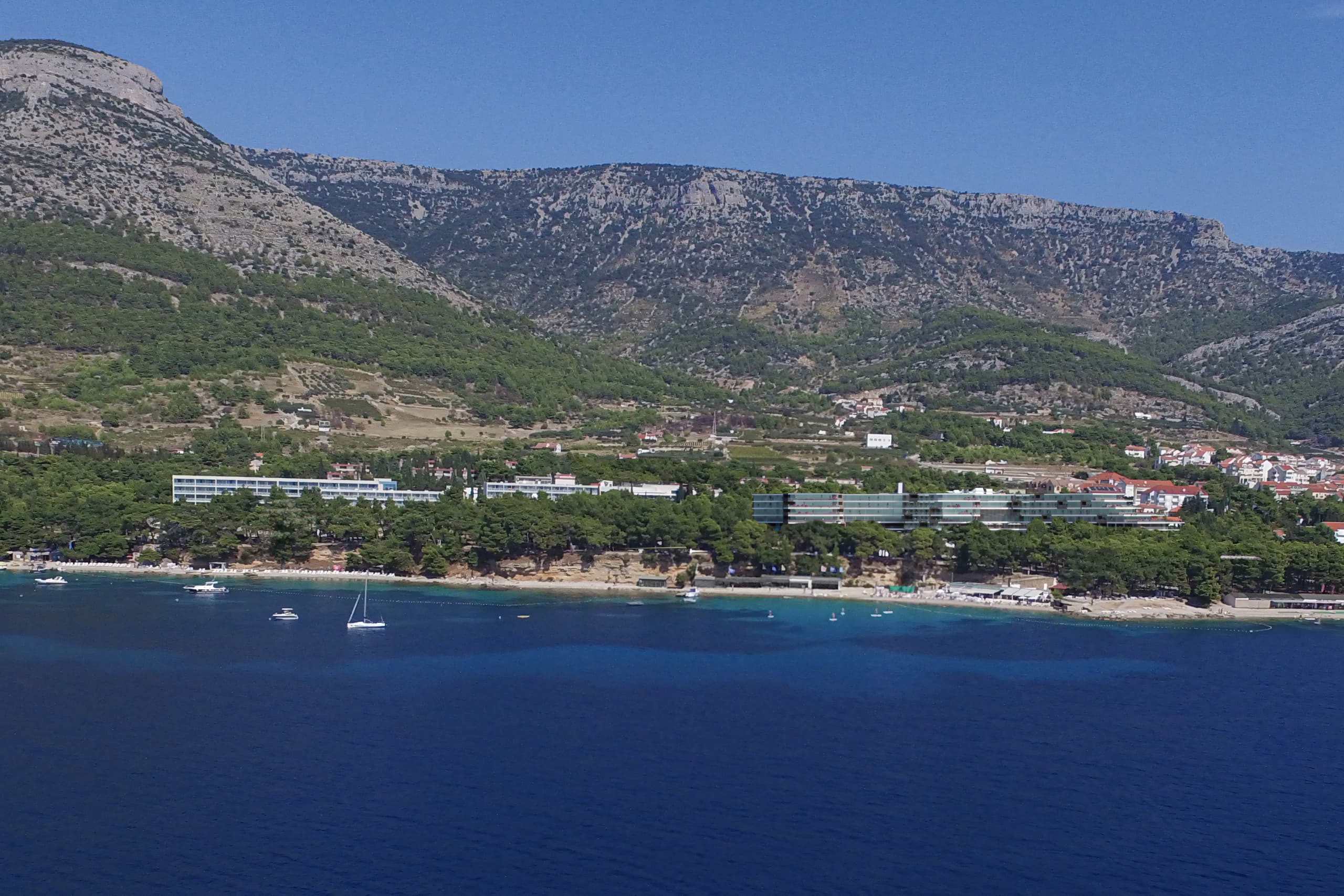
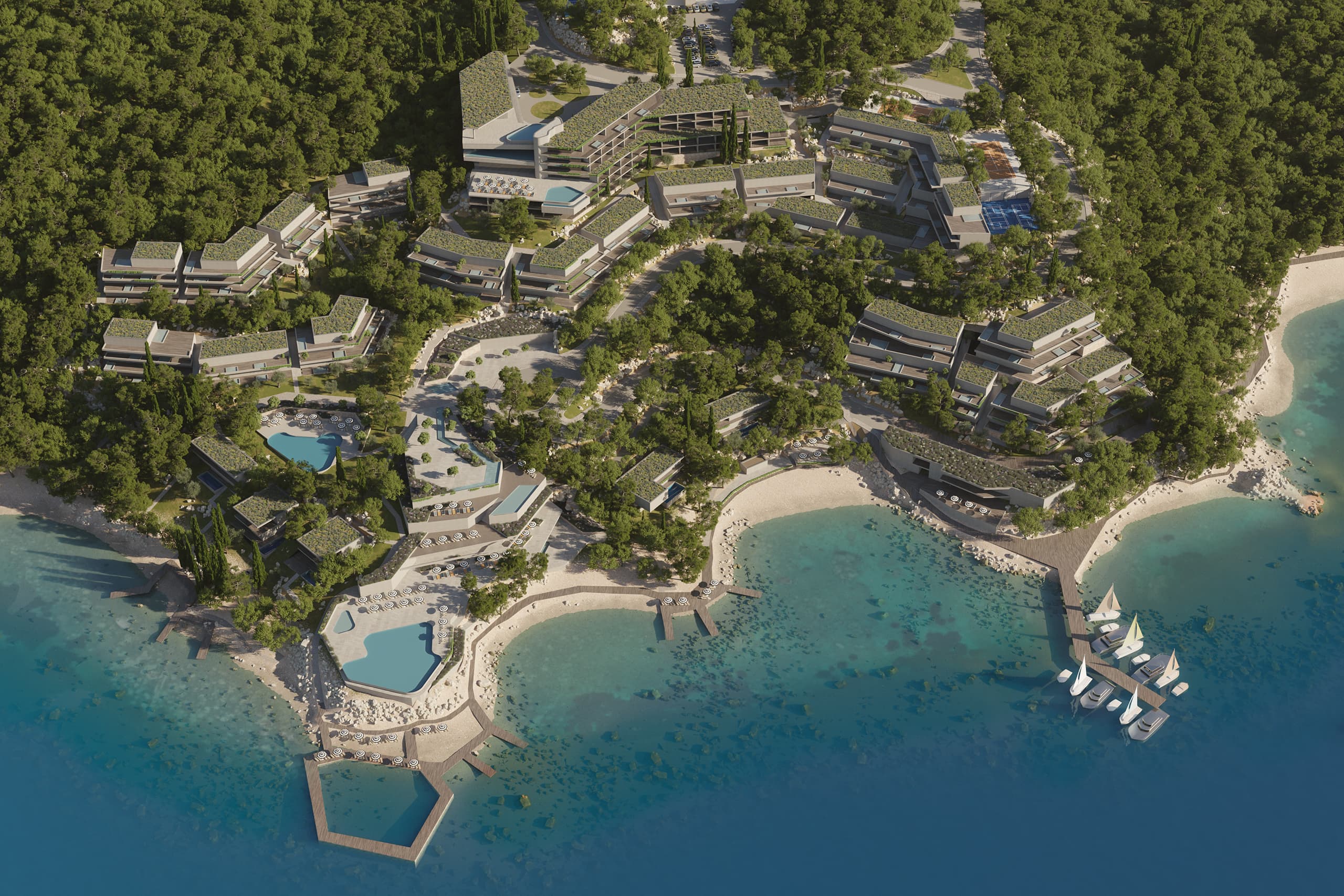
Located within the Borak–Potočine tourist zone in Bol on the island of Brač, the Bluesun Borak redevelopment transforms an existing coastal resort into a contemporary Mediterranean hospitality destination. Positioned between the historic centre of Bol and the iconic Zlatni Rat beach, the project redefines the existing hotel complex through a new spatial organization focused on landscape integration, active tourism and high-category accommodation.
The intervention includes the reconstruction of existing accommodation facilities and the development of a new 5-star hotel complex, creating a unified resort experience embedded within the natural pine forest and coastal terrain.
Concept
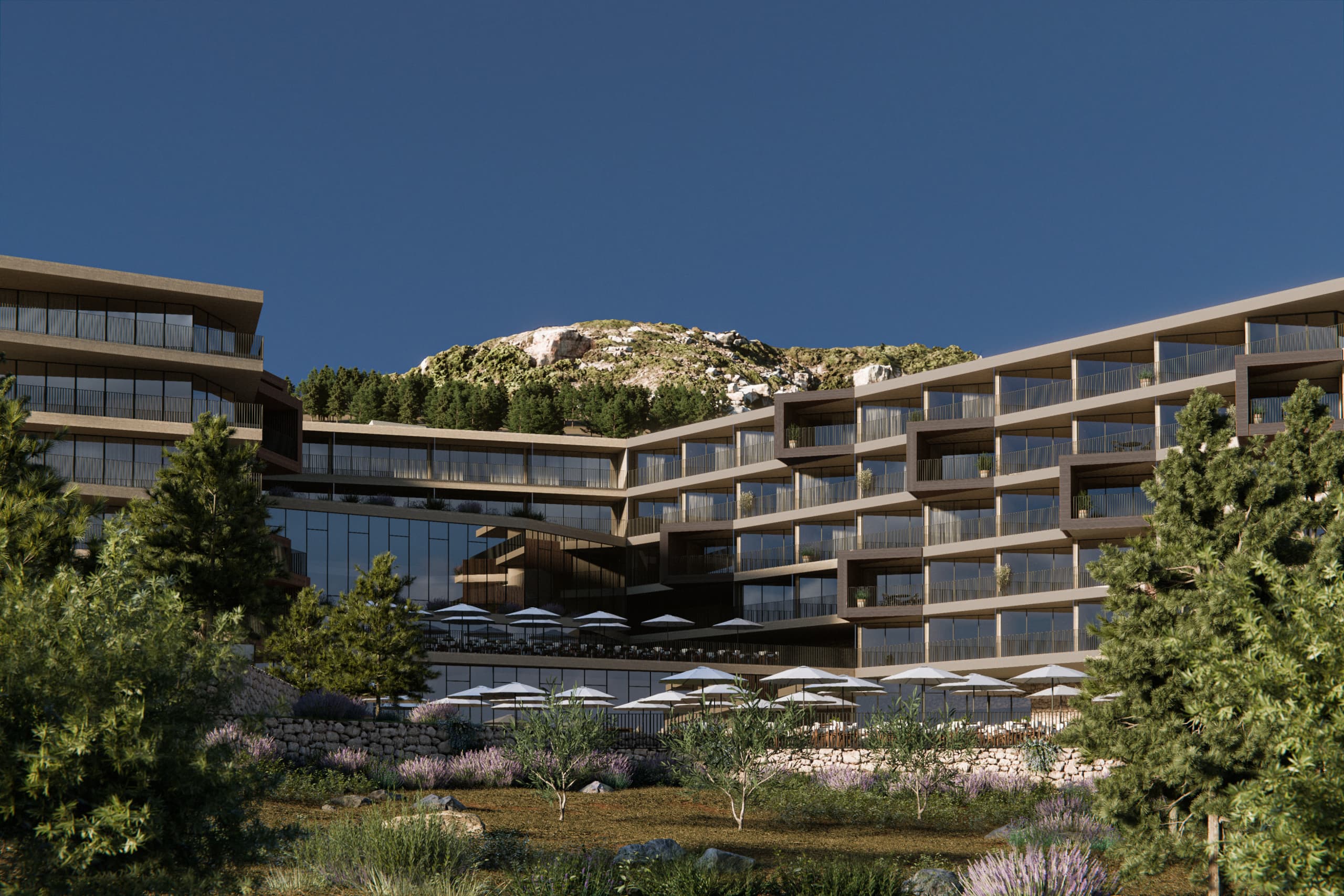
The project is conceived as a contemporary Mediterranean resort immersed in landscape. Instead of creating a singular dominant volume, the new development is fragmented into interconnected architectural structures that follow the existing topography and preserve visual continuity towards the sea.
The concept combines hospitality, recreation and outdoor living into a layered spatial experience where architecture and landscape operate as a unified system. Public amenities, accommodation and sports facilities are distributed across the site to encourage movement, openness and interaction with the surrounding environment.
Special emphasis is placed on creating a resort identity centered around wellness, sports, family-oriented programs and year-round usability.
Purpose
The project aims to reposition the existing Bluesun resort into a contemporary high-category tourism destination capable of supporting evolving hospitality standards and new travel patterns.
Beyond increasing accommodation quality and capacity, the development focuses on expanding public and recreational amenities that activate the resort throughout the day and across different seasons. Sports infrastructure, wellness programs, family facilities and entertainment zones create a multi-generational destination designed for longer stays and diversified guest experiences.
At the same time, the intervention seeks to preserve the recognizable character of Bol by integrating architecture sensitively into the natural terrain and Mediterranean landscape.
Spatial Strategy
The masterplan is organized through two primary development zones: the new TUI MAGIC LIFE hotel zone and the reconstructed TUI BLUESTAR & PLATINUM zone.
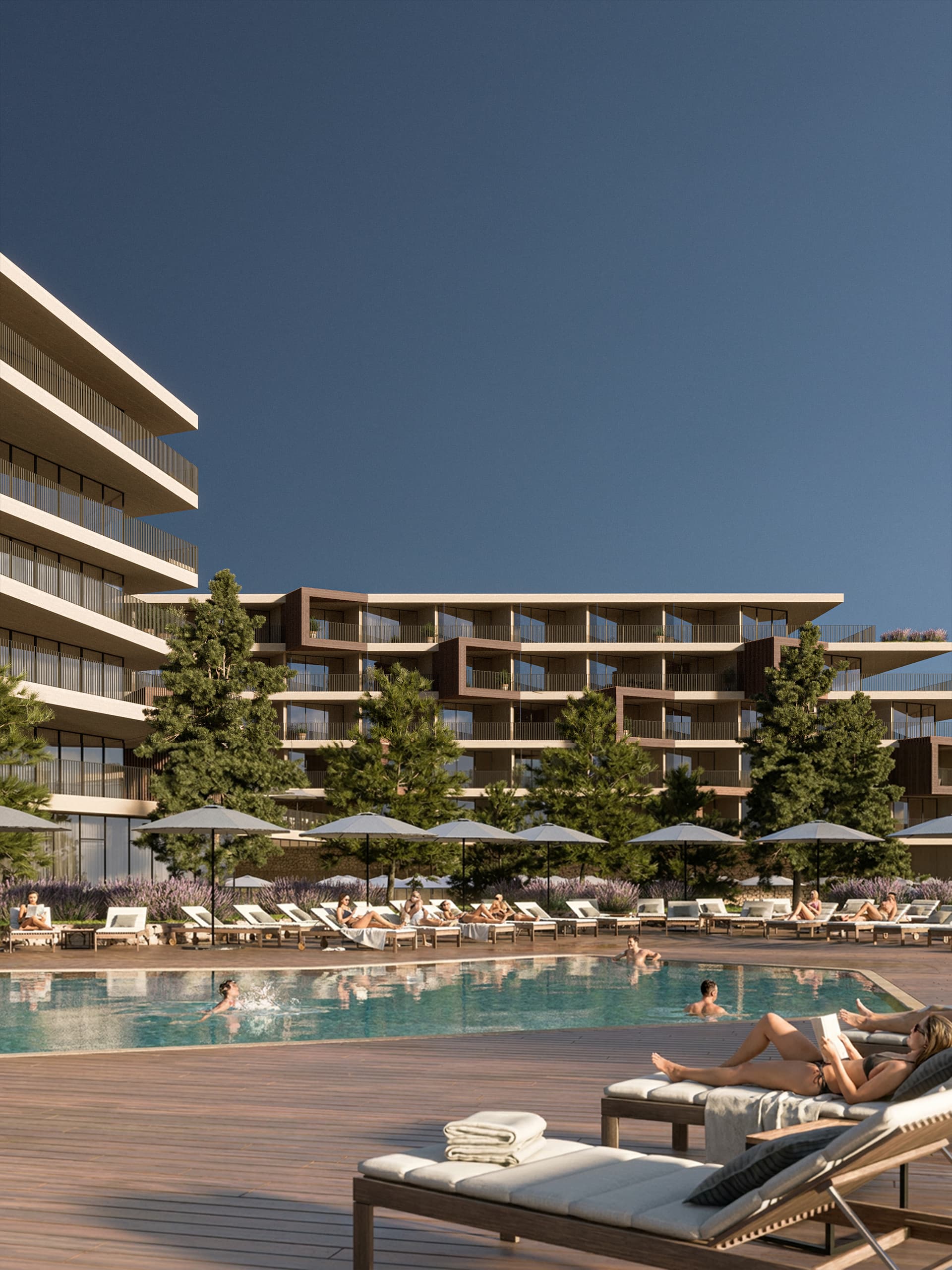
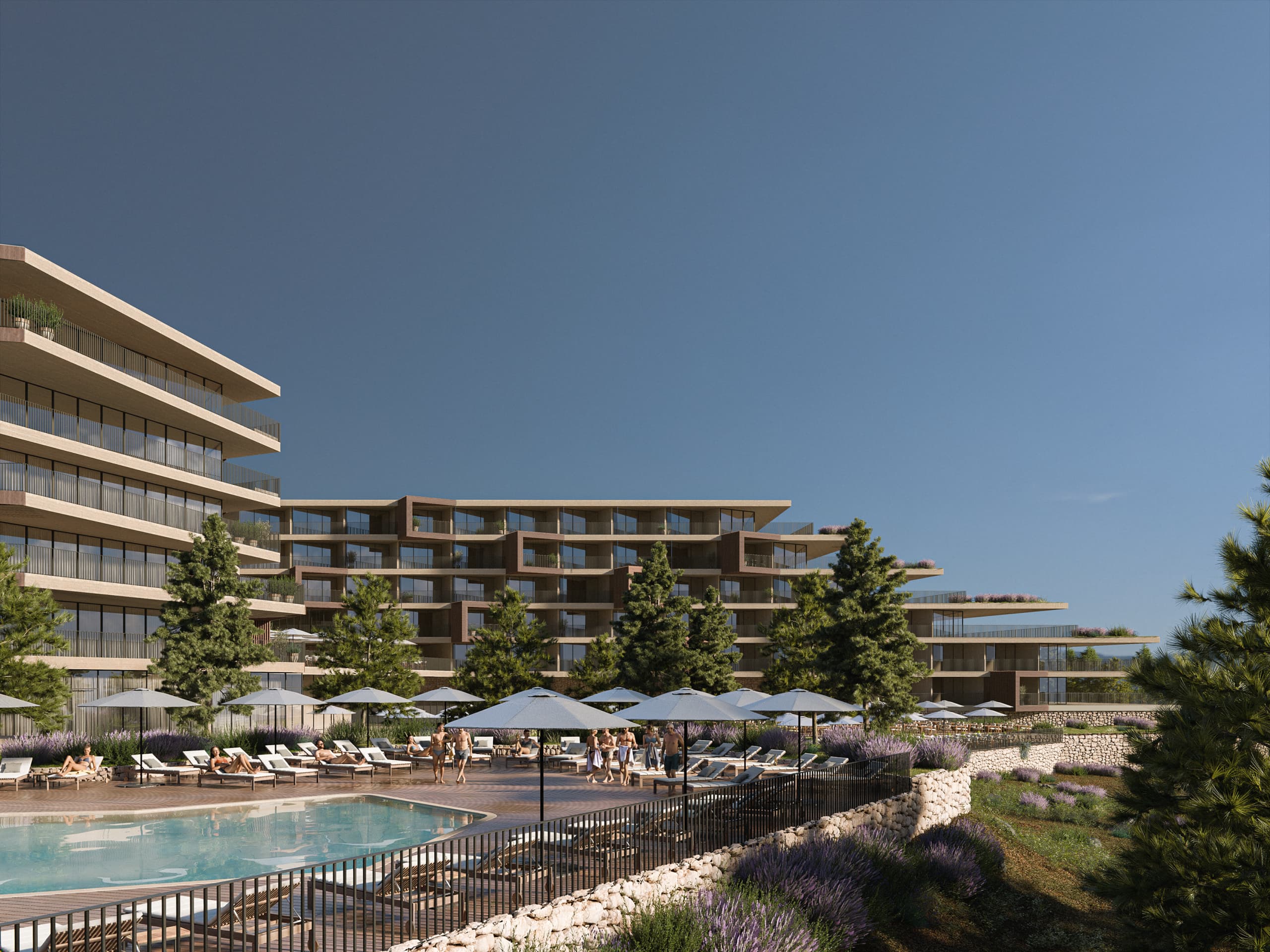
The new hotel development replaces the existing Hotel Borak and surface parking area with a compact yet permeable hospitality structure that opens towards external recreational and pool areas. Accommodation volumes are carefully positioned to maximize privacy, natural shading and sea views while minimizing the visual impact on the landscape.
Existing depandance buildings are reconstructed and reorganized to establish a clearer spatial hierarchy and improve connectivity throughout the resort. Pedestrian circulation becomes the dominant organizing principle, while vehicular traffic and parking are relocated underground to preserve the pedestrian character of the complex.
The landscape acts as connective infrastructure, integrating sports zones, entertainment areas, pool terraces and accommodation into a continuous outdoor environment.
Architecture
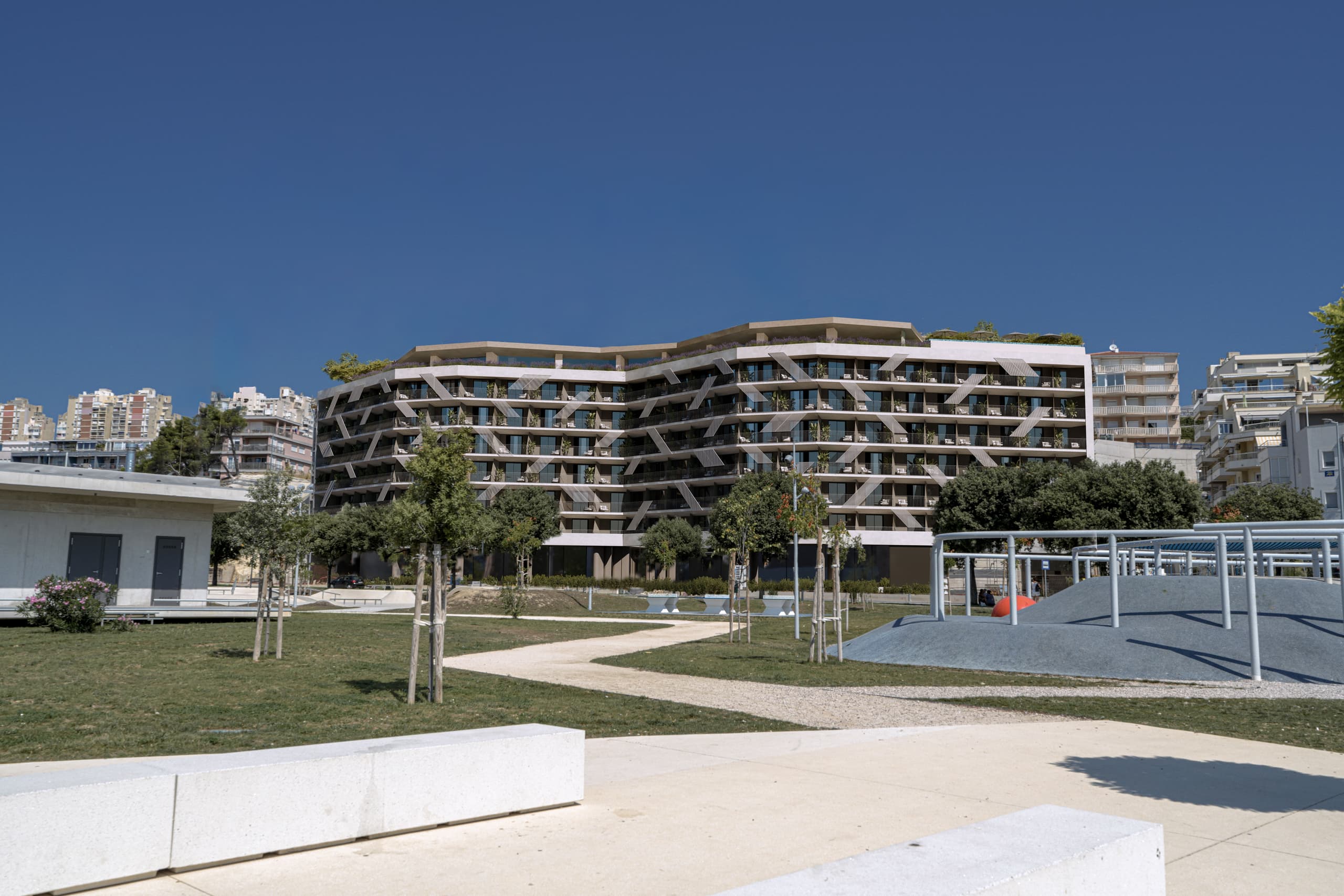
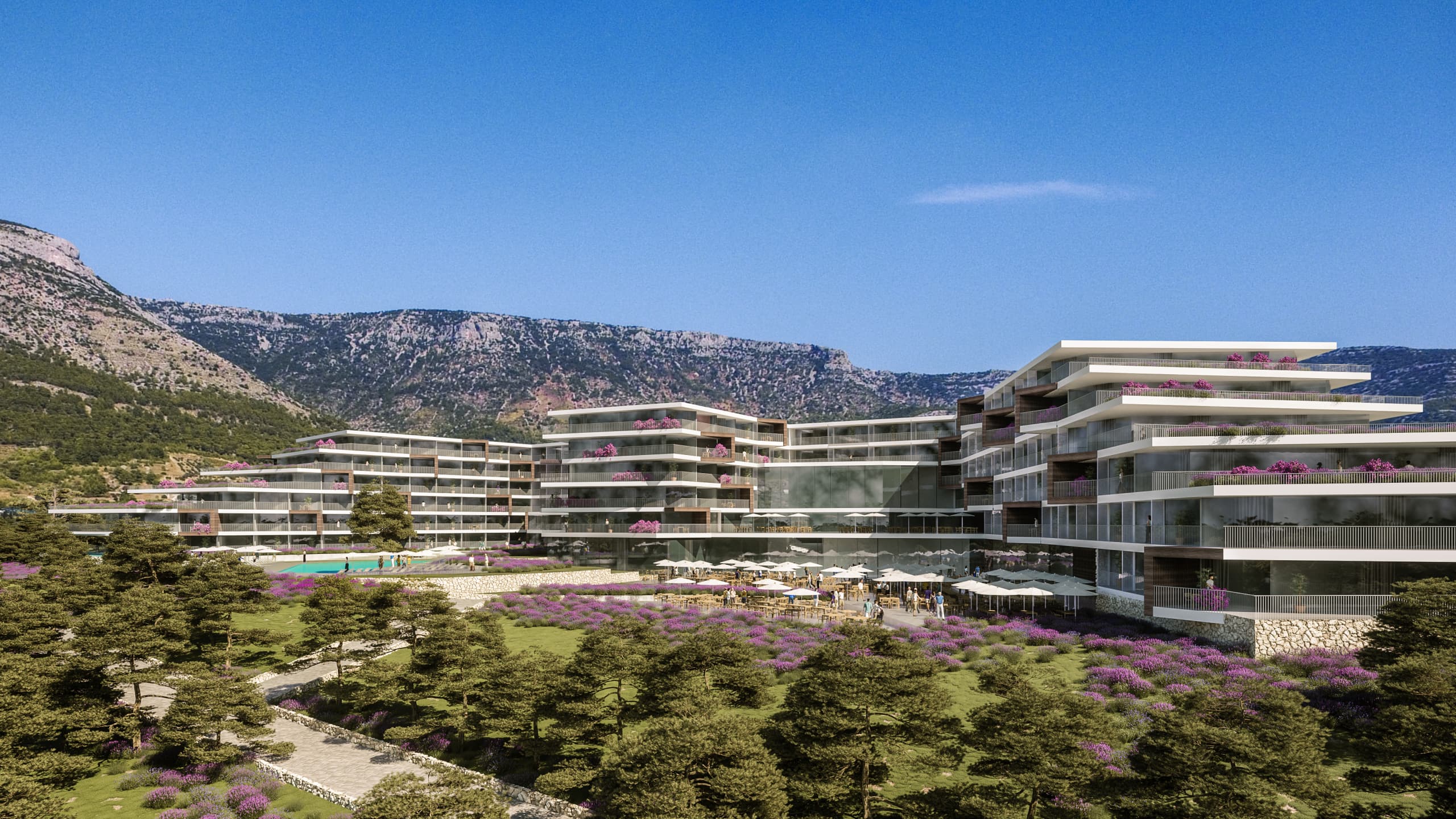
The architectural language is defined through horizontal proportions, open facades and layered outdoor spaces that mediate between interior programs and the surrounding landscape.
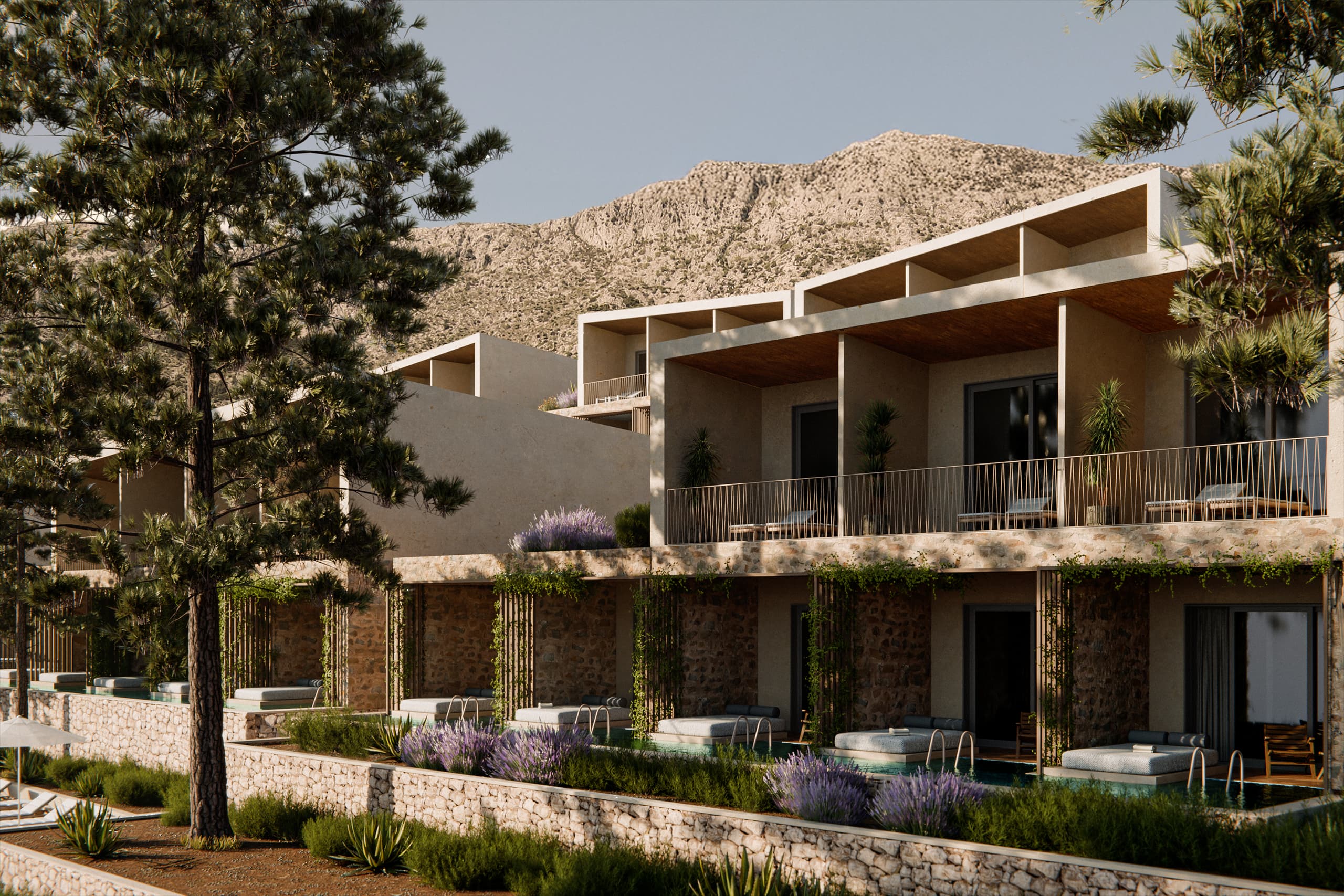
Accommodation buildings are designed with generous terraces, shaded transitions and visual permeability towards the sea and pine forest. Materiality and spatial articulation draw inspiration from the Mediterranean climate, emphasizing natural light, outdoor living and passive environmental strategies.
The new hotel structures establish a contemporary identity while maintaining continuity with the scale and atmosphere of the existing resort environment.
Landscape
Landscape design plays a central role in the identity of the project. Existing vegetation and pine forest areas are preserved and integrated into the spatial organization of the resort, creating shaded pedestrian routes and protected outdoor environments.
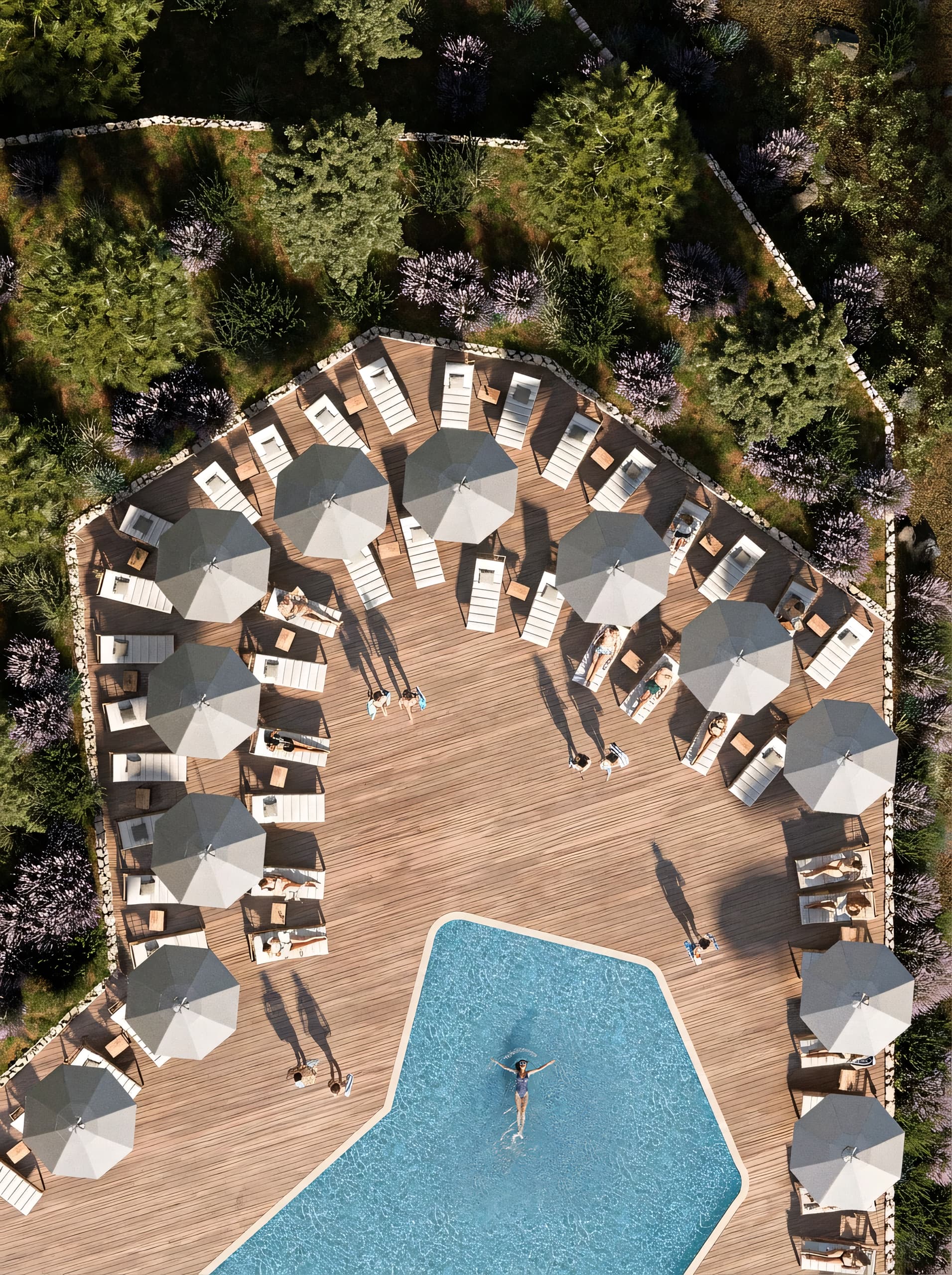
Pool terraces, sports facilities and public gathering areas are embedded into the terrain through soft transitions and layered planting strategies. Open spaces are conceived not only as circulation areas, but as active social and recreational environments that shape the overall guest experience.
The landscape becomes the primary element connecting architecture, recreation and the coastal setting.
Program
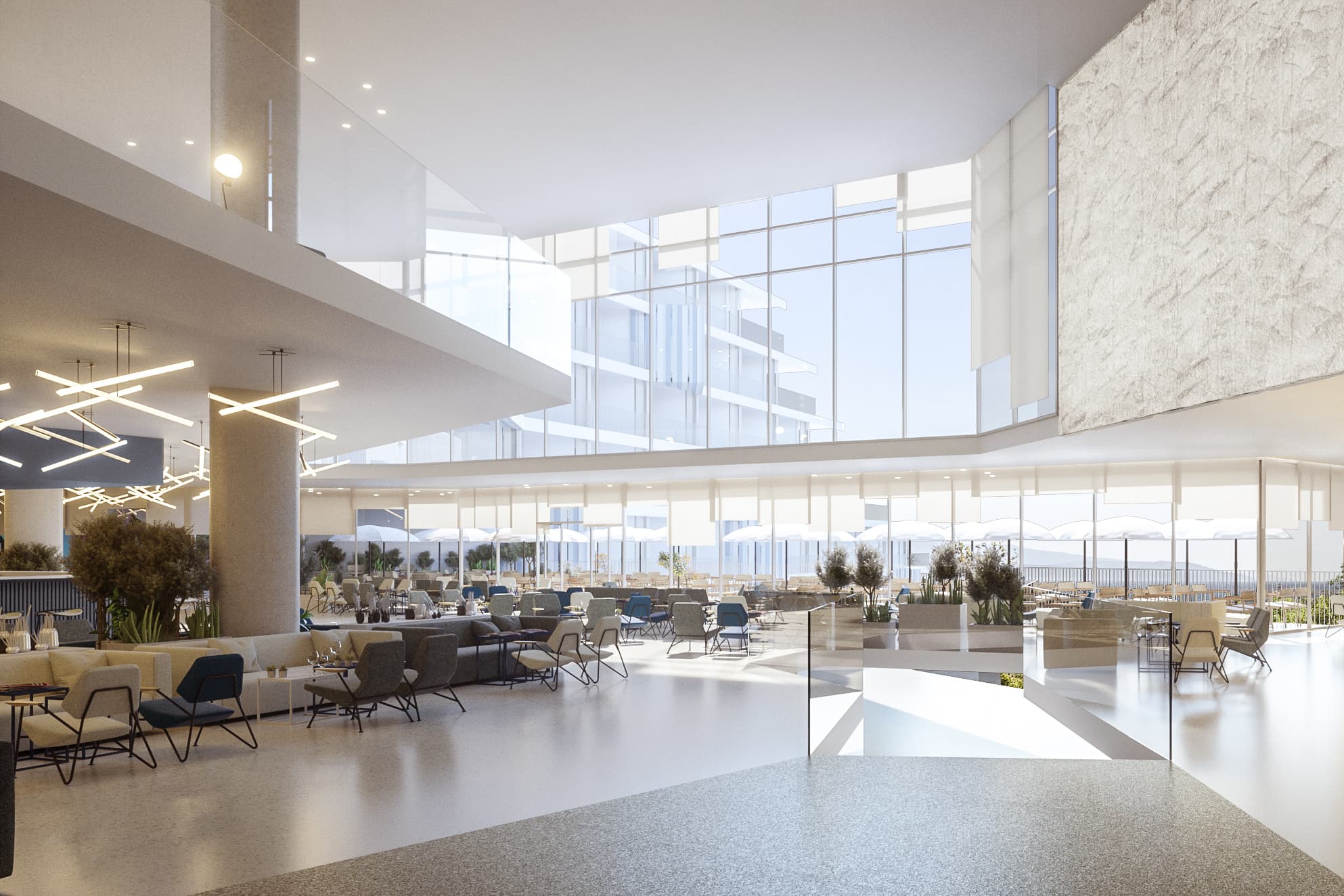
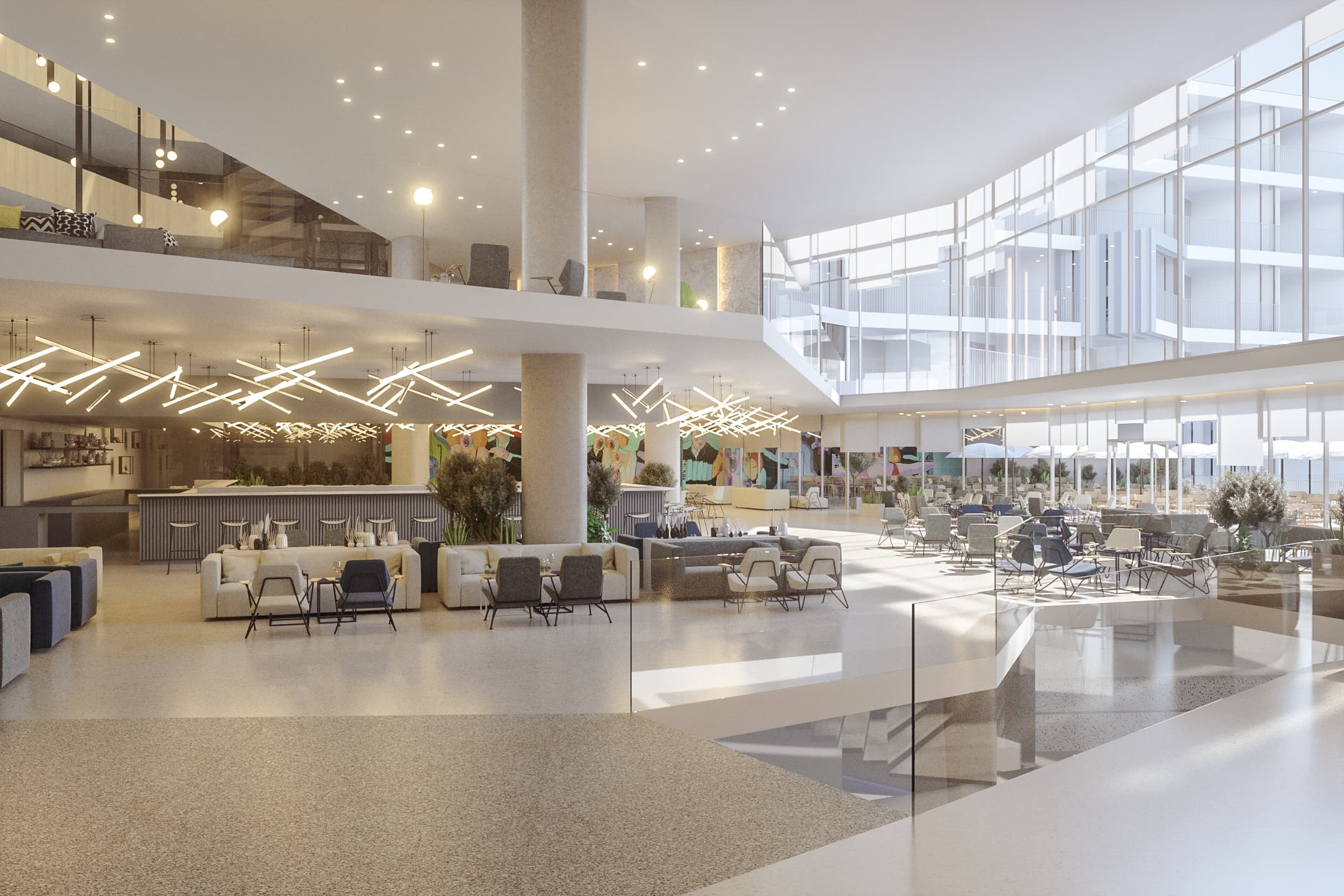
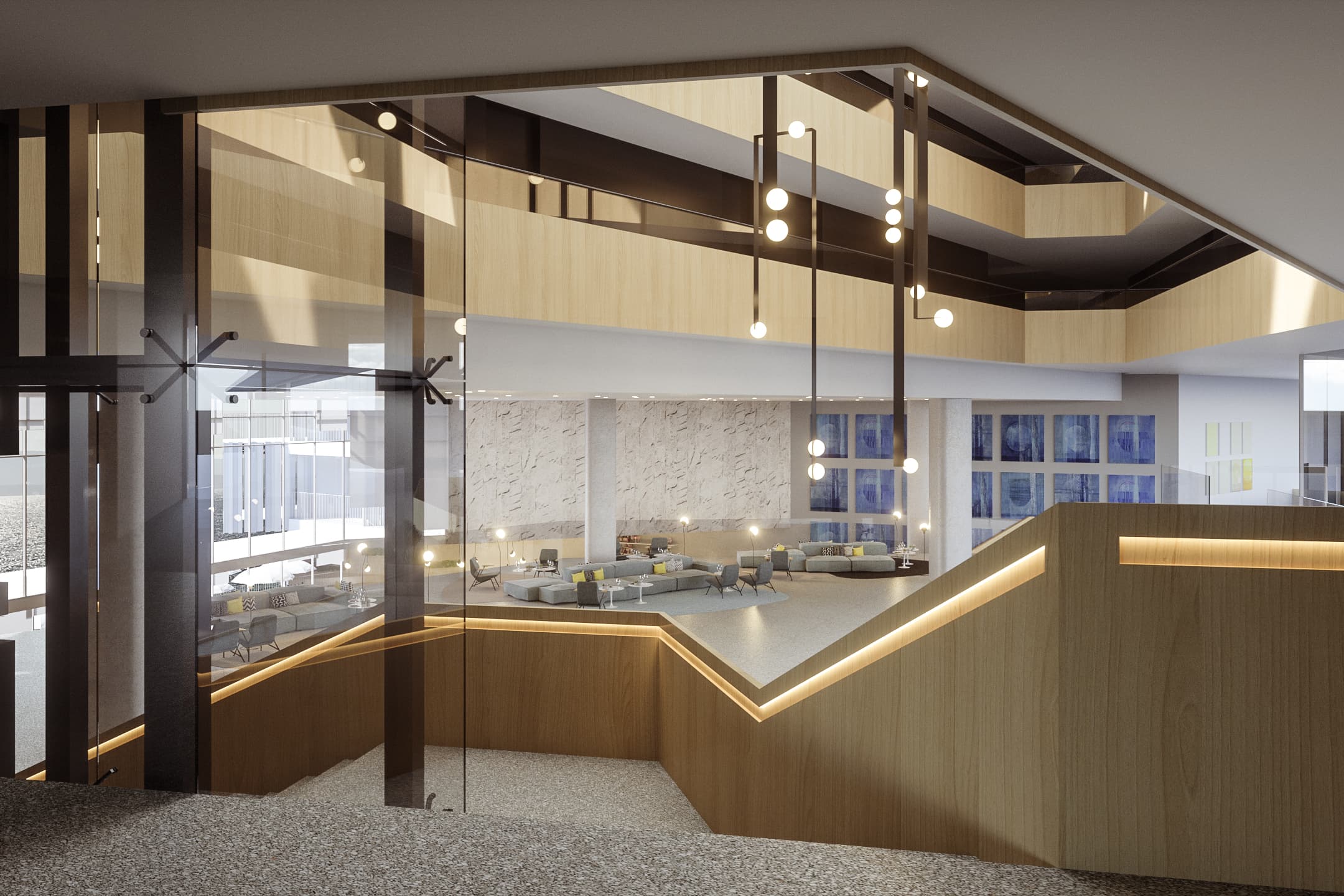
The redevelopment introduces a diverse hospitality and recreational program including a new 5-star hotel with 450 accommodation units, reconstructed depandance accommodation, multiple restaurants and bars, extensive pool areas and a comprehensive sports infrastructure.
Key amenities include wellness and fitness facilities, tennis and volleyball courts, football and archery zones, indoor and outdoor children facilities, entertainment venues and a new amphitheatre with capacity for over 1,200 visitors.
The combination of hospitality, leisure and sports facilities establishes the resort as an integrated destination focused on active Mediterranean tourism.